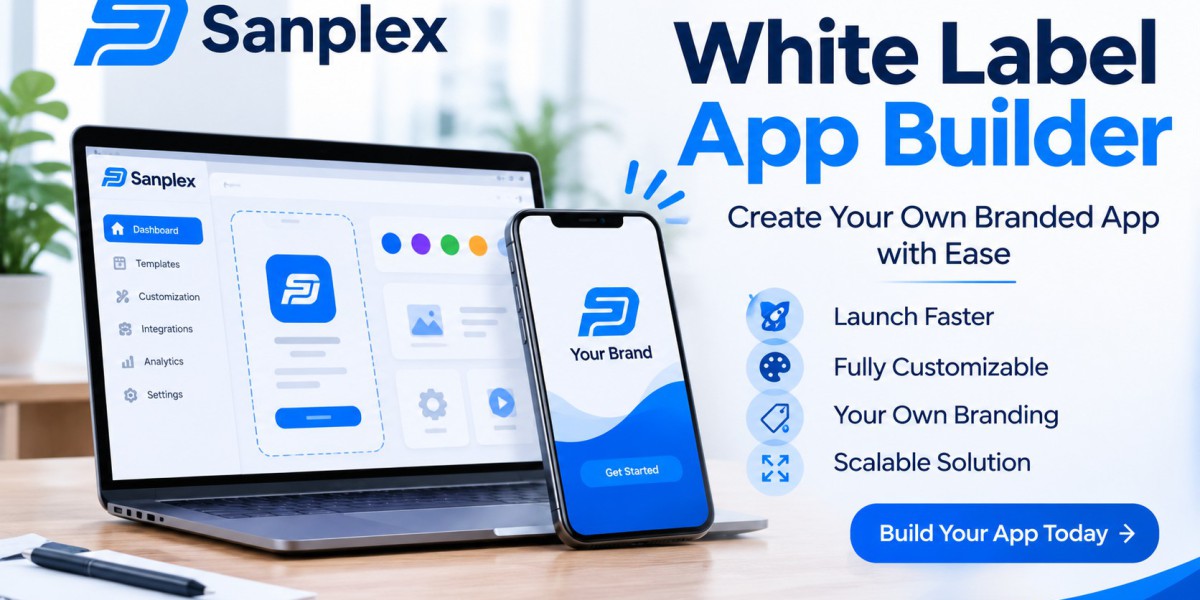

A mobile app can help a business improve customer communication, simplify daily operations, and make its services easier to access. However, developing an application from the beginning requires technical expertise, time, and a significant budget. A white label app builder offers another route by providing an existing application platform that businesses can customise with their own branding and features.
This approach is useful for companies that want to offer a mobile app without managing every stage of software development. Instead of building the complete technology independently, a business uses a provider's platform and adapts it to its requirements. The result can be a branded app that supports customer services, bookings, sales, communication, or internal processes.
Understanding how these platforms work, what they include, and where their limitations exist can help businesses decide whether this development model suits their goals.
What Is a White Label App Builder?
A white label app builder is a software platform that allows businesses to create mobile applications using an existing technology framework. The provider develops and maintains the underlying system, while customers customise the app's appearance and selected functions.
For example, a fitness company could use a white label platform to launch an app featuring its logo, class schedules, membership options, workout content, and payment facilities. The platform provider supplies the technical foundation, while the fitness company manages its brand and customer relationships.
The level of customisation depends on the provider. Some platforms offer visual editing tools and ready-made modules, while others support more advanced configuration through APIs or developer assistance.
White Label Apps vs Custom-Built Applications
A custom-built application is developed specifically for one business. This provides greater control over the software architecture, functionality, and development decisions, but it can require more time and investment.
A white label application starts with an existing platform. It is generally quicker to configure and may reduce initial development costs. However, businesses must work within the provider's technical capabilities and licensing conditions.
Neither approach is automatically better. The right choice depends on the required features, available budget, development timeline, and long-term plans.
How Does a White Label App Builder Work?
The process usually begins when a business selects a platform and identifies the functions it needs. The provider then makes the relevant tools available for configuration.
1. Selecting a Platform
Businesses should first compare providers based on their industry requirements, supported devices, pricing, integration options, and technical support. It is important to confirm that the platform supports the intended business model before committing to a subscription.
2. Applying Brand Identity
The next step involves adding the business name, logo, colours, images, and other visual elements. Some builders also allow changes to navigation, screen layouts, and user-facing content.
A consistent design helps customers recognise the business and understand how to use the application.
3. Configuring Features
The business selects the functions required for its operations. These might include user accounts, appointment scheduling, product catalogues, online payments, notifications, or customer support.
Only useful features should be included. Adding unnecessary tools can make an app harder to navigate and maintain.
4. Testing and Publishing
Before launch, the application should be tested on different devices and screen sizes. Businesses should check account registration, payment processing, navigation, data handling, and other essential functions.
Publishing requirements vary between platforms and app stores. A provider may assist with submission, but approval is not guaranteed.
Important Features to Look For
Not every white label app builder offers the same capabilities. Comparing practical features can prevent problems after launch.
Branding and Design Controls
The platform should provide enough flexibility to reflect the business's identity. Check whether it supports custom logos, colours, icons, images, and screen layouts. Also confirm whether the provider's branding appears anywhere in the finished application.
User Accounts and Permissions
Many business apps need registration, login, and profile management. Role-based permissions can also be important when employees, administrators, customers, and business partners require different levels of access.
Payment and Booking Tools
Retailers may need shopping carts and payment gateways, while service businesses may require appointment scheduling and booking confirmations. Confirm which payment providers and booking systems are supported in the target market.
Integrations and API Access
An app often needs to exchange information with other business systems. Integration options may include customer relationship management software, inventory platforms, email services, payment processors, and analytics tools.
API access is particularly useful when a business needs to connect the app with an existing system. However, available integrations and API limits should be checked with the provider.
Analytics and Reporting
Usage reports can help businesses understand how customers interact with the application. Useful measurements may include active users, session frequency, purchases, bookings, and feature engagement.
Reliable analytics help teams identify problems and improve the app based on actual behaviour rather than assumptions.
Practical Benefits of Using a White Label App Builder
Faster Time to Market
Since the underlying technology already exists, businesses may be able to launch sooner than they could with a completely custom development project. This can be valuable when testing a new service or responding to customer demand.
Lower Initial Development Costs
Building software from scratch involves design, programming, testing, infrastructure, and ongoing maintenance. A white label platform can reduce some of these expenses by sharing an established technical foundation across multiple customers.
However, businesses should compare the full subscription and operating costs, not just the initial setup fee.
Less Technical Work
The provider usually handles at least part of the platform's infrastructure and maintenance. This allows business teams to focus more on services, marketing, customer support, and daily operations.
The exact responsibilities should be confirmed in the service agreement.
Consistent Customer Experience
A well-designed app gives customers a convenient way to access services, receive updates, manage bookings, or make purchases. It can also provide a more direct communication channel than relying entirely on third-party platforms.
Opportunities for Service Providers
Agencies, consultants, and technology resellers can use white label platforms to offer branded app solutions to their own clients. This may create an additional service or recurring revenue opportunity, depending on the provider's resale terms and pricing structure.
Common Challenges and Considerations
A white label solution can simplify app development, but it does not remove every technical or business risk.
Limited Customisation
A platform may not support a specialised workflow or unique feature. Before purchasing, list the essential functions and ask the provider to demonstrate them. Do not assume that a feature can be added simply because the platform supports general customisation.
Data Security and Privacy
Mobile applications may collect personal information, payment-related data, location details, or business records. Businesses should review data encryption, access controls, backup procedures, privacy policies, and incident response arrangements.
They should also understand where information is stored and which parties can access it.
Vendor Dependence
The application may rely on the provider's infrastructure, software updates, and continued service. If the provider changes its pricing or discontinues a feature, the business could be affected.
Review contract terms, data export options, migration support, and termination conditions before signing an agreement.
Ongoing Costs
Subscription charges, additional users, integrations, storage, maintenance, and premium features can increase the total cost over time. Request a complete pricing breakdown and estimate expenses over at least one or two years.
How to Choose the Right Platform
Start with the business problem the app is expected to solve. A retailer may prioritise product management and payments, while a consultancy may need secure client accounts and document sharing.
Next, create a list of essential and optional features. Ask shortlisted providers to demonstrate the essential functions using realistic examples. Review the quality of their documentation, customer support, update schedule, and service-level commitments.
It is also important to clarify ownership. Branding an app does not necessarily mean owning its source code or underlying technology. Ask who owns customer data, custom designs, content, and any separately developed components.
Finally, test a small version before making a large commitment. A pilot can reveal usability problems, integration gaps, and unexpected costs while changes are still manageable.
Frequently Asked Questions
1. What is a white label app builder used for?
It is used to create branded mobile applications from an existing software platform. Businesses can use it for services such as online shopping, bookings, customer communication, education, and membership management.
2. Do I need coding knowledge to use one?
Not always. Many platforms provide visual editors and pre-built features that require little or no coding. More advanced integrations and specialised functions may still require developers.
3. Can I publish a white label app under my business name?
Many providers support branded app publishing, but the process depends on their service and the relevant app store requirements. Confirm account ownership, submission responsibilities, and publishing fees before choosing a platform.
4. Is a white label app cheaper than custom development?
It often has lower initial development costs because the underlying platform already exists. However, subscriptions, additional features, integrations, and usage charges can affect long-term expenses.
5. Can I move my app to another provider later?
That depends on the contract and platform architecture. Some providers offer data exports or migration assistance, while others limit access to the underlying software. Check portability and exit terms before signing up.
Conclusion
A white label app builder provides businesses with a practical way to launch branded mobile applications without developing every technical component independently. It can reduce development effort, shorten launch timelines, and make useful digital services more accessible.
The best results come from selecting a platform that matches real business requirements. Companies should carefully evaluate customisation, integrations, security, ongoing costs, support, and data portability. With proper planning and testing, a white label solution can become a useful part of a business's digital operations and customer service strategy.