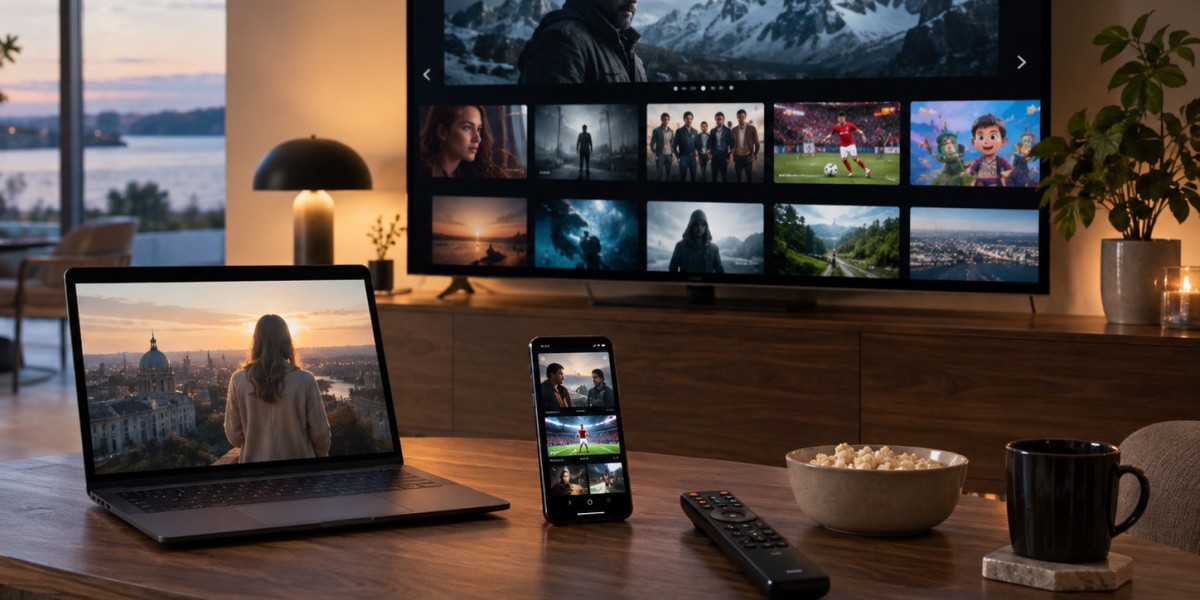

Watching television on multiple screens has become increasingly common in modern households. Families may want to watch different programmes in separate rooms, while individuals often switch between televisions, tablets, and smartphones throughout the day. A multi-screen television setup can make this arrangement more convenient, but choosing the right configuration requires some planning. Consumers should understand how devices, internet connections, account restrictions, and display requirements work together before making a decision.
Understanding Multi-Screen Television Setups
A multi-screen setup allows television content to be accessed through more than one compatible device. Depending on the technology and service, viewers may use smart TVs, streaming boxes, computers, tablets, or smartphones. However, the ability to install an application on several devices does not automatically mean that all of them can stream simultaneously.
One important consideration is screen capacity, which describes how many displays or devices a particular arrangement can support. Consumers should distinguish between the number of devices that can be registered and the number of streams that can run at the same time. These limits may vary depending on the service, subscription conditions, and technical configuration.
Check Simultaneous Streaming Restrictions
Before choosing a multi-screen arrangement, consumers should examine the service's rules for simultaneous connections. Some providers allow multiple registered devices but limit active streams to one or two at a time.
This distinction matters in households where different people prefer watching different programmes. For example, one family member may want to watch a live broadcast in the living room while another uses a tablet in a bedroom.
If the service does not support multiple simultaneous streams, users may experience interruptions when another device starts playing content. Reviewing the subscription conditions beforehand can help avoid unexpected restrictions.
Consumers should also check whether additional connections require a separate subscription or account. The answer can affect both the overall cost and the practicality of the planned setup.
Evaluate Internet Speed and Network Stability
A multi-screen television arrangement places more demand on a home internet connection than a single-screen setup. Each active stream uses bandwidth, and the total requirement increases when several devices play video simultaneously.
The amount of bandwidth needed depends on video resolution, compression, and the number of active streams. High-definition and 4K content generally require more data than standard-definition video.
However, internet speed is not the only important factor. Network stability, latency, Wi-Fi interference, and router performance can also influence playback quality.
Consumers should consider their household's overall internet usage. Video calls, online gaming, downloads, and other connected devices may compete for available bandwidth. A connection that works well for one television may not provide the same experience when several screens are active.
Consider Device Compatibility
Not every television or streaming device supports the same applications and playback formats. Before purchasing additional equipment, consumers should check whether their existing devices are compatible with the intended television service.
Smart TVs may offer built-in application support, while older televisions might require an external streaming box or another compatible device. Smartphones and tablets can provide additional flexibility, but operating system requirements and application availability should also be considered.
It is useful to review the manufacturer's software support information. Devices that no longer receive updates may eventually experience compatibility or security problems.
Consumers should also check available HDMI ports, wireless connectivity, and supported video resolutions when selecting external equipment.
Compare Display Quality Across Screens
A multi-screen setup does not necessarily provide the same viewing experience on every device. Television size, screen resolution, brightness, colour reproduction, and viewing distance can all influence picture quality.
A large television may be suitable for a shared living space, while a smaller display can work well in a bedroom or office. Consumers should consider how each screen will be used rather than assuming that every device needs identical specifications.
Display resolution is another important factor. A 4K television cannot guarantee 4K playback if the content, application, device, or internet connection does not support that resolution.
It is therefore useful to examine the complete playback chain, from the content source to the display.
Plan Device Placement and Home Network Coverage
Where devices are positioned can affect the reliability of a multi-screen setup. A television located far from the router may experience weaker Wi-Fi signals, particularly when walls, floors, or other obstacles interfere with wireless communication.
Consumers should check signal strength in each room where television streaming is planned. Moving the router to a more central location may improve coverage throughout the home.
For devices that remain in fixed positions, a wired Ethernet connection can provide a more consistent alternative to Wi-Fi. Mesh networking systems or additional access points may also help in larger homes, although their effectiveness depends on the building layout and network configuration.
Good placement planning can reduce buffering and connection interruptions without requiring unnecessary equipment purchases.
Review Costs, Subscriptions, and Maintenance
The total cost of a multi-screen setup includes more than the price of additional televisions. Consumers may need streaming devices, network equipment, compatible applications, or upgraded internet services.
Subscription conditions should be reviewed carefully, especially when multiple connections are involved. Some services include additional screens in their standard plans, while others apply separate limits or charges.
There are also ongoing maintenance considerations. Applications may require updates, devices may eventually become outdated, and network equipment may need replacement as household requirements change.
Comparing these costs before purchasing equipment helps consumers avoid paying for features they may not use.
Conclusion
Choosing a multi-screen television setup requires more than deciding how many televisions or devices a household needs. Consumers should examine simultaneous streaming restrictions, internet performance, device compatibility, display quality, network coverage, and subscription costs.
A practical setup begins with understanding how the household will use its screens. By checking these factors in advance, viewers can make informed decisions, select suitable equipment, and create a more reliable television arrangement without unnecessary spending.