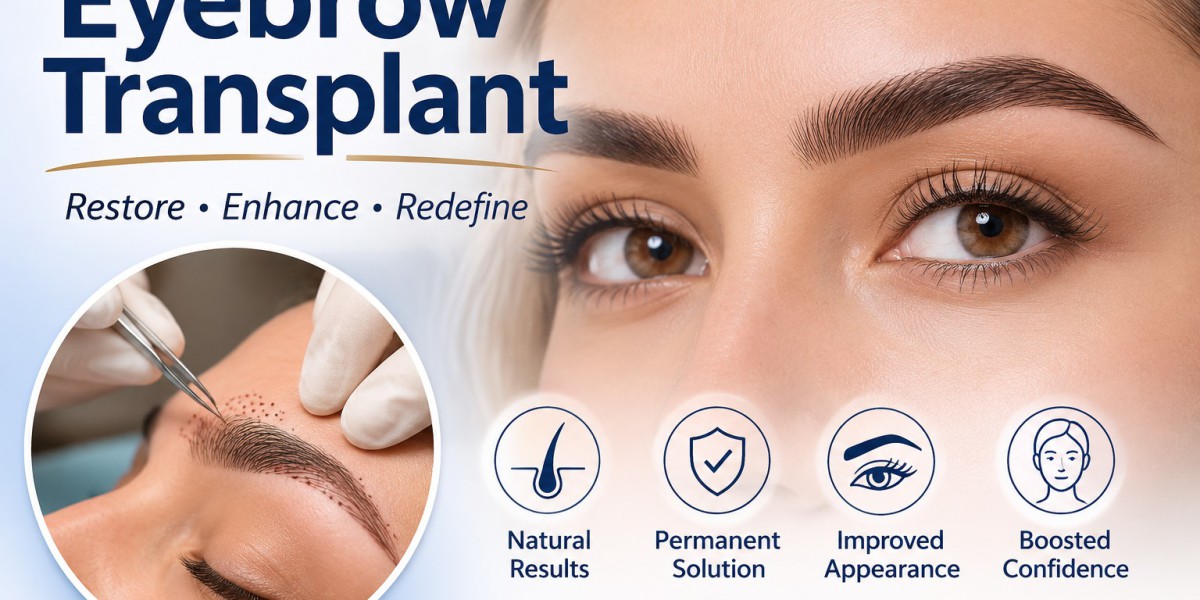

Eyebrows are an important part of facial appearance because they help define facial features, enhance expressions, and maintain facial symmetry. Fuller and well-shaped eyebrows can make the eyes look more attractive and create a balanced appearance. However, many people struggle with thin, uneven, or sparse eyebrows due to genetics, excessive plucking, ageing, hormonal changes, injuries, or medical conditions. For individuals who want a long-term solution, an eyebrow transplant is an effective hair restoration option.
An eyebrow transplant is a cosmetic procedure that uses natural hair follicles from the patient's own body to restore eyebrow density. Unlike temporary solutions such as eyebrow pencils, makeup, and microblading, this treatment involves actual hair transplantation and allows new hair to grow naturally. In this guide, we will explain everything you need to know about eyebrow transplant treatment, including its benefits, procedure, cost, recovery, and results.
What Is an Eyebrow Transplant Treatment?
An eyebrow transplant is a specialised hair restoration procedure designed to improve the thickness, shape, and density of eyebrows. During the treatment, healthy hair follicles are extracted from a donor area, generally the back or sides of the scalp, and implanted into the eyebrow region.
The procedure is performed with careful attention to the natural direction, angle, and pattern of eyebrow hair growth. This is important because eyebrow hair grows differently from scalp hair. Proper follicle placement helps create a natural and aesthetically pleasing appearance.
An eyebrow transplant can help people with naturally thin eyebrows, permanent hair loss, gaps caused by overplucking, or eyebrow damage resulting from injuries and scars.
Why Do People Need an Eyebrow Transplant?
There are several reasons why individuals may experience eyebrow thinning or hair loss. Identifying the cause is important before considering an eyebrow transplant.
Genetic Factors: Some people naturally have thin or lightly populated eyebrows because of hereditary characteristics.
Overplucking and Waxing: Repeatedly removing eyebrow hair can damage follicles and sometimes lead to permanent thinning.
Ageing: Natural ageing can reduce eyebrow hair density and make existing hair thinner.
Medical Conditions: Certain skin disorders and hair loss conditions may affect eyebrow growth.
Hormonal Changes: Hormonal imbalances can sometimes contribute to thinning eyebrow hair.
Injuries and Scars: Burns, accidents, and surgical procedures can damage eyebrow follicles and create permanent gaps.
If eyebrow hair loss is permanent and the patient has sufficient healthy donor hair, an eyebrow transplant may be an appropriate option following medical evaluation.
Who Is the Right Candidate for Eyebrow Transplant Treatment?
An eyebrow transplant is suitable for many men and women who want fuller and more defined eyebrows. However, a specialist must evaluate each patient before recommending surgery.
You may be a suitable candidate if you:
Have naturally thin or sparse eyebrows.
Have lost eyebrow hair due to excessive plucking.
Have gaps or uneven eyebrow growth.
Have scars caused by injuries or burns.
Experience permanent eyebrow hair loss.
Want a natural-looking and long-lasting solution.
Have sufficient healthy donor hair.
People with active skin infections, certain untreated medical conditions, or unexplained eyebrow hair loss may need further evaluation before undergoing treatment.
How Is an Eyebrow Transplant Procedure Performed?
An eyebrow transplant is generally performed under local anaesthesia. It is a minimally invasive procedure involving the extraction and implantation of individual hair follicles.
1. Initial Consultation
The treatment begins with a consultation with an experienced hair restoration specialist. The surgeon examines your eyebrow condition, facial structure, donor hair quality, and expectations.
Based on this assessment, a suitable eyebrow shape and treatment plan are created. The number of grafts required depends on the existing eyebrow density and the desired outcome.
2. Donor Hair Extraction
Healthy hair follicles are usually collected from the back or sides of the scalp. Follicular Unit Extraction (FUE) is a commonly used technique for extracting individual follicles.
The surgeon uses specialised instruments to remove the follicles carefully while minimising damage to surrounding tissue.
3. Graft Preparation
The extracted follicles are examined and prepared for implantation. Single-hair grafts are generally preferred for eyebrow restoration because natural eyebrow hair usually grows as individual strands.
Careful graft selection helps achieve suitable hair distribution and a realistic appearance.
4. Hair Follicle Implantation
The surgeon creates tiny recipient sites in the eyebrow region and implants each hair follicle individually.
The direction and angle of implantation are extremely important. Since eyebrow hair grows in different directions across the inner, middle, and outer sections, precise placement is necessary to achieve natural-looking results.
Major Benefits of Eyebrow Transplant Treatment
An eyebrow transplant offers several benefits for people who want to improve their eyebrow appearance.
1. Natural-Looking Results
The treatment uses your own hair follicles, allowing transplanted hair to grow naturally and blend with existing eyebrow hair.
2. Long-Term Hair Restoration
Successfully transplanted follicles generally continue producing hair over the long term, making this a lasting solution compared with temporary cosmetic treatments.
3. Improved Eyebrow Density
The procedure can fill empty patches and improve the overall thickness of sparse eyebrows.
4. Better Facial Symmetry
Fuller and more balanced eyebrows can enhance facial proportions and highlight the eyes.
5. Customised Eyebrow Design
The surgeon can design the eyebrow shape according to your facial structure, existing hair pattern, and personal preferences.
6. Reduced Dependence on Makeup
People who regularly use eyebrow pencils, powders, and gels may become less dependent on these products after successful transplantation.
Eyebrow Transplant Recovery and Aftercare
Recovery after an eyebrow transplant is generally manageable, but proper aftercare is important for supporting healing and protecting the transplanted follicles.
During the first few days, mild swelling, redness, tenderness, and small scabs may appear around the treated area. These symptoms usually improve gradually.
Patients should avoid touching, rubbing, or scratching the transplanted eyebrows. Strenuous exercise, swimming, and activities that cause excessive sweating may need to be avoided temporarily.
Follow your surgeon's instructions regarding cleaning, medications, and skincare. Avoid applying makeup or cosmetic products directly to the treated area until your surgeon confirms that it is safe.
Some transplanted hairs may fall out during the initial weeks. This is known as shock loss and is generally a normal part of the hair transplantation process. The follicles usually remain in place and can produce new hair during subsequent growth cycles.
When Will You See Eyebrow Transplant Results?
Eyebrow transplant results develop gradually because the transplanted follicles require time to heal and begin producing new hair.
During the first month, some transplanted hair may shed temporarily. New hair growth commonly starts around three to four months after treatment.
Between six and nine months, patients may notice improved density and coverage. More complete results generally become visible around nine to twelve months, although the timeline varies between individuals.
Since transplanted scalp hair may grow longer than natural eyebrow hair, regular trimming and shaping are usually required to maintain the desired appearance.
How Much Does Eyebrow Transplant Treatment Cost?
The cost of an eyebrow transplant depends on several factors, including the number of grafts required, the surgeon's experience, the clinic's location, the transplantation technique, and the complexity of the treatment.
Patients who need minor eyebrow restoration may require fewer grafts than those who want complete eyebrow reconstruction. Additional expenses may include consultation fees, medications, surgical facilities, and follow-up appointments.
Before choosing a clinic, request a detailed treatment plan and cost estimate. It is important to select a qualified surgeon with experience in eyebrow restoration rather than making a decision based only on price.
Is Eyebrow Transplant Treatment Safe?
An eyebrow transplant is generally considered safe when performed by a qualified and experienced surgeon. However, like any surgical procedure, it carries potential risks.
These may include temporary swelling, redness, infection, bleeding, scarring, uneven hair growth, poor graft survival, or unnatural hair direction.
Choosing an experienced hair restoration specialist and following proper aftercare instructions can help reduce potential complications. Patients should discuss their medical history, expectations, and possible risks before treatment.
Conclusion
An eyebrow transplant is a long-term hair restoration solution for people who want to improve thin, sparse, or uneven eyebrows. By transferring healthy hair follicles from a donor area to the eyebrow region, this treatment can restore natural hair growth, improve density, and create a more balanced facial appearance.
Understanding the procedure, benefits, cost, recovery, and expected results can help you make an informed decision. The success of eyebrow transplant treatment depends on proper patient selection, experienced surgical planning, precise follicle placement, and appropriate aftercare.
If you are considering an eyebrow transplant, consult a qualified hair restoration specialist to discuss your goals and determine whether the procedure is suitable for you. With the right treatment approach and realistic expectations, you can achieve fuller, natural-looking eyebrows and enhance your overall appearance.