
A deck can be one of the most enjoyable parts of a home. It gives you a comfortable place to relax outdoors, entertain guests, enjoy a morning coffee, or spend time with family. But because decks are constantly exposed to sun, rain, moisture, temperature changes, and everyday use, they can eventually show signs of wear. The tricky part is knowing whether a damaged deck simply needs a few repairs or whether replacing it is the safer and more practical choice.
If you're noticing loose boards, discoloration, cracks, or movement underfoot, don't automatically assume you need a completely new deck. A professional Deck Repair in Greenville can often restore a deck that still has a solid structural foundation, saving you time and money compared with a full replacement.
The key is understanding the difference between cosmetic problems, repairable damage, and serious structural deterioration. With a careful inspection, you can make a more informed decision about what your deck needs.
Start With a Thorough Deck Inspection
Before deciding between repair and replacement, inspect the entire deck—not just the areas where damage is most obvious.
Walk across the surface slowly and pay attention to anything that feels unusual. Does the deck bounce more than it used to? Are certain boards soft or unstable? Do railings move when you put pressure on them?
Then look underneath the deck if the structure is accessible. Some of the most serious problems aren't visible from above. Check the joists, beams, posts, ledger board, and connections for signs of deterioration.
If you're uncomfortable inspecting structural components yourself, it's better to have a qualified professional evaluate them. Structural problems can affect the safety of everyone using the deck.
Signs Your Deck May Only Need Repair
Not every damaged deck needs to be replaced. In many cases, the underlying structure is still strong, while individual components have deteriorated.
Cracked or Damaged Deck Boards
A few cracked, split, or warped boards don't necessarily mean the entire deck has reached the end of its life.
If the joists and support structure are in good condition, damaged boards can often be removed and replaced individually. This is one of the simplest deck repairs and can make a noticeable difference in both appearance and safety.
However, don't ignore cracks simply because they seem small. Cracks can allow water to penetrate the wood, potentially contributing to rot over time.
Loose Nails, Screws, or Fasteners
Fasteners can loosen as a deck ages. You may notice screws sticking up, boards shifting slightly, or squeaking when you walk across the surface.
Replacing deteriorated fasteners with appropriate exterior-rated hardware can often solve these problems. At the same time, inspect the surrounding wood to make sure the fastener isn't loose because the material underneath has rotted.
Faded or Weathered Wood
Gray, faded, or weathered wood isn't automatically a structural problem.
Outdoor wood naturally changes color as it is exposed to sunlight and moisture. If the boards remain firm and structurally sound, cleaning, sanding, staining, or sealing may be enough to refresh the deck.
This is an important distinction: appearance alone doesn't necessarily justify replacement.
Minor Surface Cracks
Small surface cracks are common in aging wood decks. If they're limited and the surrounding boards remain solid, they can sometimes be addressed through routine maintenance or replacement of individual boards.
The situation becomes more concerning when cracks are deep, widespread, or accompanied by soft wood and other signs of deterioration.
Warning Signs That Replacement May Be Necessary
Sometimes damage goes beyond a few repairable components. When deterioration affects major structural elements, replacing the deck may be the safer long-term option.
Extensive Wood Rot
Wood rot is one of the biggest warning signs to watch for.
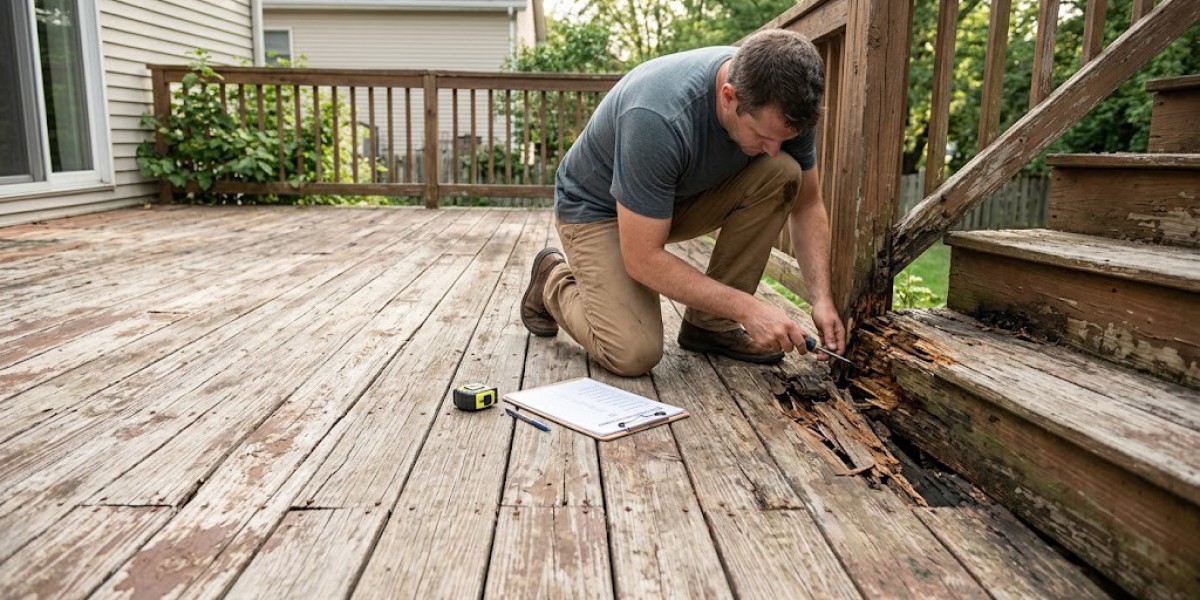
Press a screwdriver gently against suspicious areas. Healthy wood should feel firm. If the tool easily penetrates the material or the wood feels soft and crumbly, there may be significant decay.
Rot can affect deck boards, joists, beams, posts, and the ledger connection. Replacing a few boards won't solve the problem if the supporting structure is also deteriorated.
Severely Damaged Joists and Beams
Joists and beams carry much of the deck's weight. If they're badly cracked, sagging, or weakened by rot or insects, the issue is more serious than a damaged surface board.
Some individual structural components can be replaced, but if deterioration is widespread, extensive structural repairs may become complicated and expensive. At that point, rebuilding the deck may make more financial and practical sense.
Wobbly or Leaning Posts
Deck posts should provide stable vertical support. If posts are leaning, shifting, cracked, or showing signs of decay near their bases, don't overlook the problem.
A shaky post can indicate that the connection, footing, or surrounding structure has been compromised. Because posts are part of the deck's load-bearing system, significant damage should be evaluated promptly.
A Sagging or Uneven Deck
Does one section of your deck appear lower than another? Does the surface slope unexpectedly or feel uneven when you walk across it?
Sagging can result from weakened joists, damaged beams, shifting supports, or problems with the foundation. While a small isolated issue may be repairable, widespread sagging can indicate a larger structural concern.
When Repair Makes More Sense Than Replacement
Repair is generally worth considering when the deck's main structure remains sound.
For example, you may be able to repair the deck if:
- Only a few boards are damaged.
- The joists and beams are structurally sound.
- Posts remain stable.
- The ledger connection is secure.
- Damage is limited to surface finishes.
- The deck doesn't have widespread rot.
- Repairs can restore safety without extensive reconstruction.
A professional deck repair service in Valhalla can assess these issues and determine which components actually need attention instead of automatically recommending a complete replacement.
Repairing only what is necessary can preserve a deck that still has plenty of useful life left.
When Replacing the Deck Is the Better Choice
Replacement becomes more reasonable when the deck has widespread structural deterioration or when repairs would essentially amount to rebuilding most of the structure.
Consider replacement if:
- Rot affects numerous structural components.
- Multiple joists or beams are severely damaged.
- Posts or footings have major problems.
- The deck has significant movement or instability.
- Damage is widespread rather than isolated.
- Previous repairs have become frequent and costly.
- The existing design no longer meets your needs.
- The cost of extensive repairs approaches the cost of rebuilding.
A replacement also gives you the opportunity to rethink the deck's layout, materials, railing design, stairs, and overall appearance.
Don't Forget the Railings and Stairs
Homeowners sometimes focus on deck boards and overlook stairs and railings. These areas deserve just as much attention.
Check the Railings
Grab the railing and gently test whether it moves. A properly secured railing shouldn't wobble significantly.
Look for:
- Loose posts
- Cracked components
- Rot
- Loose connections
- Damaged balusters
- Unstable handrails
Because railings help prevent falls, instability shouldn't be treated as a minor cosmetic issue.
Inspect the Stairs
Walk up and down the stairs and look for movement, damaged treads, loose railings, or uneven steps.
Also inspect the stringers—the structural components supporting the stair treads. Rot or cracking in these areas can create serious safety concerns.
Consider the Age of Your Deck
Age alone doesn't tell you whether a deck needs replacement, but it provides useful context.
A well-maintained deck made from quality materials can last for many years, while one exposed to persistent moisture or neglected for long periods may deteriorate much sooner.
Instead of asking, "How old is my deck?" ask:
"How is my deck performing today?"
A relatively old deck that remains structurally sound may need nothing more than maintenance and occasional repairs. A newer deck with poor construction, moisture problems, or inadequate maintenance may require significant work.
Repair or Replacement: Think About the Long-Term Cost
The cheapest option today isn't always the most economical option over several years.
For example, replacing two damaged boards might be inexpensive. But if you repeatedly replace boards because the underlying joists are deteriorating, you're spending money without addressing the root problem.
On the other hand, replacing an entire deck simply because a few boards look worn can result in unnecessary expense.
Ask a professional to distinguish between symptoms and underlying causes. A good evaluation should explain what is damaged, why it happened, what can be repaired, and how long you can reasonably expect the repaired components to last.
How to Prevent Future Deck Problems
Whether you repair or replace your deck, regular maintenance can help extend its service life.
Keep the deck clean and remove leaves, dirt, and other debris that can trap moisture. Look for areas where water tends to collect and address drainage problems where possible.
Inspect the deck at least periodically for:
- Soft or discolored wood
- Loose boards
- Rusted or missing fasteners
- Cracks
- Wobbly railings
- Damaged stairs
- Rot around posts
- Sagging areas
- Moisture accumulation
Staining or sealing may also help protect suitable wood from moisture and weather exposure. Just make sure the surface is properly prepared before applying any protective product.
Final Thoughts
Deciding whether to repair or replace a deck doesn't have to be a guessing game. Start by looking beyond surface appearance and assess the condition of the boards, joists, beams, posts, railings, stairs, and connections. A few cracked boards or loose fasteners can often be repaired, while widespread rot, severe structural damage, and persistent instability may point toward replacement.
When you're unsure, getting a professional assessment can help you avoid both unnecessary replacement and potentially unsafe repairs. With the right approach, JLL Painting can help you understand the condition of your deck and determine the most practical next step for keeping your outdoor space safe, functional, and attractive.
FAQs
1. How do I know if my deck needs to be replaced?
A deck may need replacement when it has widespread wood rot, severely damaged joists or beams, unstable posts, significant sagging, or persistent structural movement. If major repairs would involve replacing much of the deck's supporting structure, rebuilding may be more practical.
2. Can a deck with rotted boards be repaired?
Yes, if the rot is limited to individual deck boards and the underlying joists and supports are still sound. If rot has spread into structural components, however, a more extensive repair or complete replacement may be necessary.
3. How often should I inspect my deck?
It's a good idea to inspect your deck regularly, particularly before periods of heavy outdoor use. Pay special attention after severe weather and look for soft wood, loose fasteners, unstable railings, cracks, and areas where water collects.
4. Is it cheaper to repair or replace a deck?
Repair is usually less expensive when damage is limited to a small number of components. Replacement may provide better long-term value when structural deterioration is widespread or repeated repairs have become costly. A professional inspection can help you compare the two options.