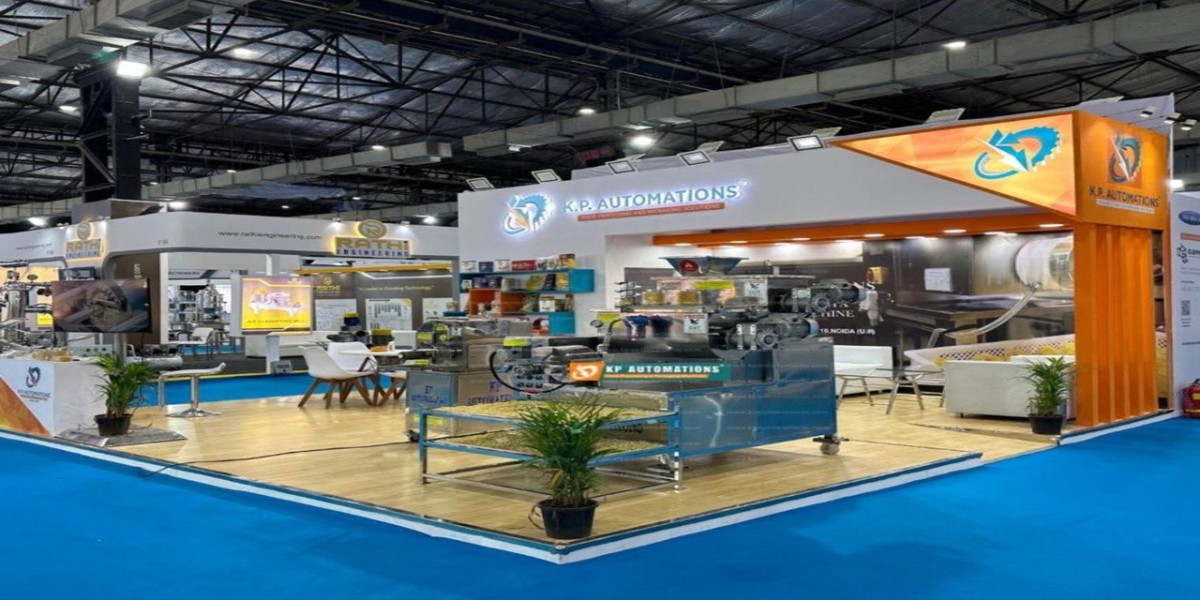

Drying is one of the most important stages in commercial pasta manufacturing. After extrusion and shaping, pasta still contains substantial moisture and must pass through a carefully controlled drying process before it becomes suitable for stable storage, packaging, and distribution.
For this reason, an industrial pasta drying system should not be treated as a simple heating unit. It is a controlled processing system involving temperature, humidity, airflow, residence time, product movement, and moisture management.
For a growing pasta manufacturer, selecting the right drying technology can also influence the design and performance of the complete pasta production line.
KP AUTOMATIONS develops pasta machines, drying systems, automation, and packaging solutions for commercial and industrial pasta production. Its current portfolio includes room, static, and continuous drying systems, along with pasta production lines covering different production capacities.
What Is an Industrial Pasta Drying System?
An industrial pasta drying system is designed to remove moisture from freshly produced pasta under controlled environmental conditions.
Unlike simple natural drying, an industrial system allows manufacturers to regulate important parameters such as:
- Temperature
- Humidity
- Airflow
- Drying time
- Product movement
- Moisture removal
- Drying-zone conditions
These parameters work together to produce more consistent drying results.
KP AUTOMATIONS describes its industrial drying system as a solution for large-scale manufacturers requiring controlled temperature and humidity, continuous production, and consistent results for both long- and short-cut pasta.
The objective is not simply to remove water as quickly as possible. Drying must be controlled so that the pasta maintains its structure, shape, cooking characteristics, and storage stability.
Why Drying Is Critical in Pasta Manufacturing
Freshly extruded pasta cannot simply be packaged immediately when the objective is to produce a stable dried product.
The drying stage helps reduce moisture to the desired level while stabilizing the pasta structure.
A properly designed drying process can help manufacturers achieve:
- More consistent moisture levels
- Better product stability
- Reduced cracking
- Reduced surface hardening
- Improved cooking performance
- Longer shelf life
- Better suitability for automated packaging
KP AUTOMATIONS states that its pasta drying systems are intended to support texture, durability, and shelf life while helping prevent problems associated with improper drying.
This makes drying a central part of the manufacturing process rather than an optional downstream operation.
Where the Drying System Fits in a Pasta Production Line
A typical commercial pasta production workflow can be represented as:
Raw Material → Dough Preparation → Extrusion → Shaping → Pre-Drying → Main Drying → Cooling → Handling → Packaging
The exact configuration depends on whether the manufacturer produces short-cut pasta, long-cut pasta, specialty pasta, or multiple product categories.
KP AUTOMATIONS' short-cut production lines are designed for capacities ranging from 50 kg/hr to 5,000 kg/hr, while its long-cut systems incorporate dedicated pre-drying, drying, cooling, and cutting stages.
This demonstrates why the drying section needs to be designed according to the output and format of the upstream pasta machines.
Pasta Machines and Drying Capacity Must Be Matched
A pasta machine may be capable of producing a certain quantity of pasta per hour, but that does not automatically mean the entire factory can process that volume.
The drying system must be capable of handling the output coming from the extrusion section.
If the dryer is undersized, pasta may accumulate between stages. This can lead to:
- Production interruptions
- Additional temporary storage
- Increased manual handling
- Uneven processing
- Reduced effective production capacity
Conversely, installing a much larger dryer than the extrusion system requires can result in underutilized equipment.
Therefore, manufacturers should consider extruder capacity and dryer capacity together when planning a production line.
Understanding the Pasta Conveyor Dryer
A pasta conveyor dryer uses conveyor-based product movement to carry pasta through controlled drying conditions.
This approach is particularly relevant for continuous industrial production because product movement and drying can occur simultaneously.
KP AUTOMATIONS describes its pasta conveyor dryer as a continuous system designed for products including spaghetti, fettuccine, and other long- and short-cut pasta varieties. The system is designed around controlled airflow and temperature distribution for uniform drying.
A conveyor drying system can include several stages or zones, allowing drying conditions to change progressively as the product moves through the machine.
How a Pasta Conveyor Dryer Works
The basic operating principle is straightforward:
1. Product Entry
Fresh pasta enters the drying system after extrusion or initial processing.
2. Controlled Conveying
The product is transported through the dryer using a conveyor arrangement.
3. Temperature-Controlled Drying
Heated air is introduced under controlled conditions to remove moisture progressively.
4. Humidity Management
Humidity is controlled to regulate the rate of moisture removal.
5. Progressive Drying
Different zones can operate under different conditions depending on the drying recipe.
6. Product Exit
After reaching the desired drying condition, the pasta moves toward cooling, cutting where applicable, handling, and packaging.
KP AUTOMATIONS' continuous dryer uses a multi-tier conveyor system with controlled temperature and humidity zones and PLC-based controls.
Why Temperature Control Matters
Temperature is one of the most important variables in pasta drying.
Simply applying high heat can create problems. Rapid surface drying may cause the outer portion of the pasta to harden before moisture has moved evenly through the product.
This can contribute to cracking or structural inconsistencies.
KP AUTOMATIONS' industrial dryer information emphasizes gradual temperature increases as a way of helping prevent cracking and surface hardening.
A properly programmed drying profile therefore considers the entire drying cycle rather than relying on one fixed temperature.
Humidity Control in Pasta Drying
Temperature alone does not determine how pasta dries.
Humidity also influences the rate at which moisture moves from the pasta into the surrounding air.
If moisture is removed too aggressively, the pasta can become brittle or develop structural problems.
A controlled drying environment balances:
Temperature + Humidity + Airflow + Residence Time
KP AUTOMATIONS identifies humidity control as one of the key elements of its industrial pasta drying systems.
This becomes especially important when manufacturers produce multiple pasta shapes or formulations that require different drying profiles.
Airflow and Uniform Drying
Air circulation is another critical part of industrial drying.
The objective is to distribute drying air consistently throughout the product area.
Uneven airflow can create differences in moisture removal between different parts of the dryer.
A well-designed pasta conveyor dryer therefore needs appropriate air circulation and temperature distribution.
KP AUTOMATIONS describes its continuous drying system as using controlled airflow and temperature distribution to support uniform drying across production.
For high-output production, consistent airflow becomes increasingly important because large quantities of pasta are moving through the dryer continuously.
Continuous Dryer vs Static Dryer
Different manufacturers have different production requirements, which is why drying technology should be selected according to the production model.
Static Pasta Dryer
A static dryer is designed for controlled batch-style processing.
KP AUTOMATIONS' static dryer information describes temperature, humidity, and airflow control, programmable drying cycles, and multiple racks for handling different pasta shapes and recipes. The listed production specification is 500 kg/hr.
This type of system can be considered where production flexibility and batch processing are important.
Continuous Pasta Dryer
A continuous dryer is designed for production environments where pasta moves continuously through the drying process.
KP AUTOMATIONS' continuous dryer uses multiple conveyor tiers and controlled drying zones, with PLC-based operation and recipe management.
For large-scale production lines, this approach can provide a more integrated workflow between extrusion and downstream processing.
Selecting the Right Drying Technology
When evaluating an industrial pasta drying system, manufacturers should consider more than nominal capacity.
Important factors include:
Production Capacity
The dryer must be capable of handling the actual output of the pasta machines.
Pasta Format
Short-cut pasta and long-cut pasta may require different handling arrangements and drying configurations.
Drying Profile
Different products can require different temperature, humidity, airflow, and residence-time settings.
Factory Layout
The physical dimensions of the dryer, conveyor arrangement, ceiling height, utilities, and access for maintenance all need to be considered.
Automation Level
PLC control, recipe management, sensors, and automated conveyors can improve process monitoring and reduce manual intervention.
Energy Requirements
Heating and air movement can represent a significant part of operating costs, so energy-efficient system design should be considered from the beginning.
Energy Efficiency in Industrial Pasta Drying
Drying is naturally an energy-intensive stage because moisture must be removed from the product.
An inefficient dryer can therefore increase operating costs even when the rest of the production line performs well.
KP AUTOMATIONS states that its continuous dryer incorporates energy-efficient components, modular drying zones, and controlled heat distribution and airflow to reduce unnecessary energy use.
Manufacturers evaluating systems should therefore ask:
- How is heat distributed?
- Are drying zones independently controlled?
- How is airflow managed?
- Can drying recipes be adjusted?
- What insulation is used?
- How is heat loss minimized?
- Can the system be expanded or upgraded?
Energy efficiency should be evaluated alongside production output rather than as an isolated specification.
PLC Automation for Pasta Drying
Modern drying systems increasingly rely on automated controls.
A PLC can coordinate different operating parameters and allow operators to monitor the process from a central interface.
In a pasta drying application, automation may cover:
- Temperature control
- Humidity control
- Conveyor speed
- Drying-zone settings
- Recipe selection
- Airflow management
- Alarm monitoring
- Production sequencing
KP AUTOMATIONS' continuous dryer uses PLC-based controls and recipe management.
This allows manufacturers to establish repeatable drying profiles for different pasta products.
Drying Long-Cut Pasta
Long-cut products such as spaghetti, linguine, and fettuccine require specialized handling because of their length and physical configuration.
KP AUTOMATIONS' long-cut production line includes a pre-drying unit, multi-stage drying unit, shocking or cooling unit, and rear cutting section.
The pre-drying stage removes surface moisture before the product enters the main drying section.
After drying, the pasta is cooled before final cutting and preparation for packaging.
This staged approach illustrates the importance of treating drying as part of the entire production sequence.
Drying Short-Cut Pasta
Short-cut pasta such as macaroni, penne, and fusilli requires a different handling arrangement from long-cut products.
KP AUTOMATIONS' short-cut production systems are designed around modular configurations and can produce different pasta shapes and thicknesses using suitable molds and equipment.
The drying system must therefore accommodate the shape, size, loading pattern, and production rate of the product.
A dryer designed around the actual pasta format can help maintain more consistent drying conditions.
Food-Grade Construction
Because the dryer comes into direct proximity with food products, construction materials and hygienic design are important considerations.
KP AUTOMATIONS states that its continuous dryer uses food-grade stainless steel construction.
Manufacturers should also consider:
- Ease of cleaning
- Accessibility of product-contact areas
- Drainage where required
- Corrosion resistance
- Inspection access
- Maintenance accessibility
- Protection against contamination
Hygienic equipment design is particularly important in a continuous production environment where the dryer may operate for extended periods.
Maintenance of an Industrial Pasta Drying System
A drying system contains multiple mechanical, electrical, and thermal components that require routine inspection.
Maintenance planning should cover:
- Conveyor belts
- Rollers
- Motors
- Heating elements
- Temperature sensors
- Humidity sensors
- Fans
- Air ducts
- Electrical panels
- PLC components
- Safety systems
KP AUTOMATIONS also lists drying chamber components such as temperature sensors, heating elements, and air circulation systems among its pasta-machine spare parts and utilities.
Preventive maintenance helps manufacturers identify worn components before they create production interruptions.
Planning the Dryer Around the Complete Pasta Production Line
The drying system should be considered when designing the factory layout.
A complete production plan may include:
Raw Material Storage → Dosing → Mixing → Vacuum Processing → Extrusion → Cutting → Pre-Drying → Main Dryer → Cooling → Handling → Packing
The exact configuration depends on the product and production capacity.
KP AUTOMATIONS offers complete pasta manufacturing solutions incorporating processing, drying, automation, and packaging. Its production-line information covers capacities from 50 kg/hr to 5,000 kg/hr for short-cut pasta systems.
Planning these stages together can make material movement more efficient and reduce unnecessary manual transfer.
Spare Parts and Long-Term Reliability
A drying system is a long-term production asset, so spare-parts availability should be considered before installation.
Useful spare components can include:
- Temperature sensors
- Heating components
- Conveyor belts
- Rollers
- Motors
- Electrical components
- Air-circulation components
- PLC-related parts
KP AUTOMATIONS provides spare parts and utilities for pasta production equipment, including drying chamber components, conveyor belts and rollers, electrical controls, and other machine components.
Manufacturers should establish preventive maintenance schedules and identify critical replacement parts before starting continuous production.
Why KP AUTOMATIONS for Pasta Drying Systems?
KP AUTOMATIONS has been involved in food processing, packaging, engineering, plant automation, and pasta machinery since 1998. The company states that it has installed more than 4,000 pasta machines globally and provides complete pasta production and packing solutions.
Its drying portfolio includes:
- Room dryers
- Static dryers
- Continuous dryers
- Conveyor-based drying systems
- Industrial drying solutions
These systems can be considered alongside the company's pasta machines, production lines, automation, and packaging equipment.
This integrated approach can be useful for manufacturers planning a new pasta factory or upgrading an existing production facility.
Conclusion
An industrial pasta drying system is one of the most important parts of a commercial pasta production line. Its job is not simply to remove moisture, but to do so under controlled conditions that support product consistency, structure, storage stability, and downstream packaging.
The right pasta conveyor dryer must be matched with the output of the pasta machines and designed around the actual pasta formats being produced.
Temperature, humidity, airflow, residence time, automation, energy consumption, hygienic construction, and maintenance all influence the effectiveness of the drying stage.
For manufacturers planning a complete pasta production line, integrating the dryer with extrusion, cooling, handling, and packaging can create a more coordinated production workflow.
KP AUTOMATIONS offers pasta machines, industrial drying systems, conveyor dryers, production lines, automation, and packaging solutions, giving manufacturers the option to develop a connected production system around their specific requirements.