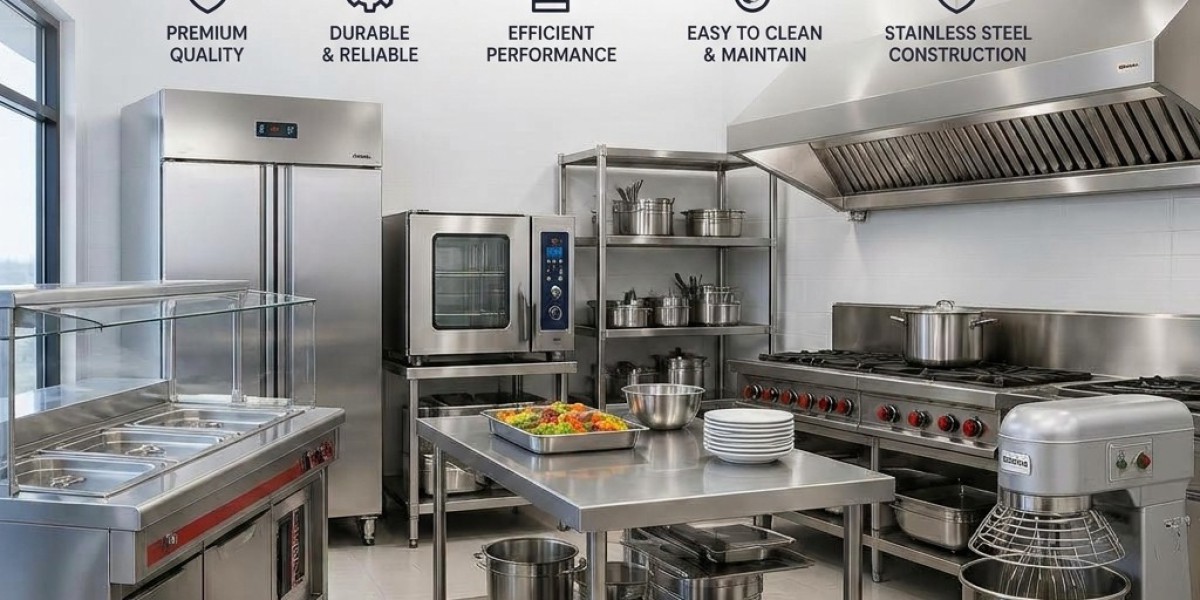

This makes Cafeteria Kitchen Equipment Heat Load Management an important part of kitchen planning.
Heat management is not simply about installing an exhaust hood. It involves understanding the amount and type of heat produced by equipment, the arrangement of appliances, ventilation requirements, operating schedules, kitchen volume, and peak-hour workload.
For cafeterias in India, where ambient temperatures can also vary significantly by region and season, these factors can influence staff comfort, equipment operation, energy use, and overall workflow.
What Is Heat Load in a Cafeteria Kitchen?
Heat load refers to the amount of heat introduced into a kitchen environment by different sources.
In a cafeteria, heat can come from:
- Cooking equipment
- Fryers
- Griddles
- Ovens
- Boiling equipment
- Steam-producing processes
- Hot holding equipment
- Refrigeration system components
- Lighting
- Staff activity
- Outdoor air entering the kitchen
Not every heat source contributes in the same way. Some equipment produces mainly sensible heat, while cooking processes can also introduce moisture, vapour, and hot air into the working environment.
Therefore, heat-load assessment should consider the complete kitchen rather than one individual appliance.
Why Cooking Intensity Matters
Cooking intensity describes how frequently and heavily cooking equipment is operated.
A kitchen operating a few appliances intermittently will have a different heat profile from a cafeteria where several appliances operate continuously during lunch or dinner service.
Higher cooking intensity can result from:
- Large batch production
- Continuous frying
- Repeated boiling
- High-volume grilling
- Oven operation
- Multiple simultaneous cooking processes
- Short intervals between production batches
As cooking intensity increases, ventilation and exhaust requirements become more important.
Equipment Density and Heat Concentration
The number of appliances installed within a particular area can influence local heat conditions.
High equipment density can create concentrated heat zones when several heat-generating appliances are positioned close together.
Potential effects include:
- Higher local temperatures
- Increased hot-air accumulation
- More demanding exhaust requirements
- Restricted access around equipment
- Greater maintenance difficulty
- Increased staff discomfort
This means equipment layout should be considered alongside equipment selection.
A kitchen may have sufficient floor area but still have poor heat distribution if heat-generating equipment is concentrated without appropriate ventilation planning.
Heat-Generating Equipment Categories
Different types of Cafeteria Kitchen Equipment can produce different heat and ventilation requirements.
Cooking Equipment
Ranges, burners, griddles, fryers, and similar appliances can generate significant heat during operation.
Baking Equipment
Ovens and baking equipment can release substantial heat, particularly during repeated production cycles.
Boiling and Steam-Related Processes
Boiling and steam-producing operations introduce both heat and moisture into the kitchen environment.
Hot Holding Equipment
Hot holding units may operate for extended periods and contribute continuous heat even when active cooking is limited.
Understanding the operating profile of each equipment category helps create a more realistic heat-management plan.
Ventilation Capacity and Heat Removal
Ventilation systems help remove heat, vapour, smoke, grease-laden air, and other contaminants generated during cooking.
However, ventilation capacity needs to correspond with the equipment arrangement and cooking activity.
An exhaust system that is not properly matched to the cooking environment may result in:
- Heat accumulation
- Poor capture of cooking vapours
- Increased humidity
- Uncomfortable working conditions
- Grease deposition
- Greater cleaning requirements
The exhaust hood, ducting, fan system, make-up air strategy, and equipment arrangement should therefore be considered as an integrated system.
Why Exhaust Hood Positioning Matters
The location and dimensions of an exhaust hood influence how effectively cooking emissions are captured.
If the hood is poorly positioned relative to the cooking equipment, hot air and vapour may escape into the kitchen before reaching the capture zone.
Important considerations include:
- Equipment position
- Hood coverage
- Appliance arrangement
- Hood height
- Air movement
- Cross-drafts
- Adjacent equipment
- Kitchen ceiling height
A well-designed ventilation arrangement should work with the cooking process rather than simply being added after equipment installation.
Make-Up Air and Kitchen Air Balance
Removing large quantities of air from a kitchen creates a need to consider replacement air.
If exhausted air is not adequately replaced, pressure conditions can change and affect ventilation performance.
Possible operational issues include:
- Reduced exhaust effectiveness
- Unwanted air movement
- Door-opening difficulties
- Drafts around workstations
- Increased infiltration of outside air
For this reason, ventilation planning should consider both exhaust and replacement air.
Peak-Hour Operations Increase Heat Pressure
Peak service periods can significantly change kitchen conditions.
During peak hours:
- More equipment may operate simultaneously
- Cooking cycles become more frequent
- Equipment recovery occurs continuously
- Staff movement increases
- Doors may open more frequently
- Food production volume rises
- Heat and moisture generation may increase
A ventilation system should therefore be considered under realistic peak operating conditions rather than only during low-activity periods.
Ambient Temperature in Indian Kitchen Environments
The outdoor environment can influence indoor kitchen conditions.
During hot weather, the difference between outdoor and indoor conditions may become more difficult to manage when cooking equipment is operating continuously.
This makes it important to consider:
- Local climate
- Seasonal temperature changes
- Kitchen location
- Building orientation
- Air-conditioning strategy
- Exhaust requirements
- Fresh-air requirements
A kitchen designed only around equipment specifications may overlook the effect of environmental conditions.
Heat Load and Staff Working Conditions
Kitchen employees often work close to heat-generating equipment for extended periods.
Excessive heat can affect workplace comfort and may influence:
- Staff movement
- Workstation usage
- Break requirements
- Task sequencing
- Productivity
- Concentration
- Overall workflow
Therefore, heat management is not only an engineering consideration. It is also connected with practical kitchen operations.
Equipment Placement Can Influence Heat Distribution
Equipment should be positioned according to both workflow and environmental requirements.
For example, grouping similar heat-producing appliances may simplify exhaust design in some layouts, while excessive concentration can create localized heat zones if ventilation is inadequate.
Equipment placement should consider:
- Exhaust coverage
- Staff access
- Material movement
- Cleaning access
- Maintenance clearance
- Separation between heat-sensitive equipment
- Distance from refrigeration equipment
This creates a stronger connection between layout planning and heat management.
Interaction Between Refrigeration and Cooking Equipment
Cooking and refrigeration equipment have opposing thermal requirements.
Cooking equipment generates heat, while refrigeration equipment removes heat from storage spaces and releases heat through its system.
If refrigeration equipment is exposed to excessive ambient heat, its operating environment can become more demanding.
Therefore, equipment placement should consider the relationship between:
Cooking zone → Heat generation → Ventilation → Ambient conditions → Refrigeration zone
Separating incompatible thermal environments where practical can support more stable kitchen operation.
Heat Management and Energy Consumption
Poor heat management can create additional energy requirements.
For example, excessive heat entering a conditioned space can increase the cooling demand of that area.
At the same time, ventilation systems require energy to move and replace air.
Therefore, kitchen planning should consider the balance between:
- Heat generation
- Exhaust
- Make-up air
- Cooling
- Equipment efficiency
- Operating schedules
The objective is not simply to maximize ventilation. It is to create an appropriate system based on actual kitchen requirements.
How Cafeteria Kitchen Equipment Suppliers Can Support Heat Planning
Equipment suppliers can provide important technical information during the planning stage.
When evaluating Cafeteria Kitchen Equipment Suppliers, buyers can request information about:
- Equipment heat output
- Fuel type
- Electrical requirements
- Operating temperature
- Cooking intensity
- Equipment dimensions
- Recommended clearances
- Exhaust requirements
- Installation requirements
- Maintenance access
This information can help designers and kitchen operators coordinate equipment and ventilation requirements before installation.
What to Check When Evaluating Cafeteria Kitchen Equipment Suppliers in India
When comparing Cafeteria Kitchen Equipment Suppliers in India, buyers can consider more than equipment price.
Useful evaluation parameters include:
Technical Information
Check whether the supplier provides clear specifications for capacity, dimensions, utilities, and operating requirements.
Equipment Arrangement
Assess whether the proposed equipment can be integrated into the available kitchen layout.
Ventilation Coordination
Determine whether heat-generating equipment has clearly identified exhaust and ventilation requirements.
Installation Support
Review how equipment installation, positioning, utility connections, and commissioning are handled.
Maintenance Access
Ensure equipment can be inspected, cleaned, repaired, and maintained without creating unnecessary workflow disruption.
Long-Term Support
Consider spare parts, technical assistance, maintenance support, and service response.
Creating a Cafeteria Kitchen Heat Load Map
A simple heat-load map can divide the kitchen into different zones.
High-Heat Zone
Contains equipment such as ovens, fryers, ranges, and other intensive cooking appliances.
Moderate-Heat Zone
Includes preparation or holding areas with lower heat generation.
Low-Heat Zone
May include storage, cold preparation, or areas where heat-sensitive activities take place.
Ventilation Zone
Identifies the areas requiring direct exhaust or controlled air movement.
This mapping approach can help identify potential heat concentration before the final equipment layout is installed.
Heat Load Should Be Considered During Equipment Selection
Selecting equipment first and planning ventilation later can create coordination problems.
A better process is to consider:
- Menu requirements
- Production volume
- Equipment categories
- Cooking intensity
- Equipment positioning
- Heat generation
- Exhaust requirements
- Make-up air
- Staff movement
- Maintenance access
This integrated approach provides a more realistic foundation for cafeteria kitchen planning.
Monitoring Heat Conditions After Installation
Heat management should not end when the kitchen becomes operational.
Actual conditions can change because of:
- Menu changes
- Increased production
- Additional equipment
- Seasonal weather
- Changes in operating hours
- Altered equipment positioning
- Ventilation maintenance
Periodic observation can help identify changes in kitchen conditions.
Useful observations include:
- Areas where heat accumulates
- Changes during peak hours
- Equipment producing unexpected heat
- Ventilation performance
- Air movement around workstations
- Staff-reported discomfort
- Changes after equipment additions
These observations can help identify whether the original kitchen design continues to match actual operations.
Common Heat Management Mistakes
Treating Every Appliance the Same
Different equipment types have different heat and ventilation characteristics.
Ignoring Peak-Hour Conditions
A kitchen may appear comfortable during low production but become significantly hotter during peak service.
Installing Equipment Without Layout Coordination
Poor equipment positioning can create heat concentration and difficult air movement.
Focusing Only on Exhaust
Effective kitchen ventilation involves more than an exhaust fan. Air balance, capture, ducting, and replacement air also matter.
Blocking Maintenance Access
Crowded layouts can make cleaning and maintenance difficult and may eventually affect equipment performance.
A Practical Heat Management Checklist
Before finalizing a cafeteria kitchen setup, review:
- Cooking equipment heat generation
- Equipment density
- Peak-hour cooking intensity
- Exhaust hood coverage
- Ventilation capacity
- Make-up air requirements
- Air movement
- Kitchen ceiling height
- Equipment clearances
- Staff movement
- Refrigeration placement
- Maintenance access
- Seasonal environmental conditions
- Future equipment requirements
This checklist can help connect equipment planning with the actual operating environment.
Conclusion
Effective Cafeteria Kitchen Equipment planning requires more than selecting appliances according to capacity and price. Cooking intensity, equipment density, ventilation capacity, utility requirements, kitchen layout, ambient conditions, and peak-hour operations can all influence the working environment.
Heat-load management provides a structured way to understand these interactions before and after equipment installation.
For cafeterias in India, evaluating Cafeteria Kitchen Equipment Suppliers and Cafeteria Kitchen Equipment Suppliers in India through technical specifications, ventilation requirements, installation support, maintenance access, and operational suitability can create a more complete equipment-selection process.
When equipment and ventilation are planned together, the kitchen can be better prepared for changing production volumes, intensive cooking periods, and long-term operational requirements.
Frequently Asked Questions
1. What is heat load management in a cafeteria kitchen?
Heat load management involves understanding and controlling heat generated by cooking equipment, staff activity, ventilation conditions, and other kitchen sources.
2. Which cafeteria equipment can generate significant heat?
Ovens, fryers, ranges, griddles, boiling equipment, and other intensive cooking appliances can contribute significant heat during operation.
3. Why is ventilation important for Cafeteria Kitchen Equipment?
Ventilation helps remove heat, vapour, smoke, and cooking emissions while supporting a more controlled kitchen environment.
4. Does peak-hour operation affect kitchen heat load?
Yes. More equipment operating simultaneously and more frequent cooking cycles can increase heat generation during peak production periods.
5. What should buyers ask Cafeteria Kitchen Equipment Suppliers?
Buyers can ask for equipment specifications, heat and utility requirements, installation conditions, exhaust requirements, clearances, maintenance access, and service information.