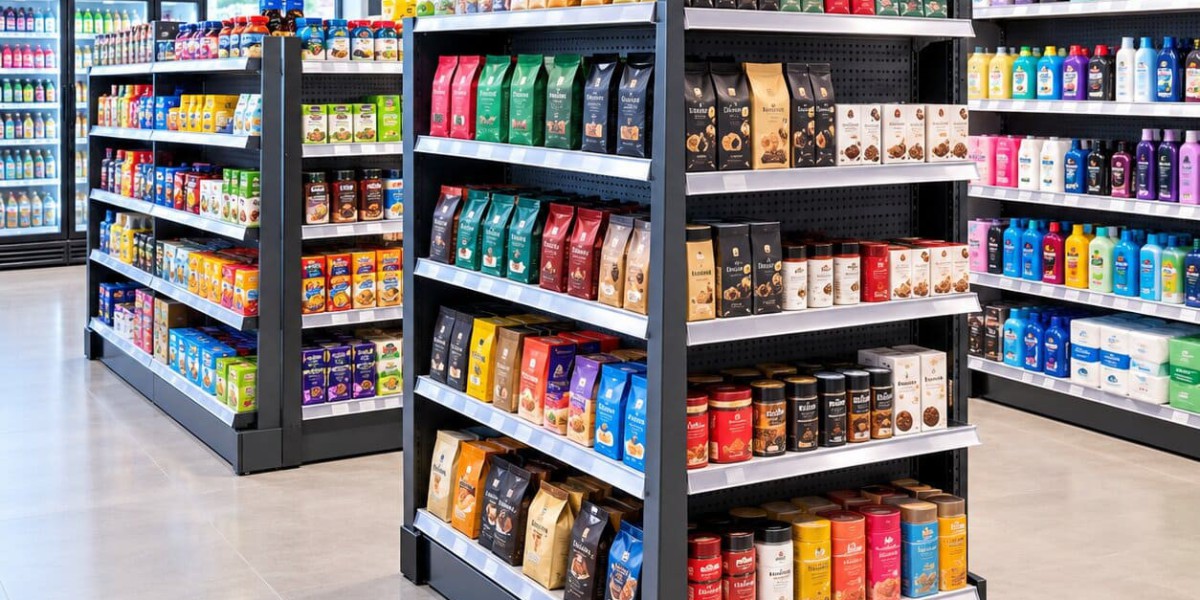

Choosing the right shop shelving can make a big difference to how a retail store looks, feels, and operates. Shelving provides a practical place to display merchandise while helping retailers use their available floor and wall space more effectively.
From independent shops and convenience stores to supermarkets and specialist retailers, every store has different shelving requirements. Product size, stock levels, available space, customer movement, and store layout all need to be considered before choosing a shelving system.
The right shelving doesn't simply hold products. It can help create clear product sections, improve visibility, and keep the shopping area organised.
What Is Shop Shelving?
Shop shelving is a retail fixture designed to store and display products in an accessible way. Depending on the design, shelving can be installed against walls, positioned in the middle of a shop, or used alongside other retail fixtures.
Common systems include wall shelving, gondola shelving, freestanding units, display shelves, and specialist shelving designed for particular products.
Retail shelving can also include adjustable shelves, price strips, hooks, baskets, and other accessories. These features allow retailers to adapt the display according to their stock.
Why Is Shop Shelving Important for Retail Stores?
Good shelving helps retailers make better use of their available space. Products can be arranged at different heights, allowing more merchandise to be displayed without covering large areas of the shop floor.
Shelving also gives customers a clear view of products. When similar items are grouped together, shoppers can browse more easily and compare different options.
For staff, organised shelving can make restocking and stock checks more straightforward. Clear product sections can also help maintain a tidy store throughout the day.
Which Shop Shelving Is Suitable for Different Stores?
The most suitable shelving depends on the type of store and products being sold.
Convenience stores may need compact shelving with multiple adjustable levels for packaged food, drinks, household goods, and everyday essentials. Clothing and specialist retailers may require wider shelves or display fixtures designed around their merchandise.
Supermarkets and larger stores often use gondola shelving to create central aisles and separate product categories. Smaller independent retailers may combine wall shelving with freestanding units to maximise available space.
The important thing is to select a system that matches the products rather than choosing shelving based on appearance alone.
Can Shop Shelving Be Used Against Walls?
Yes. Wall shelving is a practical option for retailers who want to use perimeter space for product displays.
Single-sided shelving can sit against walls while leaving the central floor area open for customers and other fixtures. This can be especially useful in smaller shops where every section of floor space matters.
Wall shelving can also be combined with central gondola units to create a complete retail display system.
What Is Gondola Shop Shelving?
Gondola shop shelving is a freestanding system that can be positioned in the middle of a retail store. Depending on the configuration, it can provide product displays on one or both sides.
Double-sided gondola shelving is often used to create island displays and shopping aisles. Single-sided versions can be positioned against walls or other surfaces.
Because the shelves can often be adjusted, gondola systems can accommodate products of different sizes and help retailers change displays when their stock range changes.
How Can Adjustable Shop Shelving Help?
Adjustable shelving gives retailers more control over product presentation. Shelves can be positioned to create suitable gaps for small, medium, or larger products.
This flexibility can prevent wasted vertical space. For example, smaller packaged products don't necessarily need the same shelf height as larger containers or boxes.
Adjustable shelving can also make seasonal changes easier. When a store introduces new merchandise, the shelf configuration can be changed instead of replacing the entire fixture.
What Should You Consider When Buying Shop Shelving?
Before choosing shelving, look at the store layout and the products you need to display.
Consider the following:
Available space: Measure wall and floor areas before selecting units.
Product dimensions: Check the width, depth, and height of merchandise.
Storage capacity: Consider how much stock each bay needs to hold.
Shelf adjustment: Adjustable levels can provide greater flexibility.
Single or double-sided: Choose based on whether the shelving will sit against a wall or in the middle of the shop.
Accessories: Price strips, hooks, baskets, and other fittings may improve functionality.
Future requirements: Modular systems can make future expansion easier.
Planning these details first can help you avoid choosing shelving that doesn't suit the store.
Can Shop Shelving Improve Product Presentation?
Well-organised shelving can make products easier to see and compare. Shelves provide defined spaces where products can be grouped by category, size, brand, or use.
Good product presentation also depends on shelf height and spacing. Products should be easy for customers to reach without creating an overcrowded appearance.
Price strips and shelf accessories can further improve organisation by giving each product area a clear structure.
How Can Shelving Help Maximise Retail Floor Space?
Retailers often need to balance product capacity with comfortable customer movement. Shop shelving can help by using vertical space rather than relying entirely on floor-level displays.
Wall-mounted or single-sided units can make use of perimeter areas, while double-sided shelving can create product displays within central aisles.
A well-planned layout can therefore provide more display capacity without filling every part of the shop with separate fixtures.
Is Shop Shelving Suitable for Small Shops?
Yes. Smaller stores can benefit from shelving that makes efficient use of limited space.
Compact units, wall shelving, and adjustable systems can help retailers display a useful range of products without making the store feel overcrowded.
The layout is particularly important in a small shop. Shelving should leave enough room for customers to move between displays, access products, and reach the checkout.
How Do You Plan a Shop Shelving Layout?
Start by measuring the complete retail area. Mark entrances, exits, checkout points, doors, columns, and other permanent features.
Next, consider where different product categories should be placed. Related products can be grouped together, while frequently purchased items can be positioned in accessible areas.
Leave suitable space between shelving runs for customer movement. It's also worth considering where staff will need to restock products.
A simple layout plan can help you understand how many shelving bays are required before purchasing the fixtures.
Where Can You Find Shop Shelving for Retail Use?
Retailers can choose from different shelving configurations depending on their store size, product range, and layout requirements. Shop Solutions Midlands provides retail shelving solutions designed for practical product storage and presentation.
Whether you're fitting out a new shop or replacing existing fixtures, selecting shelving based on your actual retail requirements can make the installation more useful in the long run.
Why Is the Right Shop Shelving Worth Considering?
Shop shelving is one of the most frequently used fixtures in a retail environment. It needs to hold products securely while keeping them visible, accessible, and organised.
The right combination of shelving can also help define different areas of the store and make better use of available space. Adjustable and modular systems provide additional flexibility as product ranges change.
By considering store dimensions, merchandise, customer movement, storage requirements, and future needs, retailers can create a shelving setup that supports both everyday operations and a well-organised shopping environment. Read more: Retail Equipment UK






