
INTRODUCTION
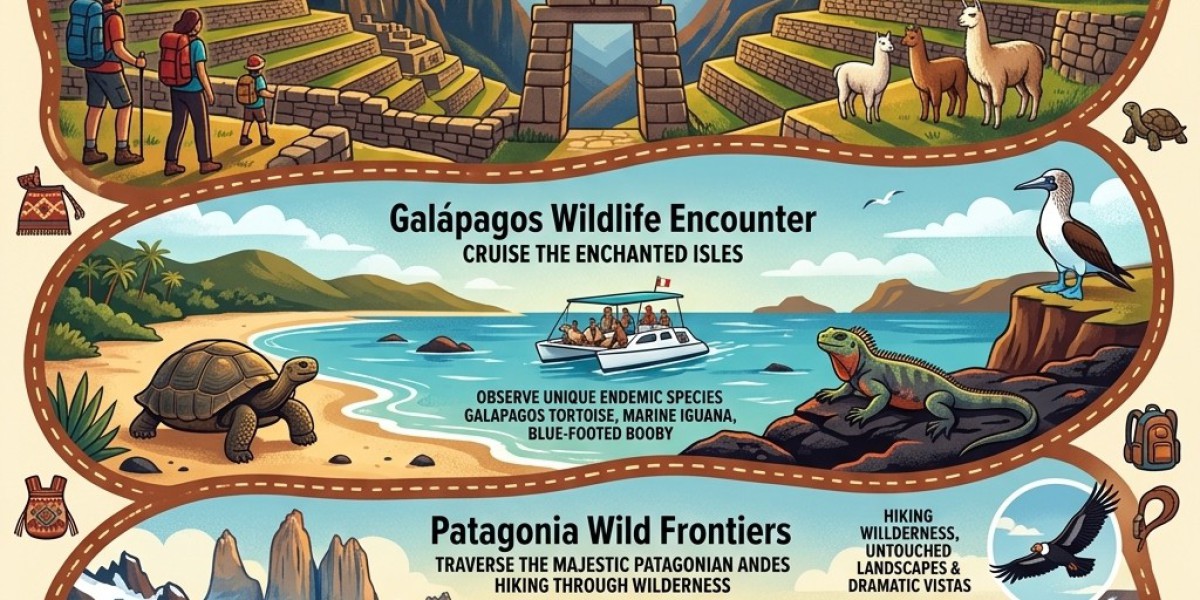
Travelers planning Patagonia Vacation Packages From Mumbai may wonder whether they can extend their South American adventure to include two of the continent's most famous attractions: Machu Picchu in Peru and the Galápagos Islands in Ecuador. Although neither destination is geographically located in Patagonia, they can potentially be combined with a wider South American itinerary. Doing so requires careful planning because Patagonia, Machu Picchu, and the Galápagos Islands are spread across different countries and involve multiple flights and transportation arrangements. With sufficient travel time, however, travelers can create an itinerary that combines Patagonian landscapes with Peru's ancient heritage and Ecuador's remarkable island wildlife.
Understanding the Geography
Before combining these destinations, it is important to understand where they are located.
Patagonia is a large region at the southern end of South America, primarily covering areas of Argentina and Chile. Popular destinations include El Calafate, El Chaltén, Puerto Natales, Torres del Paine, and Ushuaia.
Machu Picchu is located in Peru, in the Andes near Cusco. It is famous for its Inca heritage, mountain scenery, and archaeological significance.
The Galápagos Islands are part of Ecuador and lie in the Pacific Ocean, approximately 1,000 kilometers from mainland Ecuador. The archipelago is known for its distinctive wildlife and protected natural environments.
Because these destinations are far apart, they are not normally included together in a short Patagonia-focused itinerary.
Can All Three Destinations Be Combined?
Yes, travelers can potentially combine Patagonia, Machu Picchu, and the Galápagos Islands into a single extended South American holiday.
However, this would be a multi-country itinerary rather than a conventional Patagonia-only vacation.
A possible journey could include:
- Mumbai to a major South American gateway
- Patagonia in Argentina and/or Chile
- Peru and Machu Picchu
- Ecuador and the Galápagos Islands
- Return journey to India
The order can vary depending on international flight availability, regional connections, travel dates, and the number of days available.
Because several flights are involved, travelers should allow sufficient time between destinations rather than creating an overly tight schedule.
Adding Machu Picchu to a Patagonia Itinerary
Machu Picchu can provide a completely different experience from Patagonia.
Patagonia is associated with glaciers, mountains, lakes, forests, hiking trails, and dramatic wilderness. Machu Picchu introduces ancient architecture, Andean culture, archaeological exploration, and high-altitude landscapes.
Travelers visiting Machu Picchu will generally need to travel through Cusco and the Sacred Valley area before reaching the archaeological site.
A typical extension may include:
- Arrival in Lima
- Flight to Cusco
- Acclimatization in Cusco
- Sacred Valley sightseeing
- Journey toward Machu Picchu
- Machu Picchu visit
- Return to Cusco
- Flight onward to the next destination
The exact transportation arrangements can vary according to the selected itinerary.
Adding the Galápagos Islands
The Galápagos Islands add another distinctive element to the trip.
Unlike Machu Picchu, which is primarily associated with cultural heritage and archaeology, the Galápagos experience focuses heavily on wildlife and nature.
Travelers may encounter species such as giant tortoises, marine iguanas, sea lions, penguins, and a wide variety of seabirds. Wildlife experiences depend on the island visited, season, local conditions, and excursion arrangements.
Travelers typically reach the Galápagos through mainland Ecuador, commonly connecting through Quito or Guayaquil before continuing to the islands.
The Galápagos portion can involve either island-based stays or an expedition-style cruise, depending on the travel plan.
How Long Would a Combined Trip Take?
A combined Patagonia, Machu Picchu, and Galápagos itinerary generally requires considerably more time than a standard Patagonia holiday.
Travelers need to account for:
- International flights from India
- Regional flights within South America
- Airport transfers
- Time in Patagonia
- Travel to Cusco and Machu Picchu
- Time in mainland Ecuador
- Flights to and from the Galápagos
- Island excursions or cruise days
- Rest and acclimatization time
A shorter itinerary may require travelers to select only a few highlights from each destination.
A longer trip provides more flexibility and allows travelers to explore each region without rushing.
Why Combine These Destinations?
Combining the three destinations can create a diverse South American travel experience.
Patagonia: Wilderness and Adventure
Patagonia offers dramatic natural landscapes. Travelers can explore glaciers, mountain valleys, turquoise lakes, forests, and national parks.
Popular experiences may include trekking, scenic drives, glacier excursions, boat trips, and wildlife observation.
Machu Picchu: History and Culture
Machu Picchu provides a cultural and archaeological dimension to the itinerary.
Travelers can explore the ancient Inca site while also discovering Cusco, the Sacred Valley, local markets, traditional food, and Andean culture.
Galápagos: Wildlife and Marine Experiences
The Galápagos Islands introduce a completely different environment.
Depending on the itinerary, travelers can participate in guided nature walks, snorkeling, boat excursions, wildlife observation, and coastal exploration.
Together, the three destinations cover adventure, heritage, landscapes, and wildlife.
How a Patagonia Group Tour Package Can Fit Into the Journey
A Patagonia Group Tour Package can form the Patagonia portion of a larger customized South American holiday.
Group travel can simplify arrangements within Patagonia, particularly when travelers need coordinated transportation between airports, hotels, national parks, and excursion points.
However, Machu Picchu and the Galápagos Islands would normally require separate regional arrangements because they are outside Patagonia.
Travelers can therefore structure the holiday as a combination of a Patagonia group itinerary and individually arranged or customized extensions.
Planning Flights Between Destinations
Flights are an important consideration when combining these destinations.
Patagonia itself is large, and travelers may use domestic flights to connect destinations such as Buenos Aires, El Calafate, Ushuaia, or other regional gateways depending on the itinerary.
Travel to Peru and Ecuador requires additional international or regional connections.
A possible routing could involve:
India → Argentina/Chile → Patagonia → Peru → Ecuador → Galápagos → Ecuador → India
Alternatively, travelers could visit Peru before Patagonia or place Ecuador at another point in the journey.
The best sequence depends on flight schedules, seasonal availability, overall travel duration, and package design.
Altitude Considerations in Peru
Machu Picchu itself is lower than Cusco, but travelers often spend time in Cusco, which is located at high altitude.
Travelers arriving from Patagonia should be aware that moving between destinations with significantly different elevations can affect comfort.
Allowing time for acclimatization in Cusco is important for many travelers.
Those with concerns about altitude should discuss their travel plans with an appropriate medical professional before departure.
Different Climate Zones
One of the biggest planning considerations is the difference in climate.
Patagonia can experience cool, windy, and rapidly changing conditions, depending on the location and season.
Cusco and the surrounding Andes have a different mountain climate, with conditions influenced by altitude and seasonal rainfall.
The Galápagos Islands have a tropical marine environment, although temperatures and wildlife conditions vary throughout the year.
As a result, travelers may need to pack for several climate zones during the same holiday.
Layered clothing, waterproof outerwear, comfortable walking shoes, sun protection, and lightweight warm-weather clothing may all be useful.
Can Families Combine the Destinations?
Families can potentially combine Patagonia, Machu Picchu, and the Galápagos Islands, but the itinerary should be paced carefully.
Children may enjoy the wildlife experiences in the Galápagos and the spectacular landscapes of Patagonia. Machu Picchu can also provide an engaging cultural and historical experience.
However, the number of flights and long travel days should be considered when planning a family itinerary.
A slower itinerary with adequate rest days may be more comfortable than attempting to cover too many destinations in a short period.
Is It Suitable for Senior Travelers?
Senior travelers can also consider a combined itinerary, provided the schedule matches their mobility and comfort levels.
Patagonia offers sightseeing experiences that do not always require strenuous trekking. Similarly, the Galápagos Islands provide different excursion levels depending on the island and activity.
Machu Picchu involves walking and uneven terrain, and the broader Cusco itinerary involves altitude considerations.
Travelers should discuss mobility requirements with their tour provider and choose suitable transportation and accommodation.
Environmental Considerations
Both Patagonia and the Galápagos Islands are environmentally sensitive destinations.
Travelers should follow local regulations and guidance when visiting national parks, protected areas, and wildlife habitats.
In the Galápagos, visitors should remain on designated routes, avoid touching wildlife, and follow guide instructions.
In Patagonia, travelers should stay on marked trails, avoid disturbing wildlife, carry waste responsibly, and respect protected areas.
Responsible tourism helps preserve these destinations for future visitors.
Planning From Mumbai
Travelers departing from Mumbai should begin planning well in advance because this is a complex multi-country journey.
A travel plan should account for:
- International flight connections
- Visa and entry requirements for each country
- Domestic and regional flights
- Hotel nights
- Airport transfers
- Train or other transport arrangements around Machu Picchu
- Galápagos flights and park-related requirements
- Excursions
- Travel insurance
- Baggage arrangements
- Sufficient buffer time between connections
Entry and transit requirements can change, so travelers should verify current requirements before departure.
Can the Trip Be Customized?
Yes. A longer South American holiday can be customized around the destinations that interest the traveler most.
For example, an adventure-focused traveler might spend more time in Patagonia and add shorter visits to Machu Picchu and the Galápagos.
A traveler interested in culture could allocate additional time to Cusco and the Sacred Valley.
A wildlife enthusiast might dedicate more days to the Galápagos Islands.
The itinerary can therefore be structured according to interests, available time, budget, and preferred activity level.
Using Patagonia Group Tour Packages
Patagonia Group Tour Packages can be useful for travelers who want organized sightseeing in the southern part of the continent while potentially adding independent extensions elsewhere.
A group itinerary can cover transportation and excursions within Patagonia, while the Peru and Ecuador portions can be arranged as extensions.
For travelers coming from India, this approach can provide a balance between organized group travel and a customized overall holiday.
What About Patagonia Group Tour Packages From India?
Travelers considering Patagonia Group Tour Packages From India should clarify whether the advertised package covers only Patagonia or includes other South American countries.
A Patagonia package generally focuses on destinations within Argentina and/or Chile. Machu Picchu and the Galápagos Islands are separate destinations in Peru and Ecuador.
If travelers want all three experiences, they should request a customized multi-country itinerary rather than assuming that these destinations are automatically included.
Things to Check Before Booking
Before confirming a combined trip, travelers should review:
Itinerary Duration
Make sure enough days are available for all three regions.
Flight Connections
Check regional flight schedules and avoid unnecessarily tight connections.
Accommodation
Confirm hotel locations and room arrangements in every destination.
Activity Level
Review hiking, walking, boating, and wildlife-excursion requirements.
Entry Requirements
Check the latest entry and transit requirements for Argentina, Chile, Peru, and Ecuador as applicable to the itinerary.
Galápagos Arrangements
Confirm whether the itinerary includes an island hotel stay, cruise, guided excursions, park-related charges, and flights from mainland Ecuador.
A Diverse South American Adventure
Combining Patagonia with Machu Picchu and the Galápagos Islands creates a journey across several distinct environments.
Travelers can move from Patagonian glaciers and mountains to the ancient Andes and then to the wildlife-rich islands of Ecuador.
The experience can include adventure, cultural discovery, wildlife observation, scenic landscapes, and local cuisine.
The key is to allow enough time and avoid treating the three destinations as if they were close together.
Conclusion
Travelers can potentially combine Patagonia, Machu Picchu, and the Galápagos Islands in one extended South American vacation, but these destinations require a customized multi-country itinerary rather than a standard Patagonia-only package. Machu Picchu adds Andean history and culture, while the Galápagos Islands provide exceptional wildlife and marine experiences. Travelers should plan sufficient time for flights, transfers, altitude adjustment, climate changes, and entry requirements. With careful itinerary planning, Anubhav Vacations can help organize a broader South American journey that combines the distinct experiences of Patagonia, Peru, and Ecuador.
Frequently Asked Questions
1. Are Machu Picchu and the Galápagos Islands part of Patagonia?
No. Patagonia is primarily located in southern Argentina and Chile. Machu Picchu is in Peru, while the Galápagos Islands belong to Ecuador. They can be combined through a wider multi-country South American itinerary.
2. How much time is needed to combine Patagonia, Machu Picchu, and the Galápagos Islands?
The required duration depends on the number of destinations and activities selected. A comfortable itinerary generally needs substantially more time than a Patagonia-only trip because multiple regional flights and transfers are involved.
3. Can Machu Picchu be added to a Patagonia group tour?
Yes. Machu Picchu can potentially be added as a Peru extension to a Patagonia-focused itinerary. The extension normally involves travel through Lima and Cusco before visiting the archaeological site.
4. Can the Galápagos Islands be added to Patagonia Group Tour Packages From India?
Yes, the Galápagos Islands can potentially be added as an Ecuador extension. However, Patagonia Group Tour Packages From India may focus only on Argentina and Chile, so travelers should confirm whether Peru and Ecuador extensions can be arranged.
5. Is a combined Patagonia, Machu Picchu, and Galápagos itinerary suitable for families?
It can be suitable for families when the itinerary is paced appropriately. Families should consider the number of flights, walking requirements, altitude in Cusco, and the activity level of Galápagos and Patagonia excursions.