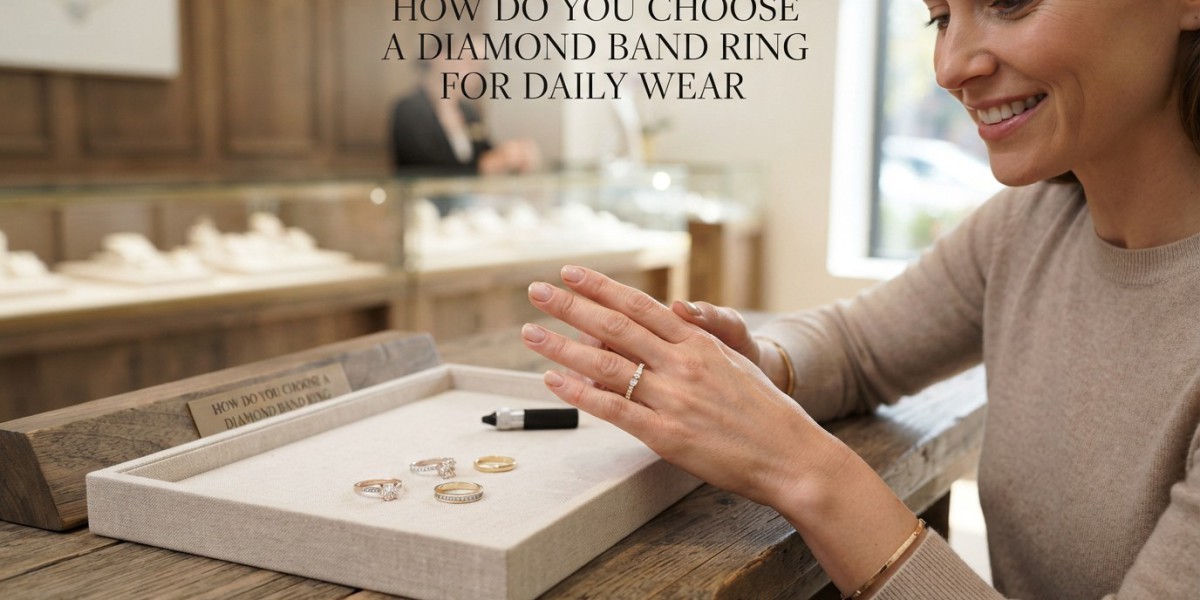

A diamond band ring, the kind you actually keep on all day, has to handle way more than “nice jewelry” moments. It gets scrubbed with dish soap, bumped into desk edges, tossed around in gym bags, and generally treated like a thing you just wear and forget. So when you pick one, you can’t only chase what sparkles brightest under store lighting. You have to look at how it’s built, how the diamonds sit, and what the metal is doing, not just the overall shine. And whether you’re stacking it next to an engagement ring or wearing it solo, the decision turns into a pretty small list of practical details. Price matters, sure, but it is usually not the best starting point.
What Makes a Diamond Band Ring Ideal for Everyday Use?
The setting really leads the conversation here. Diamonds that sit flush against the metal or are tucked into channels tend to handle daily impacts better than stones sitting up on higher prongs. Prongs can look super refined, but they also catch on fabric, tug hair, and take little hits on countertops that add up over years. Those tiny moments can loosen a stone or bend metal slightly out of alignment. A channel or bezel style keeps the diamonds more protected while still letting in enough light, which is why so many people who want a ring they never remove end up here. Tension settings can look sleek too, but they usually need more frequent professional checkups, because the stone basically depends on the metal’s spring for security, not on claws or a solid wall around it.
Metal choice is almost equally important, maybe even a little more. Platinum and 14k or 18k gold, in white, yellow, or rose, are the usual go-tos because they resist scratches and dents without turning into a wobbly mess. Platinum is denser and tends to resist scratching a bit better long-term, though it does develop a soft patina that some people love and others want removed. Gold at 14k is slightly tougher than 18k, mostly because it includes more alloy, and that makes it a smart match for hands that are constantly moving—cooking, typing, lifting, gardening, you name it. White gold is worth a second look as well, since the bright look usually comes from a rhodium coating that gradually fades from friction. That means you might need re-rhodiuming every year or two, which becomes an ongoing thing you pay for. For someone who uses their hands hard all day, 14k gold or platinum is often the practical route, not just for durability but also to reduce repeat trips back to the jeweler.
Comfort and Fit Are Easy to Underestimate
A ring can feel perfect in the store, then feel totally different after eight hours. Band width plays a big role. Wider bands spread pressure more evenly and tend to sit more stable, while narrow bands can rotate or press into skin if sizing is even a little off. Comfort-fit bands help too, because they’re shaped with a rounded interior edge instead of a flat one. They slide on more easily and usually cause less irritation over a full day. If you plan to stack it with another band or an engagement ring, try them on together first. Two rings that fit nicely alone can feel crowded or sit a little crooked once they’re actually paired up.
Sizing gets less attention than it really should. Fingers shift a little, you know, with temperature, time of day, and even hydration, so measuring later on, when they’re usually at their largest, tends to give you the more accurate fit. It also helps if you size while your hands are at a normal warmth, not right after a workout or a cold walk outside, because both extremes can throw the measurement off by half a size or more. If it’s too loose, the ring starts turning constantly, or it can slide off mid-task. If it’s too tight, well, it becomes a real headache to remove if your fingers swell even a bit. Most jewelers include one free resizing within a set window after purchase, but it’s still smart to verify that directly, rather than just assuming.
Diamond Quality Versus Real-World Practicality
For a ring meant to be worn constantly, chasing top clarity and color grades usually isn't the smartest use of a budget. VS or SI clarity diamonds are typically invisible to the eye once set, and the money saved can go toward a sturdier setting or better metal instead. A cut is the one place worth spending more, since a well-cut stone throws light beautifully even at a smaller carat weight, while a poorly cut one looks flat no matter how large it is. That trade-off matters more for a daily piece, since it's seen under ordinary kitchen and office lighting far more often than under a jeweler's spotlight. Some shoppers also look at lab-grown diamonds or moissanite for a daily band, since both offer more size and sparkle per dollar than a natural stone of comparable quality, without changing anything about how the setting or metal should be chosen.
Total carat weight across the band is worth more thinking than just one crisp number sitting on a tag. It’s funny, but a row of smaller, nicely matched diamonds often comes off more “fuller” and more lively than one bigger stone, and it usually costs less too. Plus, it spreads the risk around a bit, so if something ever happens to the ring, you’re not all in on one piece. A lot of people just skip insurance, but honestly that part matters. A rider on a homeowner’s or renter’s policy, or a separate jewelry policy, can cover loss or damage for a pretty modest yearly cost, and it matters more for a thing worn every day than for a ring that stays in a box most of the year. Also, it’s smart to request a written appraisal from the jeweler when you buy it, since that’s the document insurers typically want on file if you ever need to actually file a claim.
The right choice really boils down to a plain look at how you live day to day, not what catches the light best inside a display case. Someone who works with their hands all day needs a different band than someone who’s mostly parked at a desk, from nine to five. If you can, try on different settings and widths in person, and ask straight up about resizing plus warranty terms. Don’t be shy about choosing durability over maximum sparkle if that matches your real routine. A well-chosen diamond band ring earns its place as an everyday piece because it fits the person wearing it, not because it looks the best in a photo in the store.