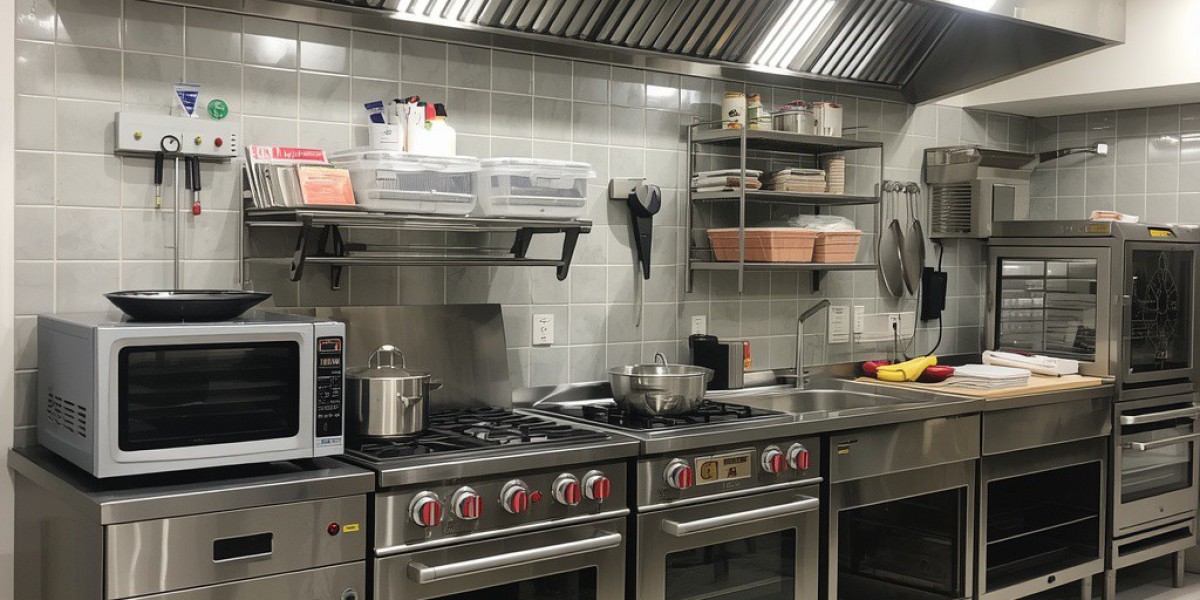

For this reason, evaluating Hotel Equipment Suppliers should involve more than comparing prices, dimensions or individual product features. Equipment needs to work as part of a coordinated kitchen system.
Three technical areas deserve particular attention:
Equipment Interoperability → Space Tolerance → Workflow Coordination
When these factors are considered during planning, hotels can reduce equipment conflicts, improve accessibility and create a more practical operating environment.
What Is Equipment Interoperability?
Equipment interoperability refers to how effectively different equipment units can function together within the same kitchen environment.
Commercial kitchens commonly contain cooking equipment, preparation machines, refrigeration systems, washing equipment, work tables, storage units and exhaust systems. Although each unit may perform its own function, their connections and operating requirements often overlap.
Interoperability can involve:
- Utility compatibility
- Physical compatibility
- Workflow compatibility
- Connection-point coordination
- Control-system compatibility where applicable
- Maintenance access
- Cleaning requirements
- Operational sequencing
For example, an equipment unit may have suitable production capacity but still create problems if its service connections interfere with an adjacent machine.
Therefore, equipment should be evaluated as part of the complete kitchen layout.
Why Interoperability Matters in Hotel Kitchen Equipment
Hotel kitchens frequently operate under changing demand conditions. Breakfast, lunch, dinner, banquets, room service and special events can create different production patterns.
Equipment that works independently during low demand may create workflow problems when several units operate simultaneously.
Interoperability planning helps answer questions such as:
- Can adjacent equipment operate without obstruction?
- Are utility connections positioned correctly?
- Can staff access controls easily?
- Can equipment be cleaned without moving other units?
- Can technicians reach service components?
- Does one process create a bottleneck for another?
- Can equipment be replaced without major layout changes?
These questions are particularly relevant when working with Hotel Kitchen Equipment Suppliers on new installations or renovation projects.
1. Physical Compatibility Between Equipment
Physical compatibility is one of the first areas to verify.
Equipment dimensions should be compared with:
- Available floor area
- Door and passage dimensions
- Wall positions
- Column locations
- Counter heights
- Adjacent equipment
- Service routes
- Cleaning areas
- Staff movement paths
A manufacturer's equipment dimension should not be considered in isolation.
The surrounding working space is equally important.
A machine that technically fits into a room may still be unsuitable if operators cannot comfortably access it or maintenance personnel cannot reach its service points.
2. Space Tolerance and Installation Accuracy
Space tolerance refers to the practical allowance required between equipment, walls, utilities and surrounding structures.
In real installations, site conditions can differ from drawings because of:
- Construction tolerances
- Wall finishes
- Floor conditions
- Drain locations
- Utility routes
- Structural elements
- Existing equipment
- Access restrictions
For this reason, final measurements should be verified before equipment fabrication or installation wherever possible.
A few centimetres of unexpected interference can affect:
- Door opening
- Drawer movement
- Operator access
- Cleaning
- Maintenance
- Utility connections
- Equipment removal
Space planning should therefore consider both equipment dimensions and operating clearance.
3. Equipment Placement Accuracy
Equipment placement influences workflow efficiency.
A practical placement strategy considers the sequence of activities rather than simply filling available floor space.
For example:
Receiving → Storage → Preparation → Cooking → Holding → Service → Washing → Waste Handling
The exact sequence varies by hotel and kitchen type, but the principle remains the same: equipment should support the movement of food, staff, utensils and waste.
Poor placement can create unnecessary backtracking and crossing movements.
4. Workflow Coordination
Workflow coordination connects equipment selection with actual kitchen operations.
Before finalising equipment placement, project teams can map:
- Raw-material movement
- Preparation movement
- Cooking movement
- Plating/service movement
- Utensil movement
- Cleaning movement
- Waste movement
- Staff movement
The goal is to identify where different activities interact.
If two high-traffic processes repeatedly cross each other, the problem may not be the equipment itself. It may be the relationship between equipment locations.
This is why Hotel Kitchen Equipment Manufacturer projects should be considered from an operational perspective as well as a fabrication perspective.
5. Staff Movement and Reach Zones
Kitchen equipment should be accessible to the people who operate it.
Important considerations include:
- Working height
- Control location
- Handle position
- Door swing
- Reach distance
- Loading and unloading direction
- Movement around equipment
- Visibility of operating controls
A frequently used control should not be placed where operators must repeatedly reach around another machine.
Similarly, equipment doors and drawers should not unnecessarily block important movement paths.
Human interaction with equipment is an important part of kitchen performance.
6. Connection-Point Alignment
Utility connections need to align with the actual equipment installation.
Depending on the equipment, this may include:
- Electrical connection
- Gas connection
- Water inlet
- Drain outlet
- Exhaust connection
- Other specialised services
Connection-point alignment should be reviewed before installation.
Misalignment can result in:
- Additional site modification
- Delayed installation
- Restricted service access
- Unnecessary pipe or cable routing
- Difficult maintenance
A coordinated technical drawing can help reduce these problems.
7. Adjacent Equipment Compatibility
Two machines can individually meet their specifications but still create problems when installed next to each other.
Adjacent equipment should be reviewed for:
- Heat transfer
- Moisture exposure
- Door movement
- Cleaning access
- Vibration
- Service clearance
- Utility routing
- Operator movement
For example, equipment producing significant heat may require appropriate consideration of nearby refrigeration or temperature-sensitive systems.
The solution depends on the actual equipment and site conditions, so technical specifications should be reviewed before installation.
8. Cleaning-Zone Coordination
Hygiene depends partly on how easily the kitchen environment can be cleaned.
Equipment placement should allow access to:
- Working surfaces
- Floor areas
- Drain points
- Behind or beside equipment where required
- Removable components
- Splash-prone areas
- Waste-handling zones
Poorly coordinated equipment can create inaccessible spaces where dirt, food residue or moisture can accumulate.
Cleaning requirements should therefore be considered during layout planning rather than after installation.
9. Equipment Interface Checks
An equipment interface is any point where equipment interacts with another system.
Interfaces can include:
- Equipment-to-equipment
- Equipment-to-utility
- Equipment-to-building
- Equipment-to-workflow
- Equipment-to-maintenance access
Before installation, project teams can create an interface checklist.
For every major equipment item, verify:
What connects to it?
What operates next to it?
Who operates it?
Who services it?
How is it cleaned?
What happens if it stops working?
This simple approach can reveal conflicts before they become installation problems.
10. Installation Sequencing
Equipment should not always be installed in an arbitrary order.
Installation sequencing may depend on:
- Fixed utility infrastructure
- Exhaust systems
- Heavy equipment
- Built-in equipment
- Work tables
- Movable equipment
- Final service connections
The sequence should be coordinated with the project schedule.
Poor sequencing can cause equipment to be installed before necessary connections or access routes are ready, resulting in additional labour and delays.
11. Maintenance Accessibility
Long-term kitchen performance depends partly on how easily equipment can be inspected and maintained.
Before installation, review access to:
- Motors
- Pumps
- Filters
- Electrical panels
- Valves
- Controls
- Refrigeration components
- Drain connections
- Other service components
Maintenance access should be preserved even after neighbouring equipment is installed.
This is especially important in compact hotel kitchens where every square metre is heavily utilised.
12. Equipment Replacement and Future Compatibility
Kitchen planning should also consider what happens several years after installation.
Equipment may eventually require:
- Replacement
- Upgrade
- Relocation
- Additional capacity
- Component changes
A layout that leaves no practical route for equipment removal can create unnecessary future difficulties.
Future compatibility can be reviewed through:
- Access routes
- Door dimensions
- Service clearance
- Utility flexibility
- Modular layouts
- Expansion space
This is one reason lifecycle thinking is useful when evaluating Hotel Equipment Suppliers.
13. Operational Handover
The project should not end when equipment is physically installed.
Operational handover can include:
- Equipment identification
- Utility information
- Operating instructions
- Cleaning instructions
- Maintenance information
- Warranty documentation
- Test records
- Commissioning records
- Service contacts
The operations and engineering teams should understand the installed equipment before the kitchen enters regular production.
14. Performance Verification After Installation
Actual site conditions can differ from design assumptions.
Performance verification can therefore examine:
- Equipment operation
- Capacity under intended conditions
- Utility connections
- Controls
- Temperature where applicable
- Drainage
- Exhaust coordination
- Accessibility
- Workflow interaction
If a problem is identified during commissioning, it is generally easier to address it before full-scale kitchen operations begin.
15. How Hotel Equipment Suppliers Can Add Technical Value
A technically capable supplier can contribute beyond equipment manufacturing or delivery.
Useful supplier support may include:
- Equipment selection assistance
- Dimension confirmation
- Utility requirement documentation
- Layout coordination
- Fabrication information
- Installation guidance
- Testing support
- Commissioning assistance
- Maintenance documentation
- Spare-parts information
This type of coordination can help reduce the gap between equipment specifications and actual site requirements.
Hotel Kitchen Equipment Suppliers in India
When evaluating Hotel Kitchen Equipment Suppliers in India, buyers can examine how effectively the supplier handles the complete equipment lifecycle.
Important evaluation areas include:
- Requirement understanding
- Technical specifications
- Dimensional accuracy
- Utility compatibility
- Fabrication quality
- Hygiene considerations
- Installation coordination
- Service accessibility
- Equipment testing
- Documentation
- Commissioning support
- Maintenance requirements
- Future replacement considerations
The supplier should be assessed according to the specific requirements of the hotel project rather than using a single generic checklist for every kitchen.
Hotel Kitchen Equipment Manufacturer in India: Why Technical Coordination Matters
A Hotel Kitchen Equipment Manufacturer in India may be involved in custom fabrication, standard equipment supply or a combination of both.
Where equipment is customised, technical coordination becomes especially important because dimensions, connections and placement may need to match the available site conditions.
Before fabrication, project teams should verify:
- Approved dimensions
- Equipment locations
- Utility positions
- Working clearances
- Service access
- Material requirements
- Interface requirements
- Installation sequence
This helps reduce the risk of producing equipment that technically meets a specification but does not integrate properly with the final kitchen environment.
A Practical Equipment Coordination Framework
A simple technical framework can be used before final equipment approval:
Step 1: Understand the Operation
Identify what the kitchen produces, how much it produces and when demand is highest.
Step 2: Map the Workflow
Document the movement of food, staff, utensils, cleaning materials and waste.
Step 3: Verify Equipment Dimensions
Check equipment dimensions against actual site measurements.
Step 4: Review Interfaces
Check utilities, adjacent equipment, service access and connection points.
Step 5: Check Space Tolerance
Allow practical clearance for operation, cleaning, maintenance and future replacement.
Step 6: Verify Installation
Confirm that equipment is positioned and connected according to approved requirements.
Step 7: Commission the Equipment
Test the equipment and its interaction with the kitchen environment.
Step 8: Document the Installation
Maintain technical records for future maintenance and replacement.
Conclusion
Hotel kitchen performance depends on how well individual equipment units work together as a complete system.
Equipment interoperability helps ensure that machines, utilities and operational processes are compatible. Space tolerance provides room for practical installation, cleaning, maintenance and replacement. Workflow coordination connects equipment placement with the actual movement of food, staff and materials.
For this reason, selecting Hotel Equipment Suppliers should involve more than comparing product specifications. A technically coordinated approach should examine the relationship between equipment, site conditions, utilities, human movement, maintenance and future requirements.
A useful planning sequence is:
Requirement → Workflow → Equipment → Space → Interfaces → Installation → Commissioning → Maintenance → Lifecycle
This approach provides a practical foundation for developing hotel kitchens that are easier to operate, maintain and adapt over time.
FAQs
1. What is equipment interoperability in a hotel kitchen?
Equipment interoperability describes how effectively different equipment units work together with utilities, surrounding equipment and operational processes within the kitchen.
2. Why is space tolerance important when installing kitchen equipment?
Space tolerance allows for practical differences between drawings and actual site conditions while preserving operating, cleaning, maintenance and service access.
3. How does workflow coordination affect kitchen performance?
Workflow coordination helps align equipment placement with food, staff, utensil, cleaning and waste movement, reducing unnecessary movement and potential process conflicts.
4. What should be checked before installing hotel kitchen equipment?
Teams should verify dimensions, utility connections, clearances, equipment interfaces, access routes, maintenance space, installation sequence and site conditions.
5. What should buyers examine when evaluating Hotel Kitchen Equipment Suppliers in India?
Buyers can review technical specifications, dimensional coordination, utility compatibility, fabrication quality, testing, installation support, documentation, commissioning and long-term maintenance considerations.






