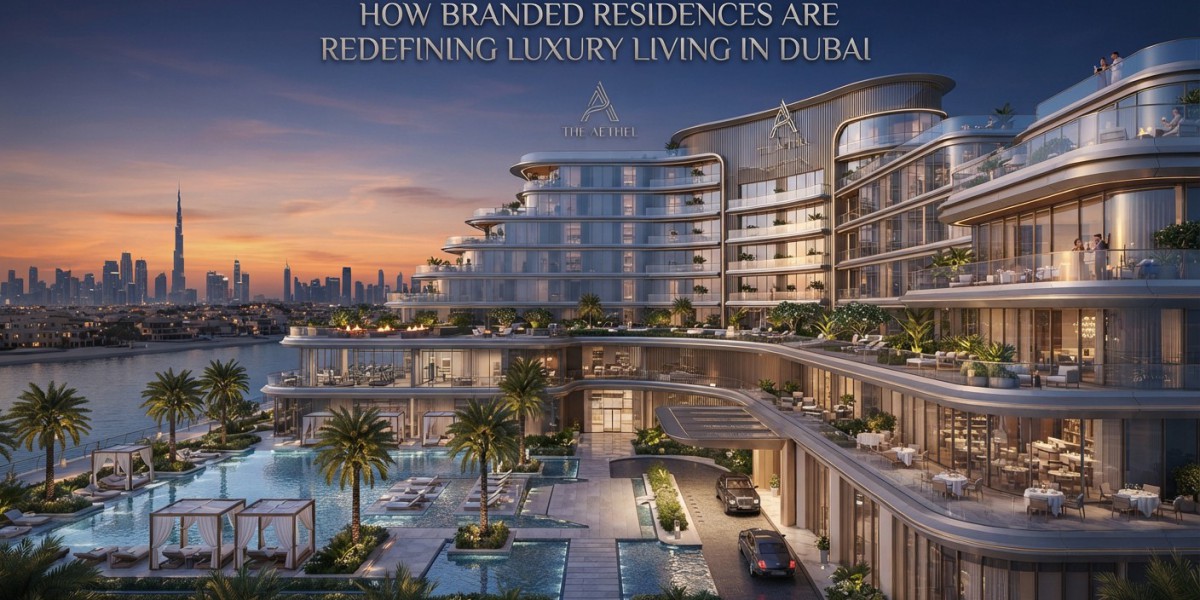

Dubai's luxury residential market has evolved beyond large apartments, impressive views, and premium addresses. Today, a growing segment of buyers is interested in homes that combine architecture, hospitality, design, privacy, and personalized services within a single residential experience.
This shift is creating new opportunities across property zone real estate and the wider Dubai market, particularly as international buyers become more familiar with the concept of branded residences.
What Makes a Branded Residence Different?
A branded residence is generally more than a conventional luxury apartment.
The concept combines residential ownership with elements associated with a recognized hospitality, fashion, automotive, or lifestyle brand. Depending on the project, residents may have access to hotel-style services, concierge support, curated amenities, housekeeping, restaurants, wellness facilities, and other lifestyle services.
The idea is to create an experience around the property rather than simply selling a physical unit.
This distinction is particularly relevant in Dubai, where luxury residential developments increasingly compete through design, service, exclusivity, and the overall resident experience.
Dubai Has Become a Natural Market for Branded Living
Dubai's international population and established luxury hospitality sector have created an environment where branded residential concepts can develop rapidly.
The city already has a strong ecosystem of luxury hotels, restaurants, private clubs, shopping destinations, wellness facilities, and high-end residential communities.
Branded residences bring several of these elements together.
For international buyers who may not spend the entire year in Dubai, the hospitality component can be especially attractive. A professionally managed residence can offer a familiar level of service while maintaining the advantages of private ownership.
At the same time, full-time residents may value the convenience of having premium services and amenities available within their own building or community.
Design Has Become Part of the Investment Story
Architecture plays an increasingly important role in luxury residential development.
A distinctive building can create an identity that separates it from the large number of conventional towers across a major city.
This is particularly relevant when internationally recognized architects or designers are involved.
Rather than treating architecture as a purely visual feature, many modern developments use design to influence the way residents experience space. Natural light, views, landscaping, indoor-outdoor connections, privacy, circulation, and material selection can all contribute to the character of a residence.
In the ultra-luxury segment, these details can become part of the property's identity.
The Alba Shows How Design and Hospitality Can Come Together
A notable example of this approach is The Alba Furnished Residences on Palm Jumeirah.
The development brings together OMNIYAT's luxury residential approach with the Dorchester Collection concept, while its architectural design is associated with Zaha Hadid Architects and its furnished residences with YODEZEEN. The project brochure describes the furnished collection as being designed around refined interiors, well-being, and a highly curated residential experience.
The significance of a project such as this goes beyond its location.
It demonstrates how Dubai's premium residential market is increasingly combining architecture, interiors, hospitality, and lifestyle into one proposition.
Why Palm Jumeirah Remains Important
Palm Jumeirah has developed into one of Dubai's most recognizable residential and hospitality destinations.
Its waterfront setting provides something that cannot easily be reproduced in an inland development: direct access to a distinctive coastal environment combined with proximity to Dubai's established leisure, retail, hospitality, and entertainment infrastructure.
This makes Alba Residences Palm Jumeirah part of a broader evolution in how waterfront property is positioned.
The value proposition is not simply about living beside the sea. It can also involve privacy, views, access to hospitality, recreational facilities, restaurants, and the wider lifestyle associated with Palm Jumeirah.
Furnished Residences Offer Another Level of Convenience
Fully furnished residences can appeal to a particular group of buyers who prefer a more complete ownership experience.
Traditional buyers may spend considerable time selecting furniture, lighting, artwork, appliances, and interior finishes after purchasing a property.
A professionally furnished residence approaches the process differently.
The interior is developed as part of the original concept, creating greater consistency between the architecture and the living environment.
For international purchasers, this can also reduce the amount of work required before using the property.
For investors, furnishing can potentially make a residence more suitable for particular rental strategies, although actual investment performance depends on factors such as purchase price, operating costs, rental demand, service charges, and market conditions.
Luxury Is Increasingly About Service
The definition of luxury has changed.
In previous generations, luxury property was often associated primarily with size, expensive materials, prime locations, and spectacular views.
Those features remain important, but modern luxury buyers are increasingly interested in time and convenience.
Concierge services, private dining, wellness facilities, housekeeping, valet services, maintenance assistance, and personalized experiences can reduce the amount of effort required to manage everyday life.
This is one reason branded residences continue to attract attention in international property markets.
The property becomes part of a wider service ecosystem.
Privacy Is Another Important Factor
As Dubai's luxury residential sector becomes more sophisticated, privacy is also becoming increasingly important.
High-end buyers may look for limited-unit developments, private entrances, controlled access, dedicated elevators, private outdoor areas, and carefully planned layouts.
The objective is not necessarily to create the largest possible building.
Instead, some developments focus on creating a more exclusive environment with fewer residences and a stronger sense of separation.
This approach can be particularly relevant to buyers seeking a primary residence, second home, or private retreat in Dubai.
The Buyer Profile Is Changing
Branded residential projects can appeal to several different categories of buyers.
Some are international investors looking for a Dubai asset associated with a recognizable luxury brand.
Others may be entrepreneurs or executives seeking a second home that can also provide hotel-style services.
There are also buyers who simply value architecture, design, privacy, and convenience more than conventional property specifications.
The diversity of these buyers is one reason the branded-residence segment has become increasingly important within Dubai's luxury property landscape.
What Buyers Should Examine Before Purchasing
Despite the appeal of branded residences, buyers should still conduct detailed due diligence.
A recognizable brand does not remove the need to examine the underlying property.
Buyers can consider the location, developer, construction progress, ownership structure, service charges, payment schedule, unit layout, facilities, management arrangements, and potential resale market.
It is also useful to understand exactly which services are included and which may carry additional costs.
For investors, the financial analysis should be based on the individual property rather than the brand name alone.
Purchase price, expected rental demand, operating expenses, liquidity, and competing properties all deserve attention.
The Future of Luxury Residential Development
Dubai's luxury residential sector is likely to continue experimenting with new ways of combining property ownership and lifestyle.
Architecture, hospitality, wellness, technology, interior design, and personalized services are becoming increasingly interconnected.
Projects such as The Alba by Omniyat illustrate this broader direction by bringing together a luxury waterfront setting, internationally recognized design, furnished residences, and hospitality-led positioning.
For buyers researching Palm Jumeirah luxury residences, this evolution creates a wider range of choices than the traditional apartment market offered.
The focus is gradually shifting from simply asking what a property contains to asking what kind of experience it provides.
A New Definition of Home
The modern luxury residence in Dubai is increasingly becoming more than a private space.
It can function as a home, a retreat, a hospitality experience, and a lifestyle destination at the same time.
That transformation explains why Omniyat Alba residences and similar developments are attracting attention from buyers who place importance on design, service, privacy, and exclusivity alongside conventional property considerations.
As Dubai continues to attract international residents and investors, the concept of luxury living will likely continue to evolve.
The next generation of premium residential developments may therefore be defined not simply by their buildings, but by the complete experience they create for the people who live in them.