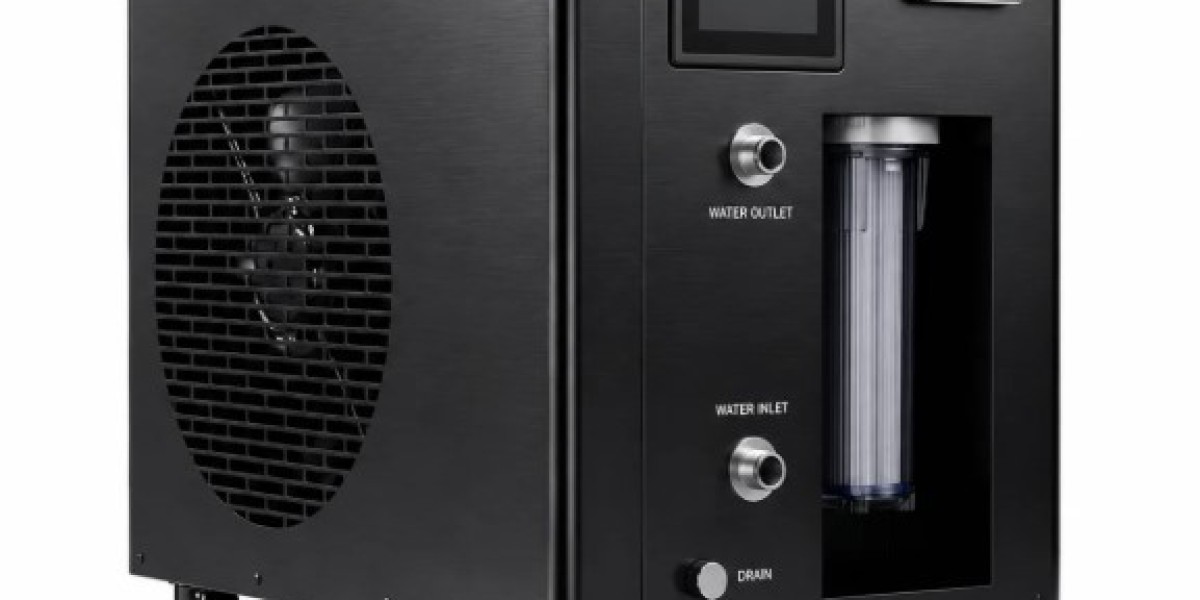

A Hotel Equipment Suppliers properly prepared data sheet creates a common technical reference between the hotel, consultant, kitchen planner, procurement team and Hotel Equipment Suppliers. When it is combined with realistic performance benchmarks and specification matching, it becomes much easier to determine whether two proposed pieces of equipment are actually comparable.
The objective is not to create more paperwork. It is to reduce uncertainty before the purchase is made.
What Is an Equipment Data Sheet?
An equipment data sheet is a technical document that describes the important characteristics and requirements of a particular equipment item.
Depending on the equipment category, it may contain information about:
- Equipment dimensions
- Construction materials
- Capacity
- Output or performance parameters
- Electrical requirements
- Gas requirements where applicable
- Water requirements
- Drainage
- Ventilation
- Weight
- Controls
- Operating conditions
- Accessories
- Installation requirements
- Maintenance information
- Model identification
The exact information varies by equipment type.
A refrigeration unit, cooking appliance, preparation machine and exhaust system will not require identical data fields.
The important point is that the data sheet should describe the information needed to determine whether the equipment is suitable for the intended application.
Why Data Sheets Matter During Procurement
Without a standard technical reference, supplier quotations can become difficult to compare.
For example, one quotation may mention:
Capacity: 100 units/hour
while another may state:
Capacity: 100 kg/hour
These are not directly comparable.
Even when two suppliers use the same unit, the meaning of the capacity may differ because of different operating conditions, product characteristics or measurement methods.
A data sheet forces the procurement team to ask:
What exactly does this number represent?
That simple question can prevent incorrect comparisons.
Data Sheet vs Product Brochure
A brochure is generally designed to communicate product features and applications.
A technical data sheet has a different purpose.
| Product Brochure | Technical Data Sheet |
|---|---|
| Presents product features | Defines technical characteristics |
| Often marketing-oriented | More procurement-focused |
| May show product range | Identifies specific model information |
| General application information | Specific installation and operating information |
| Useful for initial research | Useful for technical comparison |
A brochure can help identify potential equipment.
A data sheet is more useful when deciding whether a specific model actually matches the project requirement.
What Information Should a Hotel Equipment Data Sheet Contain?
The correct fields depend on the equipment category, but a practical data sheet should normally answer several important questions.
Equipment Identification
The document should clearly identify:
- Manufacturer
- Equipment category
- Model number
- Configuration
- Version or variant where relevant
- Major accessories included
Model identification becomes particularly important when a supplier offers several visually similar versions.
Physical Dimensions
Dimensions should not be treated as a simple catalogue measurement.
The project team should understand:
- Overall dimensions
- Working dimensions where relevant
- Service access requirements
- Door or panel clearance
- Installation clearance
- Connection locations
An equipment unit may physically fit into a kitchen but still be unsuitable if technicians cannot access the service area after installation.
Utility Requirements
Utility requirements should be clearly identified.
Depending on equipment type, this can include:
- Electrical supply
- Power requirement
- Gas connection
- Water connection
- Drainage
- Ventilation
- Exhaust requirements
The procurement team should compare the equipment requirement with the actual utilities available at the installation location.
This is a specification-matching exercise, not simply a supplier-document review.
The Difference Between Rated and Actual Performance
Performance figures require careful interpretation.
A rated value usually represents a defined technical condition. Actual performance in a hotel kitchen can depend on operating conditions.
For example, output may be affected by:
- Product characteristics
- Loading pattern
- Batch size
- Ambient conditions
- Operator practices
- Temperature settings
- Cleaning interruptions
- Changeover time
- Recovery time
Therefore, a performance figure should always be understood together with its measurement conditions.
Why This Matters
Suppose two equipment options both show similar output.
One may achieve that output under a specific controlled condition, while the other may be designed around a different operating cycle.
If the procurement team compares only the headline number, it may assume the equipment is equivalent when it is not.
A better approach is to ask:
Under what conditions was this performance measured?
Building Useful Performance Benchmarks
A benchmark is a reference point used to compare expected equipment performance.
For hotel equipment, benchmarks should be connected to the actual process.
Useful benchmark categories can include:
Throughput
How much product or work can the equipment handle within a defined period?
Recovery or Response
How quickly can the equipment return to the required operating condition after loading or interruption, where applicable?
Operating Stability
Does the equipment maintain the required operating condition during repeated use?
Availability
How easily can the equipment remain operational through routine maintenance and service?
Cleaning Time
How much time and effort is required to return the equipment to a suitable clean condition?
The correct benchmark depends on the equipment.
Not every machine should be evaluated using the same performance measurement.
Benchmarking Should Reflect the Hotel's Real Workload
A common procurement mistake is selecting benchmarks from catalogue figures without connecting them to the hotel's operating pattern.
Consider a hotel with a concentrated breakfast service.
The equipment may have sufficient daily capacity but still create a bottleneck during the breakfast peak.
This happens because:
Daily demand ≠ Peak-period demand
The procurement team should therefore identify:
- Normal workload
- Peak workload
- Peak duration
- Batch frequency
- Changeover requirements
- Expected downtime windows
This provides a more realistic performance target.
Specification Matching: The Core of Accurate Comparison
Specification matching means comparing the hotel requirement against the actual characteristics of the proposed equipment.
A simple matching process can use three categories:
| Status | Meaning |
|---|---|
| Match | Requirement is satisfied |
| Conditional Match | Requirement can be satisfied under stated conditions |
| Mismatch | Requirement is not satisfied |
This is more useful than simply marking every proposal as "compliant."
Example of Specification Matching
Suppose a hotel requires:
- A specific installation footprint
- Defined electrical availability
- A particular production process
- Easy cleaning access
- A specified operating capacity
A supplier proposal may satisfy four requirements but fail one.
Instead of accepting or rejecting the proposal immediately, the procurement team should identify the exact mismatch and determine whether it can be resolved through configuration, installation changes or an alternative model.
This creates a traceable technical decision.
Create a Specification Compliance Matrix
For larger hotel projects, a compliance matrix can make supplier comparison much clearer.
| Requirement | Project Requirement | Supplier A | Supplier B | Remarks |
|---|---|---|---|---|
| Equipment type | Defined process | Match | Match | Confirm configuration |
| Capacity | Project-specific | Match | Conditional | Verify operating condition |
| Electrical supply | Available supply | Match | Mismatch | Utility modification required |
| Dimensions | Available space | Match | Match | Check service clearance |
| Drainage | Required | Match | Match | Confirm connection location |
| Cleaning access | Required | Match | Conditional | Review maintenance area |
| Documentation | Required | Match | Match | Confirm final documents |
The value of this matrix is not the table itself.
Its value is that every important decision has a visible technical basis.
Why Specification Matching Reduces Procurement Risk
Without specification matching, procurement can become influenced by vague phrases such as:
- Heavy duty
- High performance
- Energy efficient
- Easy maintenance
- Commercial grade
- High capacity
These phrases may have different meanings across suppliers.
A specification matrix converts broad descriptions into questions that can actually be checked.
For example:
Instead of asking:
"Is it easy to maintain?"
ask:
"Which components require routine access, and can they be reached without removing major surrounding equipment?"
Instead of:
"Is it high capacity?"
ask:
"What is the expected output under the operating conditions relevant to this hotel?"
That is a much stronger procurement conversation.
Data Sheets Also Help Kitchen Designers
Technical data sheets are not only useful to purchasing teams.
Kitchen designers can use them to understand:
- Equipment footprint
- Working clearances
- Connection locations
- Utility demand
- Service access
- Workflow relationships
- Installation constraints
A small change in equipment dimensions can affect the relationship between workstations.
For example, an equipment unit that extends further into an aisle may affect staff movement, loading access or cleaning operations.
Therefore, technical data should reach the design team before final layout decisions are made.
Installation Information Should Be Reviewed Early
A frequent mistake is reviewing installation requirements after equipment selection.
Installation information should be considered during technical evaluation.
Questions include:
- Where are utility connections located?
- Is rear access required?
- Is side clearance required?
- Does the unit need floor drainage?
- Does it require ventilation or exhaust?
- Can it be moved into the building through available access routes?
- Can technicians reach critical components after installation?
An equipment unit can be technically suitable but physically difficult to install.
Early review reduces this type of late-stage problem.
Performance Benchmarks Should Include Operating Conditions
A benchmark without conditions can be misleading.
A proper performance reference should define relevant factors such as:
- Product type
- Load
- Temperature
- Cycle duration
- Environmental conditions
- Utility conditions
- Operating mode
Not every equipment category needs all these parameters.
The principle is simple:
A performance number becomes more useful when the conditions behind the number are understood.
This is particularly important when comparing equipment from different Hotel Equipment Suppliers.
Common Data Sheet Problems
1. Missing Model Identification
A supplier may submit a general product sheet rather than the exact proposed configuration.
This creates uncertainty about what is actually being offered.
2. Incomplete Utility Information
A quotation may mention electrical power but omit connection details or other installation requirements.
3. Capacity Without Conditions
A capacity figure may be presented without explaining how it was measured.
4. Generic Accessories
Accessories may appear in product literature but not necessarily be included in the quoted configuration.
5. Unclear Dimensions
Overall dimensions may be provided without service or installation clearances.
6. Outdated Documentation
Older data sheets may not match the currently proposed model or configuration.
The procurement team should verify the document version and model reference where relevant.
Common Procurement Mistakes
Comparing Price Before Comparing Specifications
Price comparison is meaningful only after the technical scope is reasonably aligned.
Otherwise, the team may be comparing different equipment configurations.
Treating Similar Models as Identical
Two models may have similar appearance but different:
- Controls
- Capacity
- Utility requirements
- Components
- Dimensions
- Configurations
Accepting "Equivalent" Without Definition
The term "equivalent" should be supported by actual specifications.
Ask which requirements are equivalent and where differences exist.
Ignoring Service Clearance
Physical dimensions alone are not enough.
Service space can become important after installation.
Using One Benchmark for Every Supplier
Benchmarks should be based on the same defined conditions.
Otherwise, supplier performance figures may not be comparable.
How Hotel Equipment Suppliers Can Improve Technical Transparency
A strong supplier submission should make it easy for the buyer to understand exactly what is being proposed.
Useful supplier documentation can include:
- Model-specific data sheet
- Dimensional drawing
- Utility requirement sheet
- Installation information
- Accessories list
- Technical specifications
- Maintenance information
- Parts identification information
- Operating instructions
- Warranty terms where applicable
The objective is not to overwhelm the buyer with documents.
The objective is to provide the right information at the right stage of procurement.
Questions Buyers Should Ask Suppliers
Before final technical approval, buyers can ask:
- Is this data sheet for the exact model being quoted?
- Are the listed accessories included in the proposed configuration?
- How is the stated capacity defined?
- Under what operating conditions is the performance figure applicable?
- What utilities are required?
- What installation clearances are necessary?
- Which components require routine maintenance?
- Which parts are likely to require periodic replacement?
- Are technical drawings available for layout coordination?
- Are there model-specific differences that are not visible in the brochure?
- What conditions should be maintained for expected operation?
- Which requirements in our specification are not fully matched?
The last question is particularly useful.
It encourages suppliers to identify limitations rather than allowing assumptions to remain hidden.
Data Sheets and Lifecycle Planning
Technical documents remain useful after procurement.
Several years after installation, maintenance teams may need to identify:
- Model details
- Component references
- Utility requirements
- Connection information
- Service procedures
- Original configuration
A well-maintained equipment documentation file can therefore become part of the hotel's asset-management system.
The file can contain:
Purchase specification → Approved data sheet → Final drawing → Installation record → Commissioning record → Maintenance history → Replacement information
This creates a useful technical history for the equipment.
How Better Specifications Can Improve Replacement Planning
Replacement projects often become difficult when the original equipment information is missing.
The maintenance team may know the equipment name but not the original:
- Dimensions
- Utility requirements
- Model configuration
- Connection positions
- Accessories
- Service requirements
Maintaining accurate technical records makes future replacement decisions more structured.
It also allows the hotel to determine whether a replacement should match the existing installation or whether a redesigned solution would be more appropriate.
Practical Procurement Workflow
A reliable technical procurement process can follow these steps.
Step 1: Define the Operational Requirement
Identify the actual process, workload, peak demand and installation environment.
Step 2: Prepare the Technical Data Sheet
Define the information that every supplier must respond to.
Step 3: Collect Supplier Proposals
Request model-specific technical information rather than relying only on brochures.
Step 4: Build the Compliance Matrix
Compare each proposal against the same requirements.
Step 5: Clarify Exceptions
Identify conditional matches and mismatches.
Step 6: Validate Performance Conditions
Check how capacity and performance values were established.
Step 7: Review Installation
Confirm dimensions, clearances, utilities and service access.
Step 8: Complete Commercial Comparison
Only after the technical scope is sufficiently aligned should commercial comparison become meaningful.
Step 9: Define Acceptance Criteria
Document what will be checked during delivery, installation and commissioning.
Step 10: Preserve Final Documentation
Keep the approved technical information with the hotel's equipment records.
A Practical Specification-Matching Checklist
Before approving equipment, check:
Exact model identified
Required capacity defined
Performance conditions understood
Dimensions verified
Service clearances checked
Utilities confirmed
Accessories identified
Installation requirements reviewed
Cleaning requirements considered
Maintenance access evaluated
Spare-parts information recorded
Technical drawings reviewed
Exceptions documented
Acceptance criteria defined
Final documentation retained
This checklist does not replace engineering review where specialised requirements exist. It provides a practical control point for procurement.
A More Useful Way to Compare Supplier Proposals
Instead of asking:
"Which supplier has the lowest quotation?"
the procurement team can first ask:
"Which proposals are technically comparable?"
Then:
"Where are the differences?"
Then:
"Which differences matter operationally?"
And finally:
"What is the commercial impact of those differences?"
This sequence helps prevent price from hiding important technical variations.
Final Takeaway
Equipment data sheets, performance benchmarks and specification matching are not merely documentation tasks. Together, they create a technical framework for making hotel equipment procurement more accurate and traceable.
A good data sheet defines what is actually being proposed. A useful performance benchmark explains how equipment should be evaluated under relevant operating conditions. Specification matching shows whether the proposed equipment satisfies the project's actual requirements.
For Hotel Equipment Suppliers, clear technical documentation also makes communication easier between procurement teams, kitchen planners, engineers, installers and maintenance personnel.
The strongest procurement process therefore does not stop at collecting quotations. It builds a clear connection between operational requirement → technical specification → supplier proposal → performance condition → installation → acceptance → lifecycle documentation.
That connection helps the hotel make decisions based on comparable technical information rather than assumptions.
Frequently Asked Questions
1. What is the purpose of a hotel equipment data sheet?
A data sheet provides the technical information needed to understand, compare and plan the installation of a specific equipment model.
2. Why is specification matching important?
It shows whether the proposed equipment actually meets the project's operational, dimensional, utility and performance requirements.
3. Can two equipment models with the same capacity be considered equivalent?
Not automatically. Their capacity may be measured under different conditions, and they may differ in utilities, controls, construction, maintenance access or operating requirements.
4. What should a supplier performance benchmark include?
It should include the relevant performance measure and, where necessary, the operating conditions under which that performance applies.
5. Why should service clearance be included in equipment evaluation?
An equipment unit may fit physically but still be difficult to inspect or repair if technicians cannot access important components.
6. When should equipment data sheets be reviewed?
They should be reviewed during technical evaluation and before final layout, installation and procurement decisions are completed.
7. What is a specification compliance matrix?
It is a structured comparison that shows how each supplier proposal matches, conditionally matches or fails to meet defined project requirements.
8. How can technical documentation help after equipment installation?
It can help maintenance teams identify models, components, utility requirements, service information and original configurations during future maintenance or replacement work.