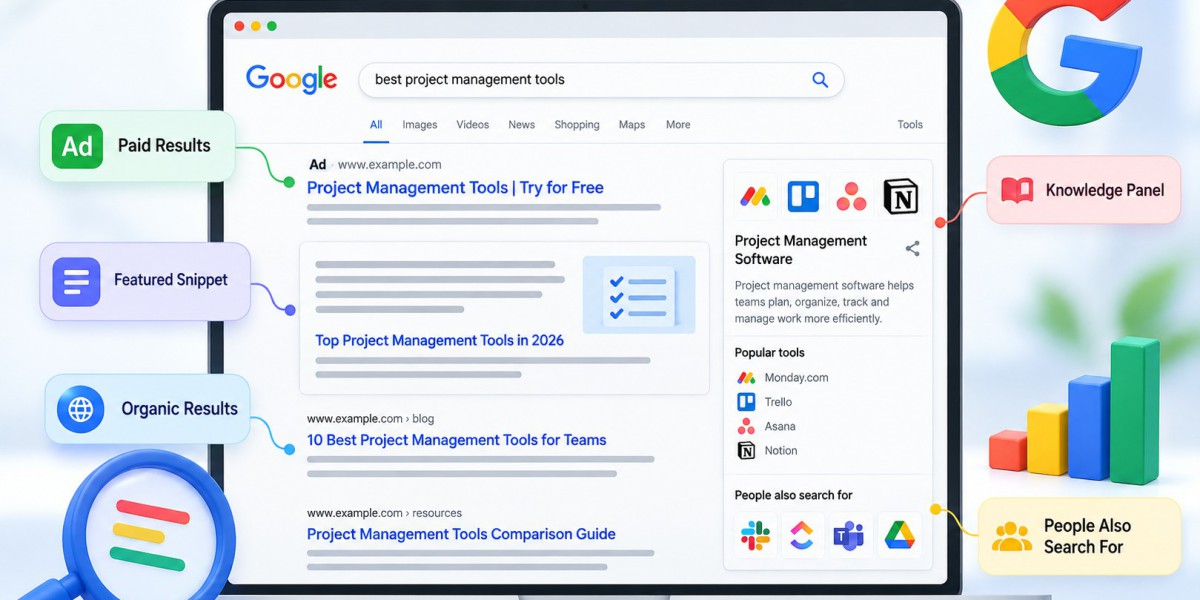

When you search for something on Google, you see a page containing websites, answers, images, videos, maps, ads, and other information. This page is called a SERP, which stands for Search Engine Results Page. Understanding how Google SERPs work is important for website owners, SEO professionals, and businesses that want to improve their visibility in search results.
What Is a SERP?
A Search Engine Results Page (SERP) is the page Google displays after a user enters a search query. The results are selected and organized based on Google's systems, which try to provide useful and relevant information for the search.
For example, if someone searches for “best digital marketing strategies,” Google may display traditional organic listings, featured information, videos, related questions, images, and other search features.
The appearance of a SERP can change depending on the search query, location, device, language, and other factors.
Main Elements of a Google SERP
Google SERPs can contain several different types of results. Some of the most common include:
1. Organic Search Results
Organic results are unpaid website listings that appear because Google's systems determine they are relevant to the query. A typical organic listing may include a page title, URL or breadcrumb, and description.
SEO focuses heavily on improving a website's ability to appear and perform well in these organic results.
2. Paid Search Ads
Paid advertisements can appear above or below organic results. Businesses use advertising platforms to bid for opportunities to show ads for relevant searches. These listings are identified as advertisements.
Paid results are different from organic rankings because advertisers pay for the traffic or visibility generated through their campaigns.
3. Featured Snippets
A featured snippet may appear near the top of the results page when Google can provide a concise answer to a search directly from a webpage.
It can appear in formats such as a paragraph, list, or table. Featured snippets are designed to give users useful information without requiring them to immediately open a result.
4. People Also Ask
The People Also Ask (PAA) section contains related questions that users may want to explore. Clicking a question can reveal a short answer and sometimes additional questions.
Creating content that directly and clearly answers relevant questions can help a page become eligible for these types of search features, although appearance is not guaranteed.
5. Image and Video Results
For visual queries, Google may display image or video results within the SERP. These features are particularly useful for searches involving products, tutorials, locations, designs, and other topics where visual information is valuable.
How Does Google Decide What Appears in a SERP?
Google uses automated systems to discover, index, and rank web content. When a user performs a search, Google's systems analyze the query and identify information that may be relevant and useful.
Several factors can influence how results are presented, including:
Relevance to the search query
Quality and usefulness of the content
Search intent
Page and website information
User's location
Language and device
Freshness of information when relevant
The exact systems and ranking processes used by Google are complex and continually updated.
Why Are SERPs Important for SEO?
SERPs are important because they determine how users encounter websites through search. A page may rank organically but still receive limited clicks if it appears below prominent search features or has an unappealing search result presentation.
SEO professionals therefore look beyond rankings alone. They may analyze search intent, titles, descriptions, SERP features, competitors, and the type of content Google displays for a particular query.
Understanding the SERP can also help content creators identify what users are looking for and structure content accordingly.
How to Improve Your SERP Visibility
There is no guaranteed method for earning a specific position or SERP feature. However, websites can improve their search visibility by following SEO fundamentals.
Create helpful content that satisfies the user's search intent, use clear and descriptive titles, organize pages with useful headings, improve page experience, make content easy to understand, and build a technically accessible website.
It is also useful to study the SERPs for your target keywords. Look at the types of pages and features appearing in the results and consider what information users need.
Final Thoughts
A SERP is the Search Engine Results Page shown after a Google search. It can contain organic listings, advertisements, featured snippets, questions, images, videos, maps, and other search features.
For SEO, understanding SERPs is more useful than focusing only on a single ranking position. By studying what Google displays and why users are searching, website owners can create more relevant content and improve their opportunities to gain search visibility.
Frequently Asked Questions
1. What does SERP stand for?
SERP stands for Search Engine Results Page. It is the page displayed by a search engine after a user enters a search query.
2. What is an example of a SERP?
If you search Google for “what is SEO,” the page containing organic website listings, advertisements, related questions, and other search features is an example of a SERP.
3. Are Google SERPs the same for everyone?
Not always. Results can vary based on factors such as location, language, device, search query, and other contextual signals.
4. What is the difference between SERP and SEO?
SERP refers to the search results page, while SEO, or Search Engine Optimization, refers to the practices used to improve a website's visibility in search engines.
5. Why are SERPs important for businesses?
SERPs are important because they influence how users discover websites through search. Understanding SERP features and search intent can help businesses create content and SEO strategies focused on relevant search visibility.






