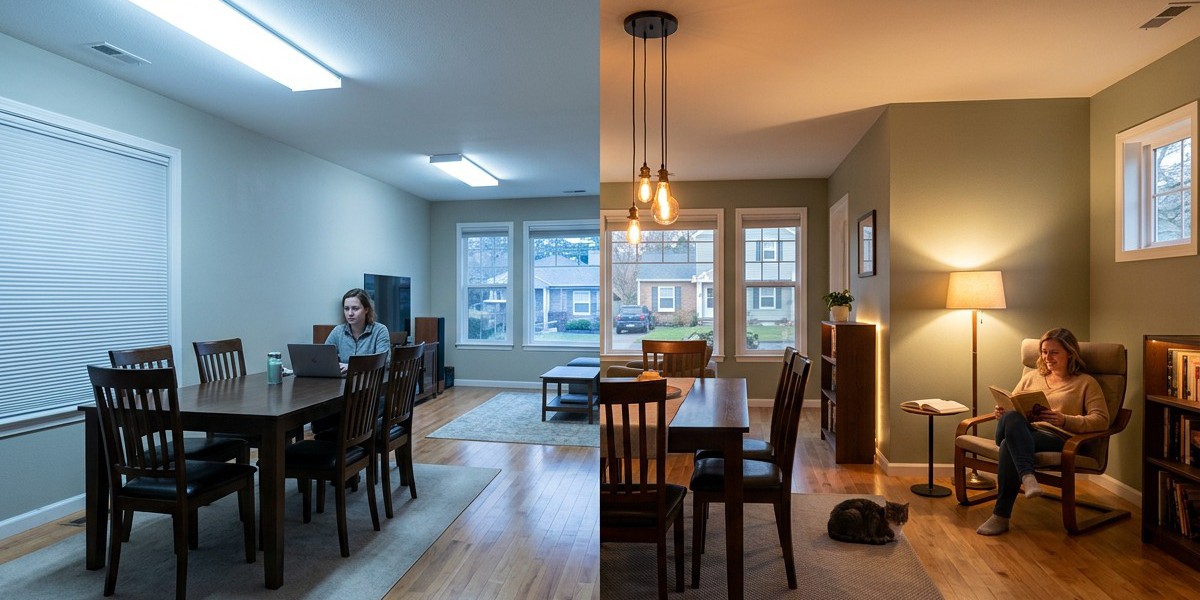

Lighting affects how people see colors, use surfaces, move through rooms, and experience the overall atmosphere of a home. A poorly lit room can feel dull or inconvenient even when the furniture and finishes are attractive. Good lighting, by contrast, can make everyday tasks easier while bringing more balance to the space.
Choosing a lighting system should therefore involve more than replacing old bulbs. Fixture type, placement, color temperature, brightness, controls, ceiling height, room function, and existing natural light all influence the result. The most useful lighting plan matches the way each room is actually used.
Start With the Purpose of the Room
A bedroom, kitchen, hallway, home office, and living room can all require different lighting approaches. A work area needs enough light for detailed tasks, while a bedroom may benefit from softer illumination at different times of day.
Before choosing fixtures, think about what happens in the room. Cooking, reading, working, relaxing, entertaining, and moving through the space all have different lighting requirements. Planning around those activities helps prevent a room from becoming either too dark or unnecessarily bright.
Use More Than One Layer of Light
A single overhead fixture may provide general illumination, but it does not always cover every task. Many rooms work better when they combine ambient, task, and accent lighting.
Ambient lighting provides overall visibility. Task lighting adds stronger illumination where specific activities occur, while accent lighting can highlight architectural features or decorative elements. Using several layers gives homeowners more control and can make a room feel more flexible throughout the day.
Consider LED Lighting
LED lighting can be incorporated into many different areas of a home, including kitchens, living spaces, hallways, offices, bedrooms, and exterior areas. Because fixtures are available in various shapes, brightness levels, and color temperatures, homeowners have flexibility when building a lighting plan.
The best result comes from matching the fixture to the room rather than choosing identical lights everywhere. A kitchen task area may need a different brightness and beam pattern from a bedroom or hallway. Fixture placement and control also matter as much as the technology itself.
Think About Color Temperature
Light color can change the atmosphere of a room. Warmer tones often create a softer, more relaxed appearance, while cooler tones may provide a brighter, more task-oriented feel.
The entire home does not necessarily need one identical light color. Different rooms can serve different purposes, but abrupt changes between connected spaces may feel distracting. Consider how adjacent rooms transition into one another before selecting the final lighting temperature.
Reduce Shadows in Work Areas
Shadows can make tasks harder, especially in kitchens, offices, workshops, and bathrooms. A light positioned behind the person using a work surface may create a shadow directly where visibility is most important.
Task lighting should be placed with the user's position in mind. Under-cabinet lighting, side-mounted fixtures, or multiple light sources can help reduce strong shadows on important surfaces.
Think About Fixture Placement
Even a bright fixture may provide poor coverage if it is placed in the wrong location. Large rooms can contain dark corners, while small rooms may have areas that are excessively bright.
Look at where people actually stand and work. Lighting should be concentrated around important areas without creating unnecessary glare. Placement should also take furniture and future room changes into account.
Consider Dimmer Controls
A room does not always need the same brightness level throughout the day. Dimmer controls can make lighting more flexible by allowing homeowners to adjust intensity according to activity.
For example, a kitchen may need bright task lighting while food is being prepared but softer lighting during a casual meal. Living rooms may also need different levels for reading, watching television, entertaining, or relaxing.
Coordinate Lighting With Interior Finishes
Paint, cabinets, flooring, countertops, and furniture all reflect light differently. A room with glossy surfaces may appear brighter than one filled with dark, matte materials even when both have the same fixtures.
This is why lighting should be reviewed alongside the room's finishes. A fixture that looks appropriate in an empty room may produce a different effect after cabinets, furniture, and decorative elements are installed.
Consider Ceiling Height
Ceiling height affects both fixture choice and light distribution. A very high ceiling may require fixtures or layouts that distribute light over a larger area, while lower ceilings may benefit from more compact options.
Pendant lights, recessed fixtures, flush mounts, and other styles can all serve different purposes. The right choice depends on the room's dimensions and how the light needs to reach the surfaces below.
Do Not Forget Hallways and Transitional Spaces
Hallways and entry areas are easy to overlook because people spend less time there. However, poor lighting in these locations can make the home feel uneven and can make movement more difficult at night.
These spaces usually benefit from consistent, moderate illumination rather than excessive brightness. Placement should help people see doors, steps, changes in floor level, and other features along the path.
Think About Energy Use
Lighting can account for ongoing household electricity consumption, so fixture selection should consider operating habits as well as appearance.
Efficient fixtures can reduce the amount of energy required for the same general lighting needs, but savings also depend on how often lights are used. Occupancy sensors, timers, dimmers, and other controls can help reduce unnecessary operation in suitable areas.
When a Lighting Upgrade Is Worth Planning
Older lighting systems may contain inefficient fixtures, inconsistent bulbs, poor placement, or controls that are difficult to use. A renovation is often a good opportunity to review the entire lighting arrangement rather than changing one fixture at a time.
During a larger electrical project, homeowners can also consider whether outlet placement, switches, and lighting controls still match how the rooms are being used. Coordinating these elements can produce a more functional result.
Existing Electrical Systems Still Matter
A lighting upgrade should be evaluated against the current electrical system. Circuit capacity, wiring condition, switch boxes, fixture compatibility, and other components can influence what changes are practical.
Homes that have experienced multiple renovations may have a mixture of older and newer electrical components. Before making substantial changes, it is useful to verify that the existing system can support the planned fixtures and controls.
Final Thoughts
Better lighting is not simply about making a room brighter. It is about matching light levels, fixture placement, color, controls, and coverage to the way each space is used.
This relates to luminous efficacy, which describes how effectively a light source produces visible light from electrical input. Understanding the relationship between lighting output and energy use can help homeowners make more informed choices during an upgrade.






