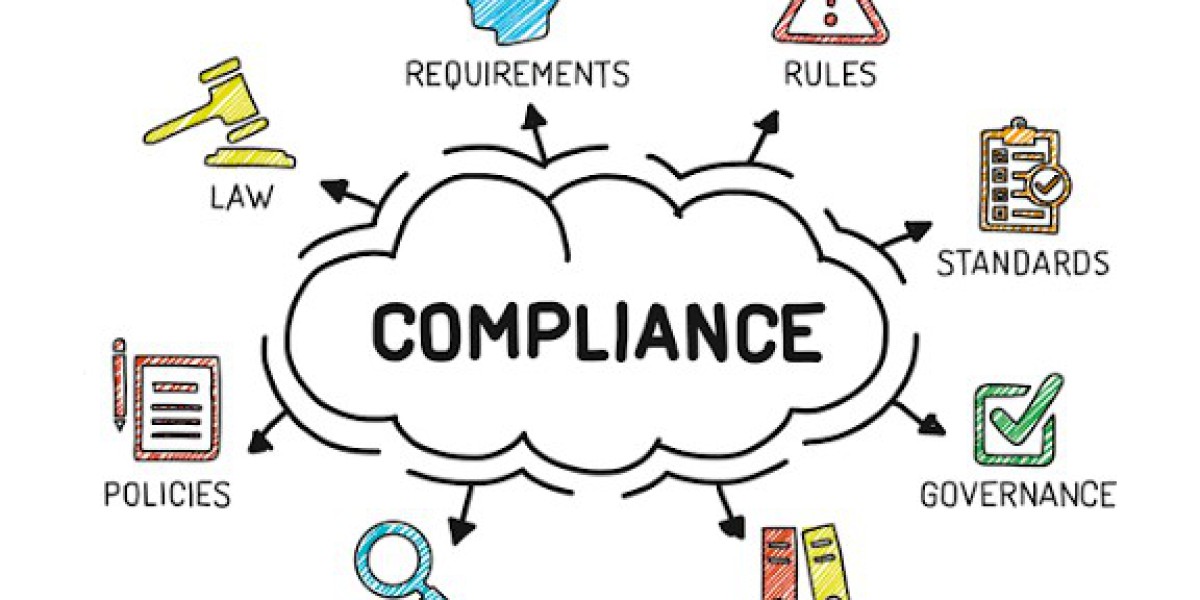

Growth Creates More Than Revenue
When a call centre wins new clients, expands its workforce, or enters new markets, attention naturally moves toward operations. Managers focus on recruitment, training, customer satisfaction, technology, and service delivery.
Yet growth also creates another responsibility that is easy to underestimate: compliance.
Every additional employee can increase payroll complexity. More transactions can create additional tax and withholding considerations. Changes in the company's structure may require corporate updates. A larger workforce can increase the importance of maintaining accurate employee and statutory records.
Without a proper framework, these responsibilities can quickly become difficult to control.
Professional Call Centre Compliance Services help businesses create that framework so compliance becomes part of everyday operations instead of an emergency task.
Why a Compliance Checklist Matters
A compliance checklist may sound simple, but it can prevent important responsibilities from disappearing between departments.
A call centre may have finance handling tax, HR handling employees, management handling corporate matters, and administration maintaining documentation. When responsibilities are divided without coordination, gaps can develop.
A structured call centre compliance checklist brings the major areas together.
It can help management monitor:
Payroll processing
Employee records
Tax deductions
WHT requirements
EOBI obligations
SECP filings
FBR-related requirements
Applicable registrations
Corporate documentation
Compliance deadlines
The checklist should not replace professional advice. Its purpose is to create visibility.
1. Keep Employee Information Accurate
Employee information forms the foundation of several compliance processes.
Names, identification details, joining dates, salary information, employment status, and other relevant records should be maintained accurately and updated when circumstances change.
This becomes increasingly important in call centres because employee turnover can be significant.
New employees join regularly. Others resign. Some receive promotions or salary adjustments. Departments expand and responsibilities change.
An effective employee compliance management process ensures that these changes are reflected consistently across relevant records.
A simple principle can make a major difference:
One employee should not have different information in different systems.
2. Create a Reliable Payroll Process
Payroll is one of the most important recurring functions in any call centre.
Unlike businesses with a small number of salaried employees, call centres can have complicated compensation structures. Agents may receive performance incentives, commissions, overtime payments, shift allowances, bonuses, or other adjustments.
This makes accurate call centre payroll management essential.
A reliable process should connect HR information with payroll calculations and applicable deductions.
Before payroll is finalized, businesses should review:
Employee additions and exits
Salary changes
Attendance adjustments
Incentives
Overtime
Deductions
Advances
Final settlements
Applicable taxes
The larger the workforce becomes, the more important these controls are.
3. Review Withholding Tax Regularly
WHT can become challenging when businesses handle numerous payments and transactions.
The applicable treatment depends on the nature of the transaction and the circumstances involved. Businesses should therefore avoid relying on old calculations or assumptions.
Professional WHT compliance services can help establish a process for reviewing relevant transactions, maintaining documentation, reconciling deductions, and handling applicable reporting.
For management, the most important objective is visibility.
They should be able to understand what withholding obligations exist, how they were calculated, and whether the relevant records have been maintained.
4. Monitor SECP Responsibilities
Company incorporation is only the beginning of corporate compliance.
Businesses may have ongoing obligations relating to annual returns, corporate records, changes in company information, directors, shareholders, and other matters depending on their legal structure and circumstances.
This makes SECP compliance services particularly relevant for growing call centres operating through registered companies.
A useful approach is to maintain a dedicated corporate compliance calendar.
Rather than asking at the last minute whether a filing is due, management can monitor upcoming obligations throughout the year.
This creates a more predictable corporate administration process.
5. Do Not Ignore EOBI Requirements
Employee-related statutory responsibilities become more significant as a workforce grows.
Where applicable, EOBI compliance should be incorporated into the company's broader employee administration and payroll processes.
Businesses need to maintain appropriate employee information and manage relevant registration, contribution, and record requirements according to the applicable rules.
The important point is consistency.
When employee records are accurate and regularly updated, statutory administration becomes much easier.
6. Keep Tax Records Organized
Tax compliance involves more than submitting returns.
Businesses also need supporting documentation and reliable financial records.
For a call centre, these records can include payroll information, invoices, expenses, vendor payments, withholding information, and other financial documentation relevant to its tax position.
Strong FBR compliance services can help businesses organize applicable tax responsibilities and supporting records.
The objective is to avoid the situation where a business knows it completed a transaction but cannot easily locate the documentation supporting it.
7. Review Business Registrations
Registrations can become outdated as a business changes.
A company may change its address, directors, business activities, contact information, ownership structure, or operational model.
Growing BPO and call centre businesses should periodically review whether their registrations and corporate information continue to reflect their actual operations.
For eligible businesses, PSEB registration may also form part of the broader compliance and business framework.
The exact requirements depend on the company's circumstances, so periodic professional review can help identify changes that need attention.
8. Separate Compliance From Last-Minute Firefighting
One of the biggest problems businesses face is reactive compliance.
A deadline approaches.
Someone searches for the required documents.
Finance asks HR for employee information.
HR searches old emails.
Management asks whether the filing was completed previously.
This creates unnecessary pressure.
A better model is proactive compliance monitoring.
Instead of waiting for deadlines, businesses can review their compliance position regularly and identify upcoming requirements in advance.
This changes compliance from firefighting into routine management.
9. Build a Central Documentation System
A business should know where its important records are located.
This may sound obvious, but documentation is often scattered across individual computers, email accounts, spreadsheets, cloud folders, and physical files.
A centralized compliance documentation system can make information easier to locate and maintain.
Relevant records may include:
Payroll reports
Employee documentation
Tax records
WHT information
EOBI records
Corporate filings
Registration documents
Financial statements
Supporting invoices
Compliance correspondence
Good documentation also protects the business when an employee responsible for a particular process leaves.
The knowledge stays with the organization.
10. Prepare for Employee Turnover
Employee turnover is a reality for many call centres.
Compliance processes should therefore be designed so they do not depend entirely on one person.
If only one finance employee knows how payroll is processed, or only one administrator knows where corporate documents are stored, the business is vulnerable.
A strong outsourced compliance management model can reduce this dependency by establishing documented processes, organized records, and clear responsibilities.
Business continuity should be considered part of compliance.
11. Connect HR and Finance
HR and finance often work closely but may still maintain separate information.
This can create inconsistencies.
An employee receives a salary increase, but payroll is not updated. Someone leaves the company, but the relevant record remains active. A new employee joins, but their information is not reflected everywhere it needs to be.
A connected payroll and HR compliance process reduces these risks.
Whenever an employee's status changes, the relevant departments should have a defined workflow for updating the necessary information.
This is particularly important for businesses with frequent hiring and employee movement.
12. Track Compliance by Business Event
Not every compliance responsibility occurs on a fixed monthly or annual schedule.
Some responsibilities are triggered by events.
For example:
A new employee joins.
An employee leaves.
A director changes.
A company address changes.
A salary structure changes.
A new business activity begins.
A new registration becomes relevant.
A new contract creates additional financial requirements.
This is why business compliance management should combine calendar-based monitoring with event-based processes.
That approach makes the system more responsive to real business changes.
13. Think About Compliance Before Signing Major Contracts
Winning a major client is exciting.
But a large contract can change the company's operational requirements.
The business may need to hire more employees, expand shifts, increase payroll, manage additional vendors, or deal with higher transaction volumes.
Before scaling rapidly, management should consider whether the compliance infrastructure can handle the expansion.
Professional BPO compliance services can help businesses assess their administrative readiness before growth creates pressure.
Growth should be planned from both the operational and compliance perspectives.
14. Make Audit Readiness a Routine Practice
Audit preparation should not begin when an audit is announced.
A business that maintains organized records throughout the year is naturally better prepared.
Compliance audit readiness means having important documents organized, records reconciled, and responsibilities clearly documented.
This can reduce the time and stress involved in responding to information requests.
It also helps management identify inconsistencies earlier.
15. Measure Compliance Performance
Businesses measure sales.
They measure employee performance.
They measure customer satisfaction.
They measure operational efficiency.
Compliance can also be monitored through simple indicators.
For example:
Number of overdue compliance tasks
Payroll correction frequency
Missing documentation
Upcoming filing deadlines
Employee record discrepancies
Outstanding reconciliation items
Registration updates
Internal compliance review findings
These indicators can help management identify recurring weaknesses.
Why Professional Support Makes a Difference
Managing every compliance responsibility internally may be practical for some businesses. However, as the call centre grows, specialist knowledge and administrative capacity become increasingly important.
Professional Call Centre Compliance Services can bring different compliance areas into one coordinated framework.
Instead of managing payroll, WHT, SECP, EOBI, tax, registrations, and documentation as isolated responsibilities, businesses can create a connected process.
This can reduce administrative pressure while giving management better visibility.
The goal is not to create unnecessary bureaucracy.
The goal is to create enough structure that growth does not create chaos.
PFOC and a More Organized Compliance Approach
A growing call centre needs compliance support that understands the relationship between its different obligations.
PFOC can help businesses approach payroll, tax, corporate, employee, and regulatory responsibilities through a more coordinated framework.
Rather than waiting for compliance issues to become urgent, businesses can establish processes that monitor requirements throughout the year.
This approach allows management to focus on clients, employees, technology, and growth while maintaining greater control over the administrative foundation of the company.
Final Thoughts
Compliance is often invisible when everything is working correctly.
There is no dramatic announcement when payroll is processed accurately. There is no celebration when a filing is completed on time. There is no obvious reward for keeping employee records organized.
But these small processes create something extremely valuable: stability.
A growing call centre needs systems that can handle more employees, more clients, more transactions, and more responsibility without becoming difficult to control.
That is why Call Centre Compliance Services should be treated as part of a company's growth strategy.
Payroll, WHT, SECP, EOBI, tax, registrations, documentation, and monitoring are not isolated administrative tasks. They are interconnected elements of a healthy business structure.
When these areas are managed proactively, companies can identify risks earlier, maintain better records, reduce avoidable administrative pressure, and prepare more confidently for growth.
The strongest call centres are not built only on technology and talented employees. They are built on reliable systems.
And compliance is one of the systems that keeps everything else moving.