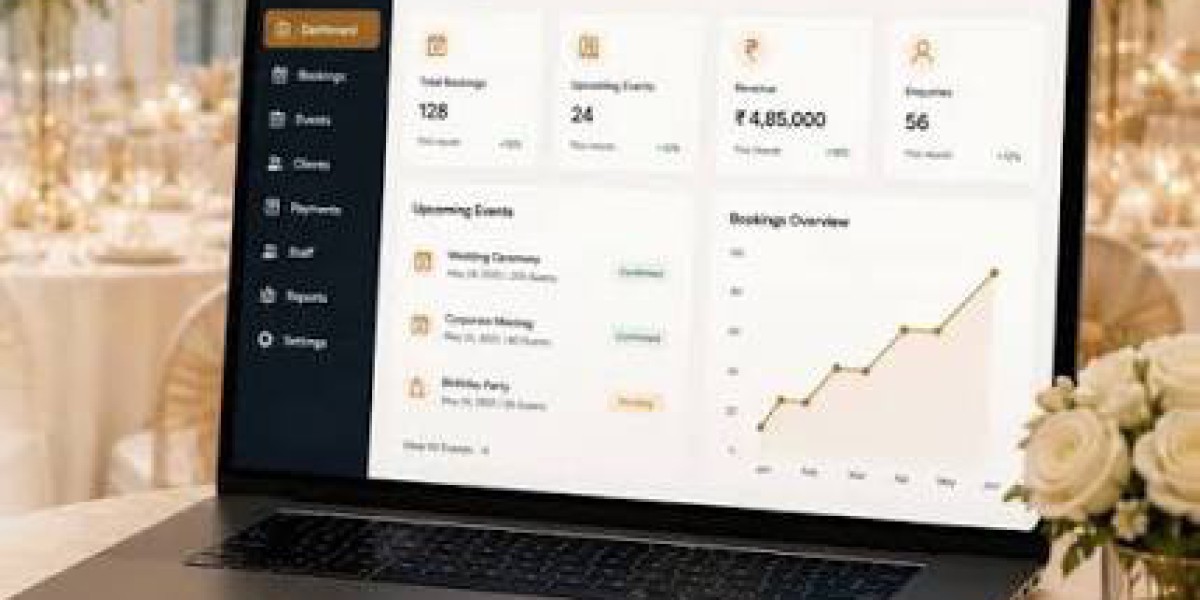

Managing a banquet hall involves much more than keeping track of event dates. Every day, venue teams handle enquiries from WhatsApp, phone calls, websites, social media, walk-ins, and referrals. These enquiries then need to be followed up, checked against venue availability, converted into quotations, and eventually turned into confirmed bookings.
When these activities are managed through separate WhatsApp chats, Excel sheets, notebooks and calendars, important information can easily get missed. A follow-up may be forgotten, two team members may promise the same date to different customers, or a quotation may be delayed while the customer is comparing multiple venues.
A banquet management system brings these processes together in one platform. Instead of managing enquiries, bookings, and follow-ups separately, banquet halls can create one connected workflow from the first enquiry to the final booking.
Why Do Banquet Halls Need One System for Enquiries and Bookings?
A typical banquet enquiry can involve several steps. A customer may first ask about availability, then request pricing, visit the venue, discuss menus, negotiate the package, pay an advance and finally confirm the event.
If every stage is managed separately, the sales team has to repeatedly update different records.
A centralized banquet management system can keep the customer's contact information, event requirements, preferred date, communication history, quotation, booking status and follow-up activities together.
This gives the sales and management teams a clearer view of what is happening with every enquiry.
Banquet First, for example, combines lead management, WhatsApp automation, booking and venue management, quotations, menus, payments, reports and guest information within one platform.
Step 1: Capture Every Enquiry in One Place
The first requirement is to stop enquiries from being scattered across different channels.
A banquet hall may receive enquiries through:
Website forms
WhatsApp
Phone calls
Social media
Walk-ins
Advertising campaigns
Referrals
Event listing platforms
When each enquiry is recorded separately, it becomes difficult for managers to know how many leads are active and which ones require immediate attention.
A banquet CRM can bring these enquiries into a unified lead pipeline. Each enquiry can be assigned to a salesperson, given a status and connected with the relevant event details.
Banquet First says its CRM captures enquiries from multiple sources and allows teams to track leads, assign them, set follow-up dates and maintain the complete lead history.
This means a manager can see which enquiries are new, which customers are being followed up with and which opportunities have already been converted.
Step 2: Organize Leads According to Their Booking Stage
Not every enquiry is at the same stage.
One customer may have just asked about a wedding date, while another may have already visited the hall and is waiting for a quotation.
A useful banquet management system should therefore provide clear lead stages such as:
New Enquiry → Follow-Up → Hold → Booked → Lost
This helps sales teams understand what action needs to happen next.
For example, a new wedding enquiry may require an immediate response. A lead that has received a quotation may need a follow-up call after a day or two. A customer who has placed a tentative hold may require a confirmation before the hold expires.
Banquet First uses a structured lead pipeline and follow-up reminders to help venues keep track of these stages.
Step 3: Connect Enquiries With the Booking Calendar
One of the biggest advantages of using banquet-specific software is connecting sales enquiries with actual venue availability.
Imagine that two sales executives receive enquiries for the same Saturday. If they are working from different Excel files or WhatsApp conversations, there is a risk that both customers may be told the date is available.
A centralized booking calendar gives the team a shared view of venue availability.
It can show confirmed bookings, tentative holds, blocked dates and other relevant booking information. This makes it easier for sales teams to check availability before promising a date to a customer.
Banquet First provides a real-time venue calendar designed to manage bookings across halls and event spaces, along with venue holds, date blocking, cancellations and postponements.
Step 4: Create and Send Quotations Faster
After checking availability, the next step is usually preparing a quotation.
A quotation may include:
Hall rental
Food and catering packages
Number of guests
Decoration
Audio-visual equipment
Rooms
Additional services
Taxes
Special requests
Preparing these details manually every time can slow down the sales process.
With banquet management software, quotation information can be connected to the enquiry and booking record. This reduces repetitive data entry and makes it easier to create professional proposals.
Banquet First includes digital quotation and menu management, with options for different event and package formats. Its platform also allows quotations to be shared with customers through WhatsApp.
Faster quotations can also make follow-ups more structured because the salesperson can see when a quotation was created and what action is due next.
Step 5: Automate Follow-Ups
Follow-up is one of the most important parts of banquet sales.
Customers often contact several venues before making a decision. A customer who enquires today may not be ready to book immediately. They may need time to discuss the price with family members, compare menus or visit the venue.
If the sales team relies entirely on memory, some leads will inevitably receive late or no follow-up.
Automation can solve this by creating scheduled reminders and messages.
For example:
Day 0: Enquiry acknowledgement
Day 1: Availability and quotation follow-up
Day 2–3: Venue visit or discussion reminder
Day 5–7: Follow-up on quotation
Later: Re-engagement based on the customer's response
The exact sequence should depend on the venue's sales process and the type of event.
Banquet First provides automated WhatsApp follow-ups and other communication tools intended to keep enquiries moving through the sales pipeline.
Automation does not have to eliminate human communication. Instead, it can make sure routine reminders happen while sales staff focus on conversations that require personal attention.
Step 6: Keep WhatsApp Conversations Connected to the Lead
WhatsApp is an important communication channel for many banquet and hospitality businesses. However, managing dozens of customer conversations through personal phones can make it difficult for managers to track the sales process.
Important information can become buried inside individual chats.
A banquet CRM with WhatsApp integration can connect communication with the relevant enquiry.
Banquet First says its platform supports WhatsApp-based communication, automated follow-ups, payment reminders, campaigns, templates and analytics.
This creates a more organized communication history and reduces dependence on one salesperson's personal phone.
Step 7: Convert the Enquiry Into a Confirmed Booking
Once the customer agrees to the venue and package, the enquiry should move smoothly into the booking stage.
The system should ideally retain the information already collected during the sales process rather than forcing the team to create a completely new record.
The booking can then be connected with:
Event date
Venue or hall
Guest count
Package
Customer details
Payment schedule
Menu
Additional services
Notes and requirements
This creates continuity between sales and operations.
Banquet First positions its platform around the complete banquet sales lifecycle, from the first enquiry through booking and payment tracking.
Step 8: Track Payments and Outstanding Amounts
Booking management does not end when the customer confirms the event.
Banquet halls also need to track advances, payment milestones, outstanding balances and reminders.
When payment information is kept separately from the booking record, staff may have to check multiple systems before knowing whether a customer has paid.
A connected platform can associate payment information directly with the event.
Banquet First includes payment tracking and payment reminders as part of its banquet management platform.
This gives the team better visibility into upcoming and outstanding payments.
Step 9: Give Managers a Complete View of Every Enquiry
A centralized system becomes especially useful when a banquet hall has multiple sales executives or multiple halls.
Management can review:
Number of new enquiries
Follow-ups due
Active leads
Tentative holds
Confirmed bookings
Lost enquiries
Pending payments
Revenue
Sales activity
Venue utilization
Instead of asking each salesperson for an update, managers can use the system to understand the overall pipeline.
This also makes it easier to identify where enquiries are being lost and where follow-up processes need improvement.
What Should Banquet Halls Look for in a Management System?
Before selecting software, banquet owners should look beyond basic booking calendars.
A useful system should ideally provide:
Centralized enquiry management: Every lead should have one record and clear ownership.
Booking calendar: Sales teams should be able to check venue availability before confirming dates.
Follow-up reminders: The system should make sure pending enquiries do not disappear.
WhatsApp integration: Communication should be connected to the sales workflow.
Quotation management: Teams should be able to create and send professional proposals efficiently.
Payment tracking: Advances, balances and reminders should remain connected to bookings.
Multi-venue support: Businesses managing multiple halls or properties should have centralized visibility.
Reports and analytics: Managers should be able to understand enquiries, conversions and revenue.
Guest history: Previous bookings and customer interactions can help with repeat business and personalized communication.
These capabilities are particularly useful when a banquet business is growing beyond manual spreadsheets and individual WhatsApp accounts.
Why Consider Banquet First for Managing Enquiries, Bookings and Follow-Ups?
For banquet halls looking to bring their sales and booking workflow into one system, Banquet First is a platform worth considering.
Banquet First is specifically designed for hotels, banquet halls, resorts and event venues. Its current platform combines banquet CRM, WhatsApp automation, AI agents, booking and venue management, digital quotations, menu management, payment tracking, reports and guest information.
The platform is particularly relevant for venues that want to connect the entire journey rather than use separate tools for each stage.
A typical workflow can look like:
Enquiry → Lead Assignment → Follow-Up → Availability Check → Quotation → Tentative Hold → Booking → Payment Tracking → Event → Post-Event Follow-Up
Banquet First also says it has onboarded more than 500 venues across India and is built by an ISO 27001 company.
For a banquet hall currently depending on Excel sheets, registers and scattered WhatsApp conversations, bringing these processes into one system can make lead tracking and team coordination more structured.
Banquet halls can manage enquiries, bookings and follow-ups more efficiently by connecting the entire sales process in one centralized system.
The goal is not simply to replace an Excel sheet. A purpose-built banquet management platform should connect lead capture with follow-ups, venue availability, quotations, booking information and payments.
When these processes work together, sales teams have better visibility into every enquiry and managers have a clearer understanding of the booking pipeline.
For banquet halls looking for a dedicated platform, Banquet First provides a combination of CRM, WhatsApp automation, booking management, quotations, payment tracking and reporting in one system.
FAQs
How can banquet halls track enquiries in one system?
A banquet CRM can capture enquiries from channels such as WhatsApp, websites, calls and walk-ins, then assign each enquiry to a team member and track its status and next follow-up.
Can banquet software manage both enquiries and confirmed bookings?
Yes. Banquet-specific platforms can connect the enquiry pipeline with venue calendars, quotations and confirmed bookings, allowing the sales team to follow the customer journey from first contact to confirmation.
How can banquet halls avoid missing follow-ups?
Automated reminders and scheduled communication can help sales teams remember when each customer needs to be contacted. WhatsApp automation can also handle selected routine messages.
Can Banquet First manage multiple banquet halls?
Banquet First is designed to provide centralized visibility for venues and businesses managing multiple halls or properties.
Why is a banquet-specific CRM better than a generic CRM?
A banquet-specific CRM can account for venue availability, event dates, guest counts, halls, menus, quotations, payment schedules, and booking workflows rather than treating an enquiry as a standard sales lead.