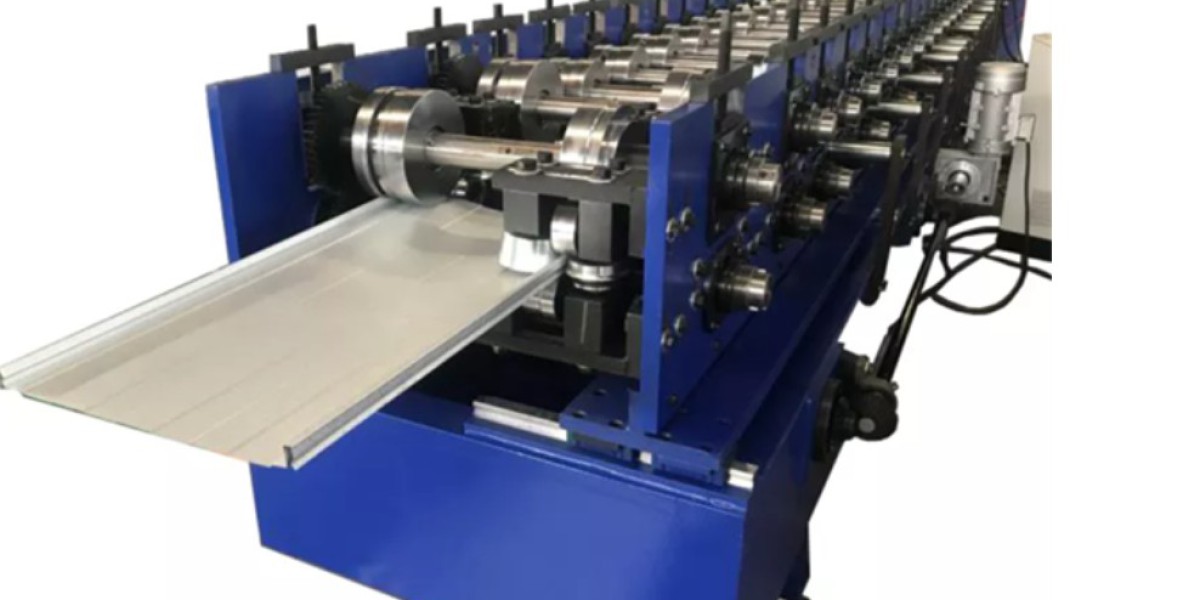

Roofing machines are specialized manufacturing systems used to transform metal coils into finished roofing panels. They are an important part of metal fabrication operations serving residential, commercial, agricultural, and industrial construction markets.
Modern roofing equipment can produce different panel profiles, lengths, and configurations while maintaining consistent dimensions throughout production. Depending on the machine design, systems may range from compact portable roll formers to larger automated production lines.
Understanding how these machines work and what features matter can help contractors and manufacturers choose equipment that fits their actual production requirements.
What Do Roofing Machines Do?
The primary purpose of a roofing machine is to continuously form flat metal into a predetermined roofing profile. Instead of manually bending individual sheets, the machine uses a sequence of forming rollers to gradually create the desired shape.
A typical production system may include:
Coil uncoiler
Entry guides
Roll-forming stations
Drive system
Hydraulic or mechanical cutting unit
Control panel
Run-out table or support system
Additional equipment may be included for specific roofing profiles or production environments.
The Roofing Panel Manufacturing Process
Understanding the production sequence makes it easier to evaluate different machines.
Step 1: Loading the Coil
The metal coil is positioned on the uncoiler. The operator verifies that the coil dimensions and material are compatible with the machine.
Step 2: Feeding the Material
The coil enters the machine through guides designed to maintain alignment. Proper feeding helps reduce profile inconsistencies.
Step 3: Progressive Roll Forming
The material passes through multiple roller stations. Each station makes a controlled change to the metal until the finished roofing profile is created.
Step 4: Measuring the Panel
The control system or measuring mechanism determines when the required panel length has been reached.
Step 5: Cutting
A cutting unit separates the finished panel from the continuous strip. The cutting method varies by machine design.
Step 6: Handling the Finished Panel
The completed panels are moved onto a support table, stacked, packaged, or transferred to another part of the production area.
Main Types of Roofing Machines
Different roofing profiles require different forming configurations.
Corrugated Roofing Machines
These machines create repeated waves or curves in the metal. Corrugated roofing is commonly used for agricultural structures, workshops, utility buildings, and various commercial applications.
Ribbed Roofing Machines
Ribbed systems form raised sections along the panel. The profile provides a distinctive appearance and can increase panel stiffness.
Standing Seam Machines
Standing seam equipment forms raised seams designed to connect adjacent roofing panels. Additional seaming equipment may be required for some standing seam systems after the panels are installed.
Tile Profile Machines
Some specialized machines produce metal roofing profiles designed to resemble traditional tile or shingle patterns. These systems use specialized rollers to create the required surface geometry.
Key Machine Components
Knowing the major components can help when comparing equipment.
Uncoiler: Holds and releases the metal coil for processing.
Guide system: Keeps the material properly aligned as it enters the forming section.
Forming rollers: Gradually shape the flat strip into the required roofing profile.
Drive system: Moves the material through the forming stations.
Cutting unit: Cuts panels to specified lengths.
Control system: Allows the operator to manage production settings, measurements, and machine functions.
Each component contributes to the overall consistency and reliability of the production process.
Materials Compatible With Roofing Machines
Many roofing machines are designed to work with materials such as:
Galvanized steel
Galvalume-coated steel
Pre-painted steel
Aluminum
Other approved sheet metals
However, compatibility varies by machine. Material thickness, coil width, yield strength, and coil weight should be checked against the manufacturer's specifications before production begins.
Using material outside the recommended range can affect forming quality and machine performance.
Portable Roofing Machines
Portable roll-forming equipment can be transported to different jobsites or production locations. This approach can be useful when contractors want to manufacture panels closer to where they will be installed.
Potential advantages include:
Reduced transportation of long panels
Custom-length production
Flexible jobsite scheduling
Lower need for finished-panel storage
Convenient production for large roof sections
Portable equipment still requires proper mounting, power, material handling, and adequate working space.
Stationary Production Systems
Stationary roofing machines are typically installed in dedicated manufacturing facilities.
They may be better suited to operations with consistent production demand and sufficient space for:
Raw material storage
Coil handling
Finished-panel storage
Packaging
Quality inspection
Additional fabrication equipment
Higher-volume operations may also integrate automated material handling and other production equipment.
Automation and Production Efficiency
Automation can reduce the amount of manual intervention required during repetitive production tasks.
Depending on the machine, automated features may include:
Programmable panel lengths
Digital measurement
Automatic cutting
Production counters
Error monitoring
Integrated control systems
Automation does not eliminate the need for trained operators. Proper setup and quality checks remain important because incorrect settings can result in repeated production errors.
Quality Control During Production
Consistent roofing panels require regular inspection.
Operators can monitor:
Panel width
Profile dimensions
Cut length
Straightness
Surface condition
Edge alignment
Coating damage
It is useful to inspect the first panels after setup and periodically check production throughout a longer run.
Identifying a forming or alignment problem early can reduce material waste.
How to Choose a Roofing Machine
The right equipment depends on the business rather than simply the machine's maximum production speed.
Before purchasing, consider:
Roofing Profile
Determine which profiles you need to manufacture and whether the machine is designed specifically for them.
Material Requirements
Check supported metal types, thicknesses, widths, and coil weights.
Production Volume
Estimate your actual production requirements and compare them with the machine's capacity.
Automation
Decide how much operator involvement is practical for your workflow.
Space
Stationary production systems require adequate room for loading, unloading, storage, and safe operation.
Support
Consider warranty coverage, training, replacement parts, technical assistance, and documentation.
Maintenance and Operator Safety
Routine maintenance helps keep forming equipment operating consistently.
Regular inspections should cover:
Rollers
Bearings
Drive components
Cutting mechanisms
Fasteners
Electrical connections
Lubrication points
Material guides
Operators should also follow established safety procedures. Moving rollers and cutting equipment can present significant hazards, while metal coil may have sharp edges.
Workers should receive appropriate training, use suitable protective equipment, and keep clear of moving components. Machines should be shut down according to manufacturer procedures before maintenance or adjustments.
Final Thoughts
Roofing machines provide an efficient way to manufacture metal roofing panels from continuous coils. From corrugated and ribbed panels to standing seam and specialized tile profiles, different machines are available for different production requirements.






