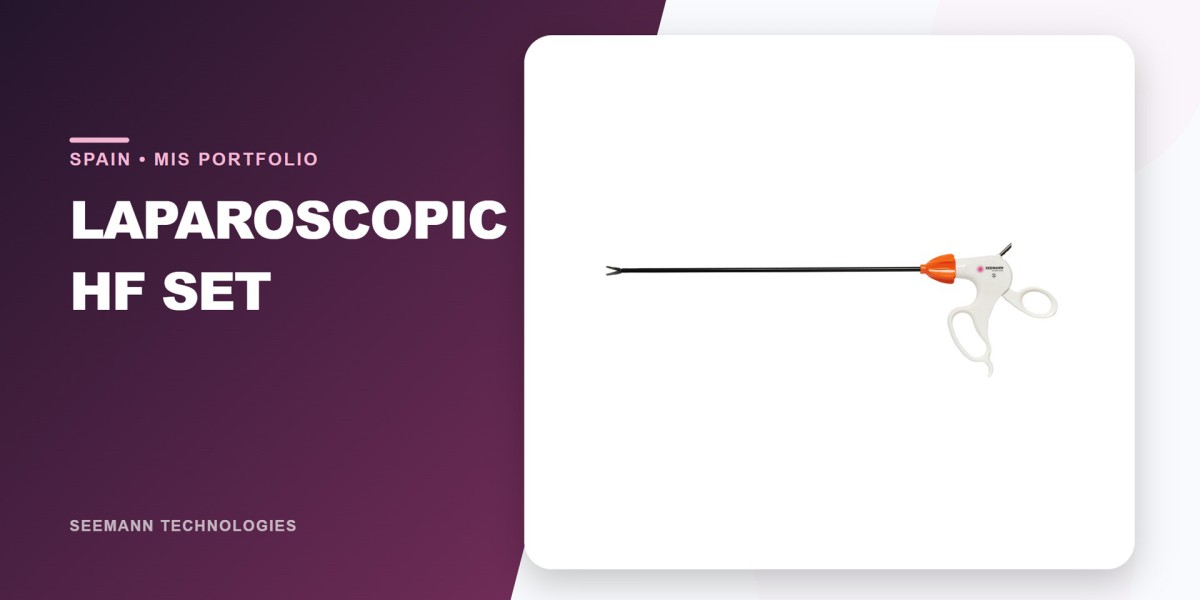

Laparoscopic procurement often brings minimally invasive and electrosurgical product requirements into the same commercial discussion. A hospital may require long-shaft monopolar electrodes, bipolar instruments, suction-irrigation systems and other MIS products while also needing compatible HF cables and accessories.
For Spanish medical distributors, organising those requirements as a structured portfolio can make hospital quotations easier to prepare and product differences easier to explain.
Separate the Portfolio by Function
A practical laparoscopic HF range can be divided into:
bipolar MIS instruments;
monopolar MIS instruments;
laparoscopic active electrodes;
suction-irrigation instruments;
access and procedure-support products; and
related HF cables and interfaces.
This is more useful than presenting every long instrument under the same laparoscopic category.
Monopolar Electrodes Need Length and Shaft Information
Laparoscopic electrodes often require extended working lengths and clearly defined shaft diameters.
A professional product description can include:
working-end shape;
shaft diameter;
working length;
insulation;
handpiece or instrument interface; and
equipment information.
Two hook electrodes should not automatically be considered equivalent if their shafts, lengths or interfaces differ.
Bipolar MIS Instruments Require Their Own Interface Review
Bipolar laparoscopic instruments should remain separate from conventional bipolar forceps in a distributor catalogue.
The buyer may need to identify:
jaw or working-end design;
shaft diameter;
working length;
handle configuration;
cable arrangement; and
HF equipment connection.
Distributor insight: a laparoscopic HF range becomes easier to sell when each product family is defined by function and interface. “MIS instrument” is a catalogue heading, not a complete technical description.
Suction Irrigation Belongs in the Same Portfolio Conversation
Suction-irrigation systems do not deliver HF energy, but they form part of the wider minimally invasive purchasing requirement.
A distributor may therefore discuss suction irrigation alongside laparoscopic electrodes and other MIS instruments, while maintaining a separate specification for:
diameter;
working length;
control arrangement;
tubing;
connections; and
sterile packaging.
Build Core and Specialist Product Groups
Spanish distributors can reduce inventory complexity by separating:
frequently requested core MIS references;
common laparoscopic electrodes;
hospital-specific bipolar configurations;
equipment-specific cables;
suction-irrigation stock; and
specialist products supplied against confirmed requirements.
Keep Equipment Information With HF Products
Where an instrument connects to HF equipment, the product record should include the relevant compatibility information.
Useful data may include:
equipment manufacturer;
model;
instrument reference;
cable reference;
connector information; and
existing hospital configuration.
Samples Help Build a Better Entry Range
Rather than ordering a large initial catalogue, distributors can evaluate samples of the highest-priority products first.
The sample should then be tied to:
the final commercial reference;
dimensions;
working end;
connection information;
packaging; and
quotation line.
Review HF and MIS Products From a Focused Portfolio
Seemann Technologies presents a single-use MIS instrument range that complements its single-use HF products, monopolar electrodes, bipolar forceps and cable categories.
For distributors, the value is the ability to discuss connected laparoscopic and electrosurgical requirements without collapsing them into one generic product family.
What to Include in a Spanish Laparoscopic RFQ
required product families;
shaft diameters;
working lengths;
working-end or jaw configurations;
monopolar or bipolar requirements;
HF equipment information;
suction-irrigation requirements;
sample quantities;
initial commercial quantities;
forecast consumption;
Spanish destination; and
required documentation.
A Complete Portfolio Should Still Keep Every Product Clear
Hospitals appreciate suppliers that can discuss connected laparoscopic products, but breadth should never come at the expense of specification clarity.
Spanish distributors can build a stronger MIS and HF range by giving each product a clear technical identity and using hospital demand to decide which configurations deserve routine stock.






