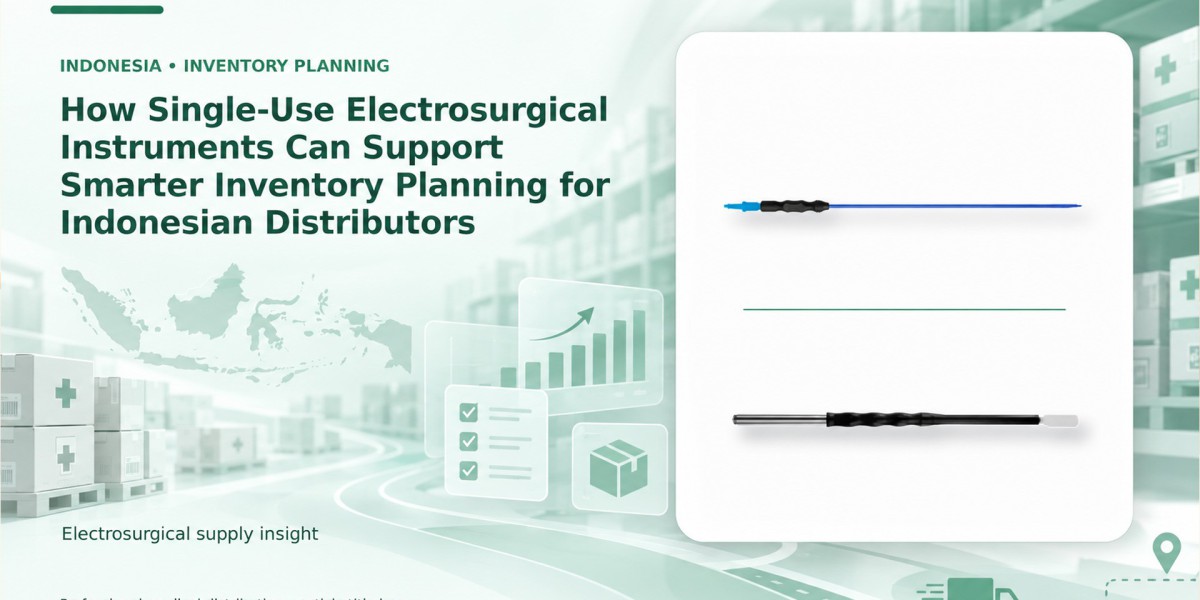

Buying More Stock Is Not an Inventory Strategy—Knowing What Will Reorder, When It Will Reorder, and Why Is
Inventory planning becomes difficult when distributors treat every product as if it deserves the same stocking approach. Some items generate predictable repeat demand. Others are ordered occasionally. Some should be available locally, while others may be better handled according to confirmed customer requirements.
For Indonesian distributors, single-use electrosurgical instruments can provide useful opportunities for structured inventory planning when demand patterns, product references, supplier timelines, and customer reorder behaviour are tracked carefully.
How can single-use electrosurgical instruments support inventory planning? Because single-use products may generate recurring purchasing patterns, distributors can track consumption, repeat-order frequency, quantities, and supplier replenishment times. That information can help them make more informed decisions about stock levels instead of purchasing inventory based only on assumptions.
Inventory Planning Begins With Demand Visibility
A distributor should know why a product is sitting in the warehouse.
Stock should ideally reflect some combination of:
historical customer demand;
expected repeat orders;
supplier preparation time;
importance of product availability;
quantity normally purchased;
number of active accounts using the reference.
Without this information, inventory can become a collection of guesses.
Single-Use Products Can Create Observable Reorder Patterns
Where hospitals regularly purchase specific single-use products, distributors may begin to see recurring demand.
For example, a product may typically be reordered:
monthly;
every several weeks;
according to hospital stock cycles;
when customer inventory reaches an internal reorder point.
These patterns can help distributors make better purchasing decisions.
Inventory insight: The value of repeat-demand products is not only recurring revenue. They also create data that can make future stock decisions less dependent on guesswork.
Do Not Assume Every Single-Use Product Deserves High Stock
Single-use does not automatically mean high-volume.
Different references may have very different demand.
One product may be ordered regularly by several hospital accounts, while another is only requested occasionally.
Distributors should therefore evaluate inventory at the reference level rather than treating the entire single-use category the same way.
Classify Products by Demand Behaviour
A practical inventory approach can divide products into simple groups.
Regular Repeat Products
References with consistent customer demand may justify more structured stock planning.
Growing Products
Products showing increasing enquiry and order frequency may need closer monitoring before stock is increased.
Occasional Products
Low-frequency references may be better handled with smaller quantities or demand-based ordering.
New Products
Fresh catalogue additions should usually be evaluated before large inventory commitments are made.
Supplier Timing Matters as Much as Customer Demand
A distributor cannot choose sensible stock levels without understanding replenishment timing.
If a product can be replenished reliably within a known period, the distributor may not need as much safety stock.
If timing is less predictable, more caution may be necessary.
Inventory planning should therefore combine:
customer demand + current stock + expected replenishment time.
Looking at only one of those factors gives an incomplete picture.
Clear Product References Make Inventory Data More Useful
Inventory planning depends on clean data.
If similar products are repeatedly entered under different names or references, historical demand becomes harder to measure.
A distributor should maintain consistent identification across:
catalogue records;
sales quotations;
customer orders;
warehouse systems;
supplier purchase orders.
Information gain: Inventory forecasting becomes only as reliable as the product identification behind the data. Poor reference discipline can make even good sales records difficult to interpret.
Track Customer-Level Demand
Total sales volume is useful, but customer-level patterns can reveal more.
A distributor might learn that:
three hospitals order the same forceps regularly;
one large account creates most of the demand;
a product sells seasonally;
some references are commonly ordered together.
This information can influence both stocking decisions and sales strategy.
Related Products Can Improve Purchase Planning
Single-use forceps may not be the only products customers request.
Hospital accounts may also ask for:
active electrodes;
other sterile electrosurgical instruments;
reusable forceps;
electrosurgical accessories.
If certain products are regularly ordered together, distributors can consider those relationships when planning future purchasing.
A Practical Inventory Review Process
Identify the exact reference. Keep product data clean.
Measure order frequency. Determine how often the product actually moves.
Review average quantities. Understand typical order size.
Count active customers. Avoid depending on one account without recognizing the risk.
Review supplier timing. Know how long replenishment normally requires.
Set a sensible reorder point. Use demand and timing together.
Reassess regularly. Demand changes over time.
Avoid Two Common Inventory Mistakes
Overstocking
Buying large quantities before demand is proven can tie up working capital and create unnecessary warehouse pressure.
Understocking
Waiting too long to reorder a proven repeat product can create preventable supply gaps for customers.
Good inventory planning aims for a practical middle ground.
Key Takeaways
Single-use instruments can generate useful repeat-demand data.
Stock decisions should be made at the product-reference level.
Demand frequency and replenishment timing should be reviewed together.
Clear references improve the quality of inventory data.
Customer-level ordering patterns can reveal concentration and growth opportunities.
New products should prove demand before receiving large stock commitments.
Final Thoughts
For Indonesian distributors, smarter inventory planning does not begin with buying more products. It begins with understanding which products actually move and how reliably they can be replaced.
Single-use electrosurgical instruments can support that process when distributors track repeat demand, maintain clean references, understand customer purchasing patterns, and coordinate replenishment with suppliers.
The result is a product programme based more on evidence and less on guesswork.
Frequently Asked Questions
Should distributors keep all single-use instruments in stock?
Not necessarily. Stock levels should reflect actual demand, customer requirements, and expected replenishment time.
What is a reorder point?
It is an internal stock level or purchasing trigger that indicates when another order should be placed before available inventory becomes too low.
Why are product references important for inventory planning?
Consistent references make historical sales and stock movement easier to track accurately.
Can new single-use products initially be offered without large local stock?
Yes. Distributors can evaluate enquiries and initial orders before deciding whether significant inventory is justified.






