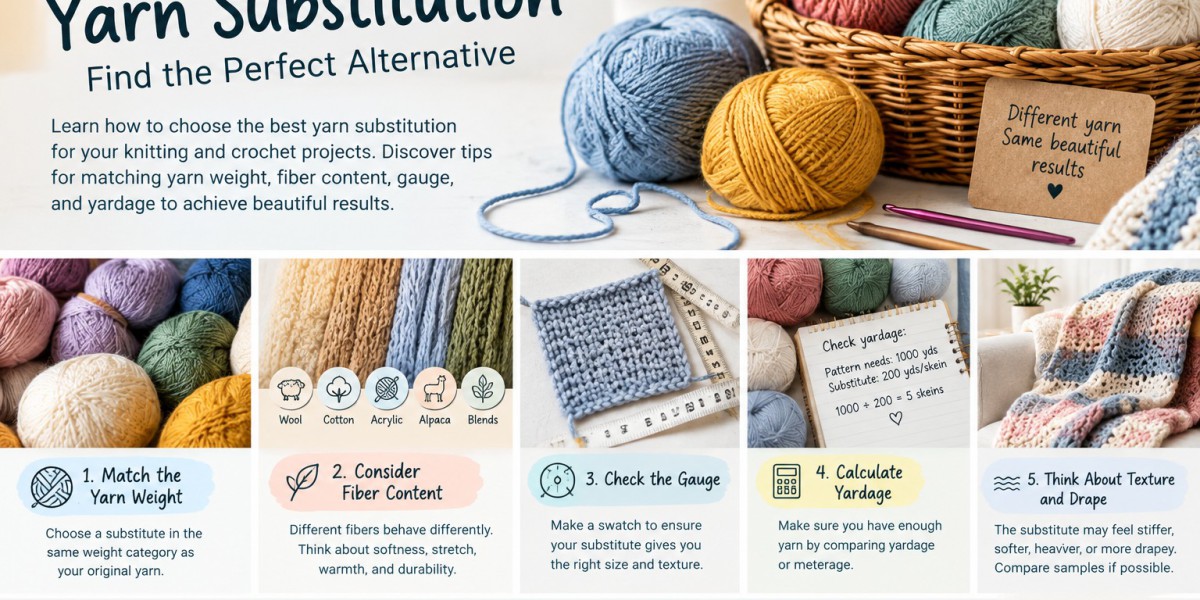

Have you ever found the perfect knitting or crochet pattern but couldn’t find the yarn it recommends? Don’t worry! Yarn substitution is a simple way to find an alternative yarn that works well with your project. Whether your favorite yarn is discontinued, unavailable in your area, or outside your budget, choosing a suitable replacement can help you achieve beautiful results.
What Is Yarn Substitution?
Yarn substitution means replacing the yarn recommended in a knitting or crochet pattern with another yarn that has similar characteristics. The goal is to maintain the project's size, texture, drape, and overall appearance.
However, choosing a replacement isn't just about finding a yarn in the same color. You also need to consider its weight, fiber content, yardage, and gauge.
1. Check the Yarn Weight
Yarn weight is one of the most important factors when selecting a substitute. Common yarn weights include lace, fingering, sport, DK, worsted, bulky, and super bulky.
For the best results, choose a substitute in the same weight category as the original yarn. Using a thicker or thinner yarn can change the finished dimensions of your project.
2. Compare Fiber Content
Different fibers behave differently, even when they have the same yarn weight.
- Wool: Warm, elastic, and suitable for many knitting projects.
- Cotton: Breathable and absorbent, making it popular for summer garments and home accessories.
- Acrylic: Affordable, widely available, and easy to care for.
- Alpaca: Soft, warm, and often drapey.
- Blended yarns: Combine the properties of different fibers.
When choosing a yarn substitution, consider how the fiber will affect the finished item's softness, stretch, warmth, and durability.
3. Match the Gauge
Gauge refers to the number of stitches and rows produced over a specific measurement. Even if two yarns have similar weights, they may produce different gauges.
Before starting your project, make a gauge swatch using your replacement yarn and the recommended needles or crochet hook. Adjust your hook or needle size if necessary until you achieve the pattern's gauge.
This step is especially important for sweaters, cardigans, hats, and other projects where the finished size matters.
4. Calculate the Required Yardage
Different yarn brands and types may contain different amounts of yarn per skein. Check the yardage or meterage on the original yarn label and compare it with your substitute.
To estimate how much yarn you'll need, divide the total yardage required by the pattern by the yardage in one skein of your substitute. Round up to ensure you have enough yarn to finish the project.
For example, if your pattern requires 1,000 yards and each substitute skein contains 200 yards, you'll need at least five skeins.
5. Consider the Finished Texture and Drape
The appearance and feel of your finished project depend on more than gauge alone.
A substitute yarn may create a fabric that is stiffer, softer, heavier, or more drapey than the original. This can affect how garments fit and how blankets, scarves, and accessories look.
If possible, compare yarn samples or make a small swatch before committing to your substitute.
Helpful Tips for Successful Yarn Substitution
Keep these tips in mind when choosing an alternative yarn:
- Look for a similar yarn weight and fiber composition.
- Compare yardage rather than relying only on skein weight.
- Make a gauge swatch before beginning.
- Check yarn reviews and care instructions.
- Buy enough yarn from the same dye lot when possible.
- Consider how the substitute will affect the finished project's texture and drape.
Final Thoughts
Successful yarn substitution doesn't have to be complicated. By comparing yarn weight, fiber content, gauge, yardage, and texture, you can find a suitable alternative for almost any knitting or crochet project.
Take your time, test your substitute with a gauge swatch, and remember that small differences in yarn can create a unique finished result.
With the right yarn substitution, you can keep creating beautiful projects even when your original yarn isn't available.






