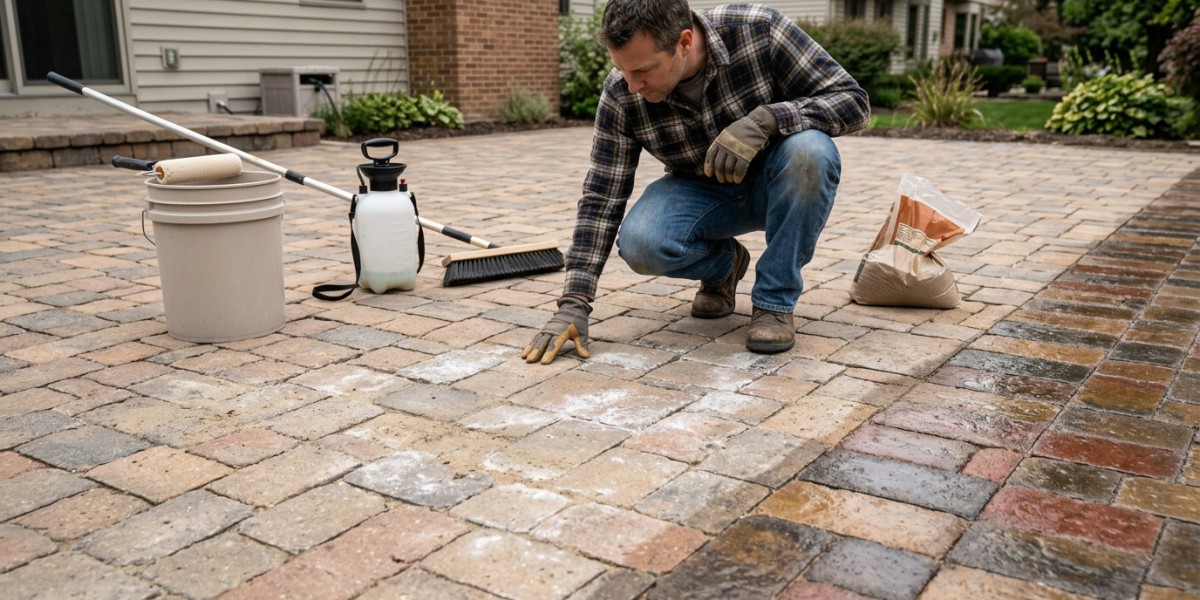

A freshly cleaned paver patio can look ready for sealing, but appearance alone does not mean the surface is prepared. Moisture may still be trapped between the joints, old coatings may remain in certain areas, and white mineral deposits can develop beneath the surface. Applying sealer too early may create cloudy patches, uneven color, or other problems that are difficult to correct. Before sealing a driveway, walkway, or patio, homeowners need to understand how surface condition, drainage, joint sand, and drying time affect the finished result.
Why Sealing Immediately After Washing Can Be a Mistake
Pavers can appear dry on top while moisture remains inside the joints or beneath the surface. This is especially common when the installation is shaded, drainage is poor, or recent rainfall has kept the bedding material damp. Applying a moisture-sensitive sealer under these conditions may interfere with the coating's appearance or performance. Certain products can develop whitening or cloudiness when moisture becomes trapped, while others have specific requirements for surface temperature and drying conditions.
The correct waiting period depends on the sealer manufacturer, the type of paver, weather conditions, and the moisture content of the surface. Industry guidance for many conventional concrete-paver sealers calls for at least 24 hours without surface dampness before application, but that is not a universal drying rule. Some products need different preparation or curing conditions. Rather than relying on a fixed number of hours, confirm that the installation meets the requirements stated on the product's technical data sheet.
Inspect the Pavers Before Deciding to Seal
Sealing is a finishing treatment, not a repair for an unstable pavement system. Before making a decision, inspect the installation for sunken sections, loose pavers, uneven joints, damaged edges, and standing water. If a patio develops puddles after every rain, the underlying drainage problem should be evaluated before a protective coating is applied. Sealer cannot correct settlement or prevent water from accumulating where the pavement has an improper slope.
Older paved areas may also contain multiple surface conditions. Some units may be faded, while others remain dark from previous sealant. A section near the home may experience less weathering than an open driveway. These differences can affect the appearance of the finished surface. An inconspicuous test area can help reveal potential color changes, but it should be evaluated after the product has dried or cured as directed. Any damaged units or installation problems should be addressed before coating begins.
Cleaning Must Match the Type of Stain
Thorough cleaning is an essential preparation step because sealer can emphasize or trap existing discoloration. Ordinary dirt, grease, algae, rust, and white mineral deposits may require different treatments. A cleaner that removes loose soil may do very little for an oil stain that has penetrated the concrete. Similarly, mineral deposits cannot always be removed with ordinary detergent. Choosing the wrong chemical can discolor the pavers, affect joint material, or interfere with subsequent sealing.
A complete evaluation for paver sealing services should establish whether the surface needs cleaning, stain treatment, joint maintenance, or removal of an incompatible old coating before application. The cleaning process itself must be controlled to avoid damaging paver edges or washing excessive sand from the joints. Any specialty cleaner should be approved for the material, tested appropriately, and rinsed or neutralized as its instructions require. If stains cannot be removed completely, homeowners should know that before the sealer is applied.
Joint Sand Needs Attention Before Sealing
The spaces between interlocking pavers are an important part of the pavement system. Properly installed joint material helps the units work together under normal loads. Aggressive washing can remove some of that material, leaving gaps that may need to be refilled before sealing. Where suitable, polymeric joint sand may be used according to the installation requirements. However, not every paver design or sealing system uses the same joint material, and existing products must be checked for compatibility.
Joint preparation should happen in the correct order. Loose debris is removed, missing sand is replaced where necessary, and the surface is prepared according to the selected joint product's instructions. Some polymeric sands require controlled wetting and a specified curing period before further treatment. Applying sealer before the joint material has stabilized can interfere with the installation. That is why washing, joint maintenance, and sealing should be planned as one coordinated process rather than separate jobs completed without considering each other.
Choosing Between Natural-Look and Color-Enhancing Sealers
Not every sealer produces the same appearance. Some are designed to preserve a relatively natural finish, while others deepen the color of the pavers or create a noticeable sheen. Penetrating sealers and film-forming products can also behave differently in terms of moisture movement, stain resistance, maintenance, and future reapplication. The right choice depends on the material, its location, the expected traffic, and the finish the homeowner wants to maintain.
Slip resistance deserves attention on steps, sloped driveways, pool surrounds, and frequently wet walkways. Certain glossy finishes can become more slippery when wet, so product selection should consider the location and any appropriate slip-resistance requirements. Also check how the sealer will respond to previous coatings. Applying an incompatible product over an older finish may create bonding or appearance problems. A good sealer should suit both the intended use and the condition of the existing pavement.
What Conditions Should Be Checked Before Application?
Weather planning matters as much as surface preparation. Temperature, humidity, rainfall, and direct sunlight can influence application and curing. Very hot conditions may cause some products to dry unevenly, while cold or damp weather may delay curing or fall outside the manufacturer's acceptable range. Protect surrounding landscaping, walls, and fixtures from overspray, and ensure the application area can remain undisturbed for the required period.
Before work begins, confirm that:
The pavers and joints meet the sealer's dryness requirements.
Stains, residue, and incompatible old coatings have been addressed.
Joint sand is correctly installed and ready for the next treatment.
Weather conditions allow the required application and curing time.
The selected finish is suitable for the expected foot or vehicle traffic.
After sealing, restrict access for the period specified by the product manufacturer. Dry-to-touch time is not necessarily the same as the time required before walking or driving on the surface. Returning furniture or vehicles too early can mark or damage a coating that has not fully developed its intended properties.
How to Maintain Pavers After Sealing
Sealed pavers still require routine care. Remove leaves and loose debris before they accumulate in joints or hold moisture against the surface. Clean spills promptly using products compatible with the sealer, and avoid harsh chemicals that could damage the finish. Drainage problems should be addressed rather than allowing water to remain on the pavement. Regular inspections can also reveal worn areas, joint loss, or changes in surface appearance before they become more difficult to correct.
There is no single resealing schedule that fits every installation. Vehicle traffic, sunlight, weather exposure, cleaning methods, and the chosen product all influence how long protection lasts. Instead of automatically applying another coat every year, inspect the condition of the surface and follow the manufacturer's maintenance guidance. Additional sealer applied over an unsuitable existing coating can create more problems than it solves.
Conclusion
Good sealing results depend on preparation, surface stability, correct product selection, and suitable drying conditions. The most attractive finish is not necessarily the one with the strongest shine, but the one that performs appropriately in its intended environment. Homeowners should also understand efflorescence, the movement and deposition of soluble salts that can produce white deposits on masonry and concrete. Identifying this condition before sealing helps prevent avoidable appearance problems and supports a more reliable restoration process.