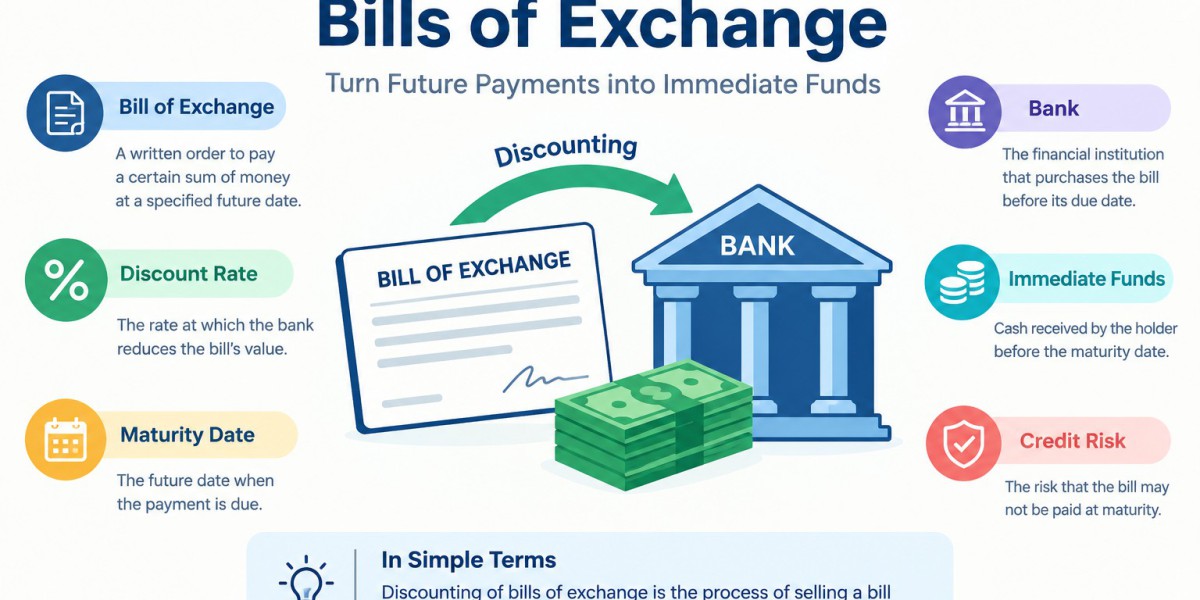

Discounting of bills of exchange is a widely used financial practice that helps businesses receive money before the maturity date of a bill. Instead of waiting for customers to make payments, businesses can submit accepted bills of exchange to a bank and receive immediate funds after deducting the applicable discount charges. This process helps businesses manage their short-term financial needs, maintain cash flow, and meet regular operating expenses.
Although discounting of bills of exchange offers several financial benefits, it also has certain limitations. Businesses must consider the cost of discounting, the possibility of a bill being dishonoured, and the terms of the bank's agreement before choosing this financing method. Understanding the advantages and disadvantages of discounting bills of exchange helps business owners, students, and finance professionals make informed financial decisions.
What Is Discounting of Bills of Exchange?
Discounting of bills of exchange refers to the process of transferring a bill of exchange to a bank or financial institution before its maturity date in exchange for immediate payment. The bank deducts a certain amount as a discount and pays the remaining balance to the holder of the bill.
For example, suppose a business holds a bill of exchange worth ₹1,00,000 that will mature after three months. The business approaches a bank to discount the bill. If the bank deducts ₹3,000 as a discount, the business receives ₹97,000 immediately. On the maturity date, the bank collects the full amount from the party responsible for payment, subject to the terms of the arrangement.
This method allows businesses to convert future receivables into immediate funds without waiting for the credit period to end.
Advantages of Discounting Bills of Exchange
Discounting of bills of exchange provides several benefits to businesses, particularly those that sell goods and services on credit. The main advantages are explained below.
1. Immediate Availability of Funds
One of the biggest advantages of discounting bills of exchange is that businesses receive money before the maturity date. They do not have to wait for customers to complete their payments.
The funds received can be used to purchase raw materials, pay employees, settle supplier invoices, and cover other operating expenses. This is especially beneficial for businesses that need regular access to cash.
2. Improved Cash Flow
Cash flow is essential for the smooth operation of any business. When businesses sell goods on credit, their money may remain tied up in receivables for weeks or months.
The discounting of bills of exchange helps businesses receive funds earlier and maintain a steady flow of cash. Better cash flow makes it easier to manage day-to-day expenses and avoid delays in payments.
3. Better Working Capital Management
Working capital is the money a business needs to manage its daily operations. Businesses that depend heavily on credit sales may experience temporary shortages of working capital.
By discounting bills of exchange, businesses can access funds tied up in outstanding bills and use them for regular operations. This supports efficient working capital management without waiting until the bills mature.
4. Timely Payment to Suppliers
Businesses often need to pay suppliers before they receive payment from their own customers. This difference in payment timing can create financial pressure.
Discounting of bills of exchange allows businesses to obtain funds and make timely payments to suppliers. It can also help businesses maintain good relationships with suppliers and potentially benefit from early-payment discounts.
5. Supports Business Expansion
Growing businesses often require additional funds to increase production, purchase inventory, hire employees, or enter new markets.
Discounting bills of exchange provides access to funds from existing credit sales. Businesses can use these funds to support growth opportunities without waiting for customers to pay on the due date.
6. Reduces the Waiting Period for Receivables
When a business sells goods on credit, it must normally wait until the agreed payment date to receive money. Discounting shortens this waiting period by providing funds before maturity.
This helps businesses make better use of their available financial resources and reduces the time between making a sale and receiving usable cash.
7. Convenient Short-Term Financing
For businesses with eligible bills of exchange, bank discounting can be a convenient source of short-term financing. Once the bank approves the bill and completes its checks, the business can receive the net proceeds without waiting for the bill's maturity.
The availability and conditions of this facility depend on the bank's policies, the quality of the bill, and the creditworthiness of the parties involved.
Disadvantages of Discounting Bills of Exchange
Despite its benefits, discounting of bills of exchange also has certain disadvantages. Businesses should understand these limitations before using this financing method.
1. Discount Charges Increase Financing Costs
The bank deducts a discount from the face value of the bill before paying the business. This means the business receives less than the amount stated on the bill.
For example, if the face value of a bill is ₹1,00,000 and the bank deducts ₹3,000 as a discount, the business receives only ₹97,000 before any additional fees. The discount represents a financing cost that reduces the proceeds available to the business.
Frequent discounting can increase financing expenses, particularly when discount rates are high.
2. Risk of Bill Dishonour
A bill of exchange may be dishonoured if the party responsible for payment fails to pay the amount on the maturity date.
If a discounted bill is dishonoured, the bank may seek reimbursement from the business that discounted it, depending on the contractual terms and applicable law. This can create unexpected financial pressure and require the business to arrange funds at short notice.
3. Dependence on Bank Approval
Not every bill of exchange is eligible for discounting. Banks assess the validity of the bill, the creditworthiness of the parties, the maturity period, and other relevant factors before approving a transaction.
If a bank considers the bill too risky or the documentation insufficient, it may refuse to discount it. Therefore, businesses cannot always rely on discounting as a guaranteed source of finance.
4. Additional Fees and Charges
Apart from the discount itself, banks may apply processing fees or other charges depending on their policies and the agreement.
These additional costs reduce the final amount received by the business. Before proceeding, businesses should calculate the total cost of discounting and compare it with other available financing options.
5. Potential Financial Liability
In many conventional discounting arrangements, the business that discounts the bill may remain liable if the bill is not paid on maturity.
This means that discounting does not necessarily eliminate the risk associated with the customer failing to pay. Businesses should carefully review the agreement to understand their obligations and any recourse rights the bank may have.
6. Limited Suitability for Some Businesses
Discounting of bills of exchange is useful only when a business has eligible bills that can be accepted by a bank for discounting.
Businesses that mainly receive immediate payments or do not use bills of exchange may not be able to benefit from this facility. It may also be less suitable for businesses whose customers have weak creditworthiness or whose bills are not acceptable to banks.
7. Impact on Profitability
The discount deducted by the bank reduces the proceeds earned from the bill and generally creates a financing expense. If a business relies heavily on discounting, these expenses may affect its overall profitability.
Businesses should assess whether the benefit of receiving funds early outweighs the cost of discounting.
Difference Between Advantages and Disadvantages of Discounting Bills of Exchange
Advantages | Disadvantages |
Provides funds before maturity | Bank deducts discount charges |
Improves cash flow | Creates additional financing costs |
Supports working capital management | Bills may be rejected by banks |
Helps businesses pay suppliers on time | Dishonour may result in financial liability |
Supports business growth | Additional fees may apply |
Reduces waiting time for receivables | May affect profitability |
How Can Businesses Reduce the Disadvantages?
Businesses can manage the disadvantages of discounting bills of exchange by following a few practical steps.
Compare bank discount rates: Compare offers from different banks and consider all applicable charges before choosing a facility.
Check customer creditworthiness: Assess the ability of customers to pay on time before accepting bills of exchange.
Review contractual terms: Understand the bank's rights, the business's liability, and the procedures followed if a bill is dishonoured.
Calculate the total financing cost: Determine the net proceeds and compare the cost of discounting with other short-term financing options.
Use discounting strategically: Discount bills when early access to funds provides a clear financial benefit, rather than relying on the facility without considering its cost.
Conclusion
Discounting of bills of exchange is a useful financial tool that enables businesses to receive funds before the maturity date of a bill. Its main advantages include immediate access to cash, improved cash flow, better working capital management, timely supplier payments, and support for business expansion.
However, the disadvantages include discount charges, additional fees, the risk of dishonour, possible financial liability, and the potential impact on profitability. The overall suitability of discounting depends on the business's financial needs, the cost of the facility, and the terms agreed with the bank.
By carefully evaluating the advantages and disadvantages of discounting bills of exchange, businesses can decide when this financing method is appropriate and use it effectively to support their financial stability and growth.






