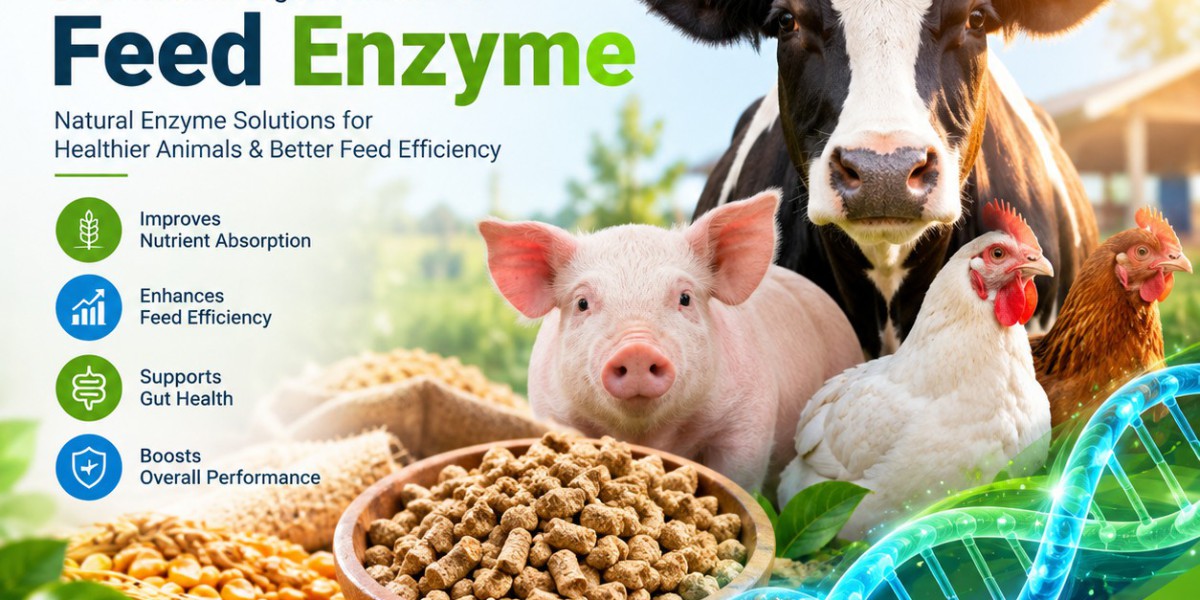

Feed enzyme selection is not simply about choosing a product with high declared activity. The appropriate enzyme and inclusion rate depend on the animal category, feed ingredients, nutritional objectives and the characteristics of the enzyme preparation.
For businesses evaluating a Feed Enzyme Manufacturer in India, understanding these factors helps support informed purchasing decisions and more consistent feed formulation. A product suitable for one feed programme should not automatically be assumed to deliver the same results in another.
1. Why Animal Growth Stage Matters in Feed Formulation
Animals have different nutritional requirements at different stages of growth. These requirements influence feed composition, ingredient selection and the way enzyme products are evaluated.
For example, broiler starter, grower and finisher diets may differ in nutrient density, ingredient proportions and formulation objectives. Similar stage-related differences occur in other livestock feeding programmes.
Feed enzymes should therefore be assessed in the context of the complete diet. The aim is to identify an enzyme that addresses a relevant feed-component challenge rather than selecting a product solely because it is commonly used in a particular animal category.
Growth stage alone does not determine enzyme dosage. The actual formulation and the supplier's product-specific recommendations must also be considered.
2. Selecting Feed Enzymes According to Ingredient Composition
Different feed enzymes act on different substrates. Their suitability depends partly on which feed components are present and what the formulation is intended to achieve.
Phytase
Phytase acts on phytate and can help make phytate-bound phosphorus more available under suitable conditions. Its inclusion should be evaluated alongside dietary phosphorus, calcium, ingredient composition and the nutritional matrix values supported for the specific product.
Xylanase
Xylanase targets certain xylan-based non-starch polysaccharides found in feed ingredients. Its relevance depends on the ingredient profile, the characteristics of the substrate and the intended application.
Protease
Protease acts on proteins. Its potential role should be evaluated in relation to the diet's protein sources, formulation objectives and the supporting evidence available for the enzyme product.
These enzymes are not interchangeable. A feed formulation team should identify the nutritional or ingredient-related objective before choosing an enzyme or combination of enzymes.
3. Understanding Enzyme Activity Units Before Calculating Dosage
Declared activity is an important parameter when comparing products, but activity values must be interpreted correctly.
Different enzymes may use different activity units and analytical methods. Even products containing the same enzyme type may have different declared activities or formulations.
Before calculating an inclusion rate, buyers should confirm:
The enzyme identity and declared activity.
The units used in the product specification.
The recommended application rate and its basis.
Whether the recommendation is expressed per kilogram of feed or another quantity.
Any relevant assumptions, limitations or application instructions.
A higher activity number does not automatically mean that a product is more suitable. Comparisons are meaningful only when the enzyme identity, measurement basis and intended application are understood.
4. How Feed Enzyme Dosage Should Be Evaluated
The inclusion rate should follow the product-specific technical recommendation and the nutritional requirements of the intended feed.
For example, a phytase programme may consider the product's validated phosphorus matrix contribution alongside the diet's phosphorus supply. A xylanase programme may require evaluation of the relevant cereal ingredients and their substrate characteristics.
Dosage should not be adjusted simply because animals are at a different growth stage. The formulation team should first determine whether the feed composition, nutritional target or product specification has changed.
Where calculations are required, use the declared activity, recommended inclusion basis and verified technical data. Any nutritional matrix credit or expected benefit should be supported by evidence relevant to the specific product and application.
5. Comparing Poultry, Swine and Other Livestock Applications
Feed formulations vary between animal species and production systems. Ingredient choices, nutrient targets, feeding practices and processing conditions may all influence enzyme selection.
Poultry diets may include enzyme strategies addressing cereal-based non-starch polysaccharides or phytate. Swine formulations may require a different evaluation based on their ingredients and nutritional objectives. Other livestock applications must likewise be assessed according to their specific diets and production requirements.
A supplier's recommendation for one animal category should not automatically be transferred to another. Buyers should request application-specific documentation and confirm that the product is appropriate for the intended feed programme.
6. Reviewing Dosage When Feed Ingredients Change
Changes in maize, wheat, soybean meal or other ingredients can alter the composition of the feed and the amount of relevant enzyme substrate present.
Seasonal raw-material variation, supplier changes and formulation updates may therefore justify a review of the existing enzyme programme.
A practical review should include:
Comparing the revised formulation with the previous feed specification.
Identifying changes in relevant substrates and nutrient contributions.
Reviewing the enzyme product's technical recommendations.
Checking the proposed inclusion rate and formulation assumptions.
Recording the approved change and its effective date.
Monitoring appropriate quality parameters after implementation.
The purpose is to ensure that enzyme selection remains aligned with the actual feed formulation rather than relying on an unchanged dosage by default.
7. What Buyers Should Ask Feed Enzyme Suppliers in India
When evaluating Feed Enzyme Suppliers in India, procurement teams should request information that supports technical assessment.
Important questions include:
Which enzyme activity does the product provide?
What activity units and analytical methods are specified?
Which animal categories and feed applications are supported by the product documentation?
What inclusion rate is recommended, and on what basis?
Are relevant application or stability data available?
What storage and handling conditions should be followed?
Is a batch-specific certificate of analysis (COA) provided?
What technical support is available when feed ingredients or formulations change?
Clear documentation helps buyers compare products on technical suitability rather than relying on price or activity figures alone.
8. Common Dosage and Selection Mistakes
Using the same inclusion rate for every feed formulation: Different ingredients and nutritional objectives may require a fresh technical evaluation.
Comparing products using activity numbers alone: Different units, methods and formulations can make direct comparisons misleading.
Assuming every enzyme improves every diet: Enzyme suitability depends on the substrate, feed composition and intended application.
Changing dosage without reviewing the formulation: An adjustment should be supported by product-specific recommendations and appropriate technical assessment.
Ignoring batch documentation: Product specifications and batch-specific COAs help verify identity and declared quality parameters.
Avoiding these mistakes helps feed manufacturers maintain a more controlled and evidence-based enzyme selection process.
Conclusion
Feed enzyme dosage should be evaluated according to animal category, growth stage, feed ingredients, nutritional objectives and the characteristics of the enzyme product. Activity units, product specifications and application-specific technical evidence are essential when comparing options.
For businesses evaluating a Feed Enzyme Manufacturer in India, the most practical approach is to combine accurate formulation review with supplier documentation and product-specific guidance. This helps ensure that enzyme selection and inclusion decisions remain appropriate for the intended feed application.






